Answering your need to monitor tank water levels accurately, these water level indicators help homeowners, gardeners, and small business operators manage supply and prevent overflows. The top picks below cover tank-top gauges, wireless monitors, and ultrasonic sensors to fit different tanks and environments. Best for irrigation setups, rainwater collection systems, and home storage tanks, each option includes practical installation notes and real-use cautions.
Buyer’s snapshot: the following five products suit different scenarios—from simple dial indicators for rain harvesting to WiFi-enabled sensors for remote monitoring. Use the table to compare basic specs at a glance, then read each section for details on who should choose that model and why.
| Product | Best For | |
|---|---|---|
| Rain Harvesting Tank Gauge | Rainwater harvesting or rustic tanks | Tank-top dial with Easy installation |
| PTLevel Wireless Tank Level Monitor | Remote monitoring, alerts by email/SMS | Two notification points, weatherproof |
| Yaktek The Levetator | Direct, true water level reading | Simple, straightforward gauge |
| IDEANATEGRATE Tank Water Level Monitor | Industrial/home use with clear display | Capacitive gauge with acrylic display |
| Mulcort Wireless Ultrasonic Level Gauge | Visual level and temperature monitoring | LCD bar graph and alarms |
Rain Harvesting Tank Gauge

The Rain Harvesting Tank Gauge is a tank-top dial indicator designed for simple, at-a-glance water tracking. Best for basic rain collection setups where a straightforward level readout is sufficient. The device features a dial with “Empty” and “Full” markers to quickly assess how much water remains in the tank. Installation is straightforward: one hole in the tank and dial calibration to match tank height. This model is suitable for users who want a low-maintenance, visual gauge without network connectivity or complex setup.
Who it’s best for: Homeowners or small-scale gardeners who need a reliable, non-digital gauge that requires minimal maintenance and can be installed on top of a rainwater tank.
Why chosen: It offers an uncomplicated measurement method, quick calibration, and clear indicators that work well in solar-powered or off-grid environments where electronics may be less practical.
Caution: Reading accuracy depends on correct calibration for tank height; miscalibration can mislead about actual water volume.
PTLevel Wireless Tank Level Monitor

The PTLevel Wireless Tank Level Monitor provides remote monitoring with alert capabilities. This model supports online access to tank levels and can notify via email or SMS at two alert points for high and low levels. It is designed to function across various environments, with weatherproof construction and operation across a wide temperature range. Power is supplied by four AA batteries, offering years of low-maintenance operation. This device is ideal for users who want ongoing visibility beyond local gauges and need proactive alerts to prevent dry runs or overflows.
Who it’s best for: Property managers, farms, or households that require remote status updates and timely alerts for multiple tanks or storage facilities.
Why chosen: Its alert system helps prevent incidents by signaling when levels are too high or too low, enabling quick corrective actions.
Caution: Battery-powered operation means periodic replacement is necessary, and cellular or internet connectivity is required for online alert delivery.
Yaktek The Levetator

The Levetator from Yaktek offers a straightforward, true water level reading. It functions as a direct gauge, letting users see exact levels without interpolation or electronic interpretation. This makes it a practical choice for smaller tanks where a plain gauge is sufficient. It is best suited for users who want a no-nuss, readable indicator and who prioritize simplicity over smart features or remote access.
Who it’s best for: Gardeners, hobbyists, and small tank setups that require a simple, accurate water level readout.
Why chosen: Its emphasis on a true liquid level reading reduces ambiguity in manual checking and aligns with traditional, low-tech monitoring practices.
Caution: It provides no remote alerts or data history; if remote monitoring is needed, pair it with an additional sensor if possible.
IDEANATEGRATE Tank Water Level Monitor
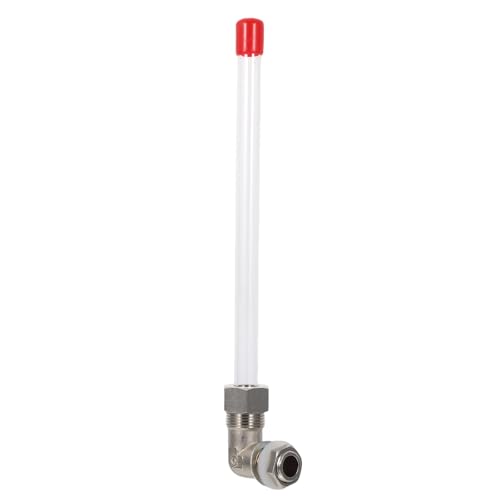
The IDEANATEGRATE water level monitor uses capacitive liquid level gauge technology and a transparent acrylic display to provide precise measurements of water height. It emphasizes clear visibility and quick assessment of water quantity through a visually accessible liquid level indicator. The device is designed for easy connection to tanks and heaters, enabling straightforward integration into established systems. This model balances clear readouts with practical installation for both home and commercial uses.
Who it’s best for: Operators who want a transparent, easy-to-read gauge with straightforward installation on various tanks and heaters.
Why chosen: The capacitive gauge technology offers precise measurement, while the acrylic display improves visibility under varied lighting conditions.
Caution: This model focuses on measurement clarity and may require compatible mounting considerations for certain tank fixtures.
Mulcort Wireless Ultrasonic Level Gauge

The Mulcort Wireless Ultrasonic Level Gauge provides a modern, wireless approach with an LCD bar graph that shows current liquid level. It is designed for comprehensive monitoring, including minimum and maximum levels, high/low alarms, and an empty-tank alert. In addition to level data, it offers a time display, and the device integrates temperature reading to help interpret water conditions. This option is well-suited for users who want a clear visual, reminders for level changes, and the ability to monitor temperature alongside liquid depth.
Who it’s best for: Homeowners or small facilities that want a single device showing level, temperature, and alarms in a readable format.
Why chosen: The combination of level visualization, alarms, and temperature data provides a broader picture of tank health and usage patterns.
Caution: Wireless range and WiFi dependence may affect performance in challenging environments; ensure adequate coverage.
Buying Guide: How To Choose Water Level Indicators For Tanks
What gauge type matches my tank?
Dial gauges on tank tops work well for simple, visible readings on rain harvesting and storage tanks. Capacitive and acrylic gauges offer precise height reading and are easier to read in bright or dim conditions. Ultrasonic and wireless sensors are best for remote monitoring across multiple tanks or when central dashboards are needed.
Do I need remote monitoring or alerts?
If remote access is important, consider wireless or WiFi-enabled models. Look for alerts via email or SMS and support for multi-tank monitoring if you manage several tanks. For basic sites, a local gauge might be sufficient.
What environment will the gauge face?
Rainwater systems outdoors can require weatherproof housing and temperature tolerance. Indoor or heated spaces may benefit from standard glass or acrylic indicators with clear displays. Ultrasonic types handle wider temperature ranges but may depend on battery or WiFi connectivity.
How will maintenance look?
Battery-based monitors require periodic replacement. Mechanical or simple dial gauges require calibration to the tank height. Consider ease of installation and whether you need a temporary or permanent mounting solution.
What’s the budget and complexity tolerance?
Basic dial gauges tend to be most affordable and easiest to install. Wireless or smart sensors offer richer features but require ongoing connectivity and potential subscriptions or power sources. Balance initial costs with long-term maintenance needs and data requirements.
Multiple-tank considerations
For households with several tanks, prioritize devices that support multi-tank monitoring, app-based dashboards, and scalable alerts. A centralized system simplifies management and reduces the risk of missed readings.
Common limitations to anticipate
- Dial gauges may require precise calibration for accurate readings.
- Wireless devices rely on stable power and network access.
- Ultrasonic sensors can be affected by tank geometry or obstructions.
- Temperature readings add insight but require proper sensor placement.
Frequently Asked Questions
- What is a water level indicator? A device that shows the current liquid height in a tank, which can be a simple dial, a transparent gauge, or a digital/wireless sensor.
- Do I need a wireless monitor for a single tank? Not necessarily; a basic dial gauge can suffice. A wireless monitor is more beneficial if you need remote visibility or alerts.
- Can these gauges handle outdoor rainwater systems? Yes, many models are designed for outdoor use and weather exposure, but verify the weatherproof rating and installation guidelines.
- Will a gauge provide exact volume or height? Most gauges provide height or level. Some advanced models can translate height into approximate volume depending on tank shape and calibration.
- How often should I calibrate a tank gauge? Calibrate during installation and periodically thereafter, especially after tank height changes or maintenance that could affect readings.
- Are there risks with wireless sensors? Potential issues include battery life, WiFi range, and network reliability. Plan for power or backup connectivity if readings are critical.