If you’re comparing home security systems, you want clear, practical guidance on kits that are easy to install, work without monthly fees, and integrate with voice assistants. This guide highlights five reliable DIY systems, explaining who they’re best for, how they perform, and key trade-offs. The buyer types best served include apartment dwellers seeking quick setup, small homes needing scalable sensor sets, and households prioritizing app-based control and real-time alerts. A quick summary table of the featured products follows for fast reference.
| Product | Best For | Key Benefit | Notes |
|---|---|---|---|
| Alarm System for Home Security (PGST) | Owners needing dual Wi‑Fi/GSM, no monthly fee | App control with Alexa/Google, auto alarm dial | DIY-friendly, adjustable sensors |
| Clouree Home Security System | Renters and small homes | No contract, instant mobile alerts | 8-piece kit, simple setup |
| WiFi Wireless Alarm System (XUK) | Families seeking a touch-screen experience | 4.3″ touch screen, voice integration | 24/7 protection with independent alerts |
| Hapippofa Wireless Home Security System | Tech-forward homes | Easy smartphone control, Alexa/Google compatible | DIY kit with comprehensive sensors |
| PGST Wireless Home Alarm System (second kit) | Apartment security upgrades | Siren alerts and remote access | Expandable with additional sensors |
Alarm System for Home Security — PGST

Best for homeowners who want a dual-network security system without ongoing fees. This kit provides Wi‑Fi and GSM/4G connectivity, ensuring alerts even if the home Wi‑Fi goes down. It supports mobile app control via Smart Life or Tuya, with features like delayed alarm, SMS/call alerts, and adjustable alarm volume. It also allows flexible DIY configuration, letting you add or remove sensors and name each location to visually track alarms on your phone. A potential limitation is the reliance on app ecosystems and the need to manage multiple device profiles.
Why this is chosen
- Dual network ensures continuity during outages
- App-based control and real-time alerts
- Customizable sensor layout for different home floor plans
Who should avoid this?
If you require professional monitoring or prefer a battery-only system without mobile apps, this kit may not be the best fit.
Clouree Home Security System — 8 Piece Kit
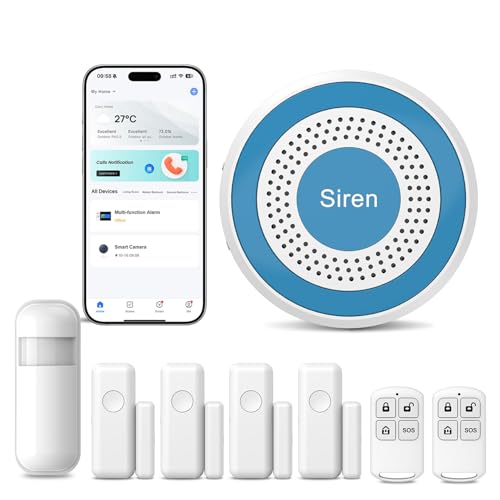
This 8-piece wireless kit targets small to mid-sized homes with ready-to-use protection: 1 host, motion sensor, 4 door/window sensors, and 2 remotes. It shines for renters or owners who want a no-contract option with instant phone alerts. The system offers real-time alerts and a loud siren, reinforcing deterrence. The main trade-off is fewer expanding options compared to larger, professional-grade systems, which can limit long-term scalability.
Who is this best for?
- Renters or small homes needing flexible setup
- Users avoiding monthly fees and contracts
Limitations to note
Expansion beyond the included components may require additional modules and compatibility checks.
WiFi Wireless Alarm System — XUK

Best for homes needing a touch-screen interface and robust voice integration. The kit uses dual connectivity (2.4GHz WiFi and 2G/4G) to ensure continuous operation with no subscriptions. It features a 4.3-inch color touch screen that displays status, time, and alerts in real time, with multilingual menus. It integrates with Alexa and Google Assistant for voice control. A limitation to watch is the absence of 5G support, which could affect future network compatibility in some areas.
Why choose this?
- Intuitive touch screen for all ages
- Reliable notifications via app, SMS, or voice
- Voice assistant compatibility for hands-free control
Hapippofa Wireless Home Security System

Best for tech-forward homes seeking comprehensive app-based monitoring. The system provides smartphone control, Alexa/Google compatibility, and a DIY setup that covers doors, windows, and motion areas. Real-time monitoring and instant mobile notifications are standard, allowing remote status checks from anywhere. A practical caveat is that, as with many DIY kits, some users may require instruction to optimize sensor placement for pet households or large properties.
PGST Wireless Home Alarm System — DIY Kit
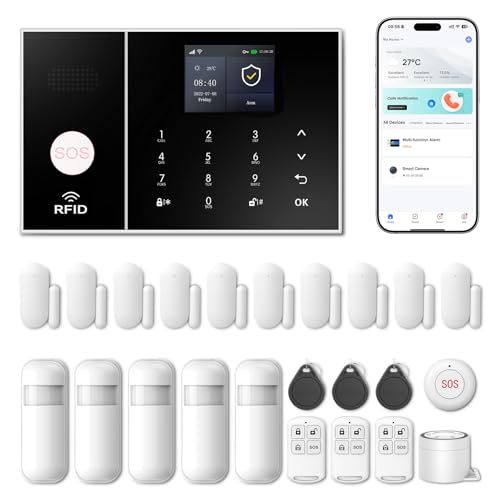
Best for apartments or small homes needing a high-deterrence alarm with remote access. This kit emphasizes a loud siren for deterrence and instant app alerts. It supports remote monitoring via a phone app and is compatible with Alexa/Google Assistant. The system is expandable with additional sensors to tailor coverage. A note: verify that the base kit supports the exact zones you need when expanding beyond the included sensors.
Buying Guide: Key Considerations for Choosing a Home Security System
What should you look for when comparing DIY security systems? Consider connectivity, expandability, and control options to match your home and lifestyle.
- Connectivity and uptime: Dual networks (Wi‑Fi plus GSM/4G) help ensure alerts even if one network fails. Consider whether 5G compatibility matters in your area.
- Control interface: A mobile app is standard, but a touch-screen panel can simplify everyday use for all household members. Voice assistant support (Alexa/Google) adds convenience but check compatibility with your devices.
- Sensor quantity and types: Door/window sensors, motion detectors, and cameras cover different entry points. Think about expansion potential if you plan to add more rooms or levels.
- Notification options: Real-time app alerts, SMS, and calls provide layers of awareness. Determine which channels you prefer and whether there are per-sensor alert settings.
- Privacy and data storage: Local storage options (no cloud subscription) can enhance privacy. If cloud storage is used, review data access controls and retention.
- DIY vs. professional monitoring: These kits are designed for self-installation and monitoring. If you prefer monitoring by professionals, verify service availability and any ongoing costs.
- Ease of installation: Look for kits that clearly document placement guidelines and come with mounting hardware for doors, windows, and entry points.
- Scalability: Plan for future needs. A system that supports adding sensors and cameras without reconfiguring the core hub is preferable.
How to evaluate compatibility and setup
Check the hub’s compatibility with your home’s Wi‑Fi network, ensure 2.4GHz operation (most devices require it), and confirm that any cellular modules fit your country’s network bands. For households with pets, consider sensor ranges and sensitivity to avoid false alarms. If you need integration with existing smart devices, verify compatibility with your preferred brand ecosystem.
Security best practices
- Use strong, unique passwords for all apps and devices.
- Keep firmware and apps updated to protect against vulnerabilities.
- Configure alert schedules so notification fatigue doesn’t occur.
- Test the system regularly to verify sensors trigger as intended.
Frequently Asked Questions
- Do these systems require a monthly subscription?
Most listed kits offer no mandatory monthly monitoring. Some may offer optional cloud services; check each product’s details.
- Can I expand the system later?
Yes. All five kits shown support sensor additions and expanded configurations, though exact compatibility depends on the hub and sensors chosen.
- Is professional installation needed?
All highlighted products are designed for DIY installation, with simple steps and included mounting hardware.
- Will these work if the internet is down?
Systems with GSM/4G backhaul can continue to operate and send alerts if Wi‑Fi fails, though some features may be limited without internet access.
- Are cameras included in these kits?
Most kits focus on sensors and hubs; some options mention cameras or are compatible with camera add-ons. Verify camera availability if you need video coverage.
- Can these integrate with voice assistants?
Yes, several listed kits offer Alexa and Google Assistant compatibility for voice control and status checks.