When you need efficient closet floor shoe storage, these five options offer sturdy builds, high capacity, and space-saving designs. This guide helps you pick the right rack for at-home use, whether you’re organizing a small apartment entryway or a larger bedroom closet. Best for families, frequent movers, or anyone expanding shoe collections without clutter.
Summary Table
| Product | Best For | Key Benefit | Capacity |
|---|---|---|---|
| KEETDY 3-Tier Long Shoe Rack | Bulkier entries and boots | Wide shelves; boots fit easily | Up to 24 pairs |
| Kitsure 3-Tier Stackable | Multi-use spaces | Non-woven shelves protect shoes | 3 tiers |
| SNTD Expandable 2-Tier | Small spaces; flexible height | Expandable length; stackable | 8-10 pairs per setup |
| Aokeyee 2-Pack Foldable | Versatile storage for seasonal shoes | Foldable; adjustable dividers | 16-32 pairs (two units) |
| AOODA 2-Tier Long | Longer entryway racks | Longer height and width; sturdy | ~18 pairs |
KEETDY 3-Tier Long Shoe Rack
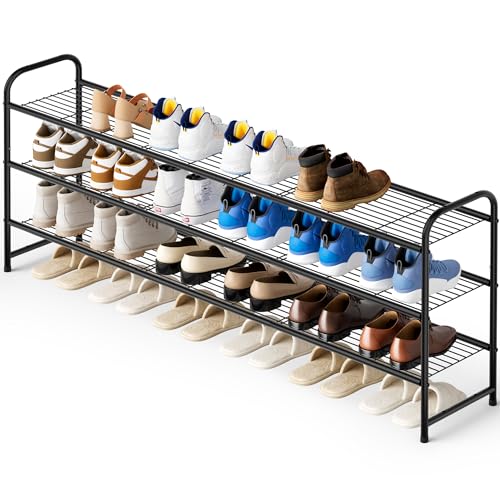
This metal shoe rack is designed for closet floors with three long tiers. It holds up to 24 pairs of shoes, making it ideal for households with multiple footwear types, including men’s sneakers and women’s boots. The 8-inch shelf height provides ample space for boots, snow boots, and rain boots, while the sturdy frame resists rust and deformation.
Best for: households needing high-capacity storage for mixed footwear, especially boots and daily wear. Choose this if you want a long, low-profile rack that stays sturdy under weight.
Limitation: It relies on a metal grid design; ensure you have level flooring for maximum stability.
Kitsure 3-Tier Non-Woven Shoe Rack

This three-tier Kitsure unit uses metal tubes with a plastic frame paired with non-woven fabric shelves. The fabric shelves protect footwear from scuffs and dust, while the design is easy to assemble tool-free. With wide tiers, it supports sneakers, heels, and slippers, and the system can be tailored with straightforward step-by-step guidance.
Best for: shoppers prioritizing lightweight, breathable storage and simple assembly. Better for apartments or entryways where dust control and quick setup matter.
Caution: Fabric shelves may sag slightly under heavy, dense pairs; ensure even distribution of weight across tiers.
Aokeyee 2-Pack Foldable Shoe Organizer

Two-pack foldable organizers with adjustable dividers and a clear cover provide versatile storage for up to 16-32 pairs, depending on how you configure. The polypropylene-based build adds durability, and the foldable design saves space when not in use. This option works well for seasonal storage or for reorganizing a cluttered closet.
Best for: households that need flexible, compact storage that can be stowed when not in use. Choose this if you want movable dividers and clear visibility.
Limitation: Foldable units may be less rigid than metal shelves under heavy daily wear; consider pairing with a rigid base if placed in high-traffic zones.
AOODA Long 2-Tier Metal Rack

AOODA’s long two-tier unit packs 18 pairs of shoes across wide shelves, with an 8-inch tier height to accommodate boots and heels. The anti-rust metal pipes and wired grid offer stable support and an easy-to-clean surface, making it a solid choice for entryways, bedrooms, or garages where space needs to be organized without sagging.
Best for: users who want a long, sturdy rack that can handle taller footwear and frequent use. Choose this if you value stability and a design that remains clean with minimal upkeep.
Limitation: It is a two-tier system, so total capacity is lower than longer multi-tier racks; consider vertical stacking or pairing with another unit if you have extensive footwear.
Onlyeasy Under Bed Shoe Storage Organizer (Set of 2)
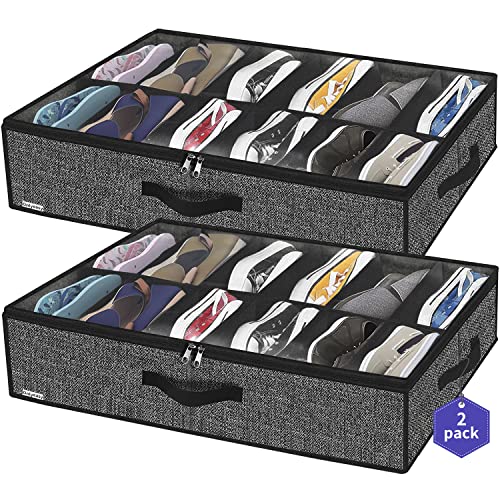
This under-bed storage set provides large capacity while staying out of sight. Each unit stores up to 12-24 pairs, depending on style, with a transparent window for quick identification. The fabric construction and foldable design maximize space efficiency in tight bedrooms or shared closets.
Best for: homes needing hidden shoe storage that preserves floor space and reduces dust exposure. Choose this if under-bed access is convenient and you want to keep shoes out of sight.
Limitation: Under-bed units are less accessible than floor-standing racks; retrieve frequently used pairs more often from a standing organizer.
Kitsure Extra-Long 3-Tier Shoe Rack

An extended 39-inch, three-tier system designed for front doors and entryways. Extra-wide storage provides room for more shoes per tier, with each tier supporting multiple pairs. The rack features a robust construction with a water-repellent and rust-proof design to withstand daily use and occasional cleaning.
Best for: spaces that demand extra-wide organization with room to store several pairs per tier. Choose this if you need maximum per-tier capacity without sacrificing stability.
Limitation: Longer units require more horizontal space; ensure you have adequate room for safe placement in high-traffic areas.
Kitsure 27.6-Inch Closet Shoe Rack

This compact Kitsure model focuses on space-saving design while providing solid storage for a daily footwear collection. It uses thickened metal tubes and rust-resistant fabric shelves to hold sneakers, flats, and heels with cleanliness and ease of maintenance in mind.
Best for: buyers needing a sturdy, compact rack for small foyers or dorms. Choose this if floor space is limited but you still want dependable organization.
Limitation: Smaller footprint means lower total capacity; pair with another unit if you have a larger shoe collection.
Buying Guide: How To Choose The Right Closet Floor Shoe Storage
- Capacity needs: Count the number of shoes you own and plan for future acquisitions. Look at per-tier capacity and total shelf length to avoid overcrowding.
- Space and footprint: Measure your closet floor, entryway, or bedroom area. Long, low racks work well along walls; tall, stackable units maximize vertical space.
- Material and durability: Metal frames provide stability and long-term use; fabric or non-woven shelves are lighter but may sag under heavy weight.
- Boot and shoe types: If you store tall boots or snow boots, ensure shelf height is at least 8 inches or more. Wider shelves help with bulky footwear.
- Assembly and maintenance: Tool-free assembly is convenient for frequent relocations. Consider ease of cleaning and the ability to wipe down surfaces.
- Accessibility: Floor-standing racks offer quick access, while under-bed organizers save space but require bending or lifting to reach shoes.
- Versatility: Some racks are stackable or detachable, enabling you to reconfigure for changing storage needs or room layouts.
Frequently Asked Questions
- What is the best closet floor shoe storage for small apartments? A compact 2- to 3-tier unit with fabric shelves and a small footprint.
- Should I choose metal or fabric shelves? Metal is typically more durable; fabric shelves save weight and are easier to move.
- How high should shoe shelves be for boots? Aim for at least 8 inches of clearance per shelf to accommodate knee-high boots.
- Is it better to buy a single large rack or multiple smaller ones? For flexible layouts, multiple smaller units can be arranged to fit irregular spaces.
- Can these racks store other items besides shoes? Some units offer extra space for accessories, small bags, or seasonal items in gaps between tiers.
- Do these shoe racks require tools to assemble? Many options advertise tool-free assembly; confirm parts align with your space before purchase.