Instant water heaters provide on-demand hot water at the tap, kitchen sink, or under-sink setup. This guide highlights top-rated models suitable for American homes, focusing on reliability, safety features, energy efficiency, and space-saving design. Each product section includes a concise overview, key features, and practical considerations to help you compare options quickly and make an informed choice.
Summary of selected products:
| Product | Brand | Type | Power | Notes |
|---|---|---|---|---|
| ThermoMate 3500W | thermomate | Under-sink electric tankless | 3500W | Self-modulating, temperature display |
| xwdzswgs 3000W | xwdzswgs | Under-sink electric tankless | 3000W | LED display, adjustable temps |
| Rheem 6.5kW | Rheem | Point-of-use tankless | 6.5kW | 1-degree temp control |
| SBPKMARSCT 3000W | SBPKMARSCT | Under-sink tankless | 3000W | Compact, high flow control |
| DURRENSA 2.5 Gal | DURRENSA | Mini-tank under-sink | 1440W | Compact footprint |
ThermoMate 3500W Tankless Under-Sink Heater

Instant Sink Hot Water is provided by a 3500W heating system, delivering hot water within seconds at the faucet. Temperature adjustment ranges from 86°F to 131°F, with flow rates between 0.4 GPM and 0.66 GPM. It must be hard-wired (no plug) and operates on 110-120 volts. A self-modulating power feature adjusts energy use as inlet temperature and flow change, helping to prevent overheating. The unit uses a cast aluminum heating element separated from the water line to minimize scale, corrosion, and mineral buildup, with SUS 304 stainless steel water tubes for durability.
Key considerations: ideal for small sinks or point-of-use installations, where space is limited and high-volume showers aren’t required. The lack of a plug means permanent wiring is necessary, which may influence installation complexity and local electrical codes. Efficiency is enhanced by the anti-scaling design, but maintain proper water flow to achieve consistent output temperatures.
xwdzswgs 3000W Under Sink Water Heater

This 110V, 3000W unit delivers instant hot water with a compact, efficient design. An LED display shows temperature and status, and the unit supports Fahrenheit or Celsius modes. It can raise water by approximately 82°F at 0.3 GPM to 131°F at 0.5 GPM, enabling on-demand hot water without preheating. Safety features include water-electric isolation, IPX4 waterproofing, leakage protection, dry-boil protection, and automatic power-off during overheating or inactivity. Note that shower use typically requires higher flow (≥1.8 GPM).
Rheem 6.5kW 240V Point-of-Use

Rheem’s 6.5kW point-of-use tankless heater provides continuous hot water with precise temperature control within one degree of the selected setting. Its compact size makes it 90% smaller than traditional tank heaters, making it suitable for point-of-use installations where space is at a premium. The unit emphasizes consistent performance and efficient operation, delivering reliable hot water when needed without a whole-house heating solution.
SBPKMARSCT 110V 3000W Under Sink Heater
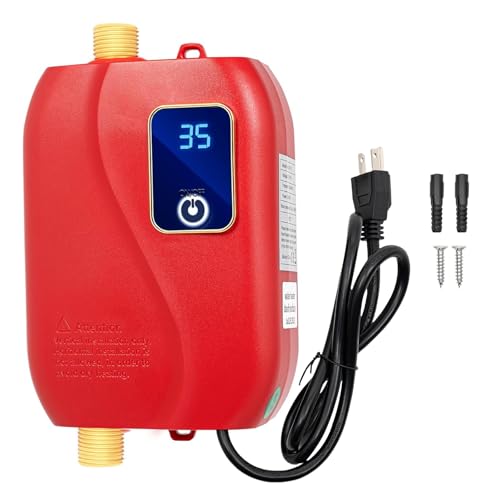
Equipped with 3000W output, this under-sink heater provides rapid hot water with a clear temperature readout and a Fahrenheit/Celsius toggle for different user preferences. The unit highlights a compact form factor and efficient performance, with a focus on keeping systems safe via protective features related to electrical and water isolation, leak protection, and overheat safeguards. It’s designed for under-sink or small-space installations rather than whole-house use.
DURRENSA 2.5-Gallon Mini-Tank Under Sink
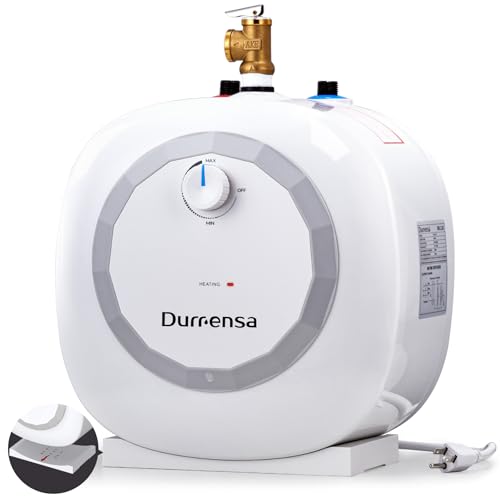
This 2.5-gallon mini-tank under-sink heater offers instant hot water at the point of use. It uses a glass-lined tank design with a compact footprint, making it suitable for tight spaces in kitchens, RVs, or small bathrooms. The unit plugs into a standard 120V outlet, avoiding the need for complex electrical work. Energy efficiency stems from insulation and efficient heat retention, though it’s best suited for tasks like handwashing or dish duty rather than high-flow showering.
Buying Guide: Key Purchase Considerations
When selecting an instant water heater, consider the following factors to match your needs and home setup:
- Flow rate and temperature: Check the GPM rating and the temperature rise at your typical water flow. Higher flow requires higher wattage or multiple units; for showers, you’ll need models designed for higher flow or dedicated shower-friendly configurations.
- Electrical requirements: Many models require hard-wiring and 110-120V or 240V connections. Confirm your electrical panel capacity and local codes, and determine if a qualified electrician is needed for installation.
- Space and installation: Under-sink and point-of-use heaters save space but require proper mounting and clearances. If wall space or cabinetry is limited, consider compact units with vertical or wall-mounted designs.
- Safety features: Look for IP ratings (IPX4 or better), leak protection, dry-boil protection, thermal cutoffs, and automatic power-off states. Multi-protection design reduces risk and extends equipment life.
- Temperature control: Models with digital displays or knob controls help you dial in precise temperatures. Check whether Fahrenheit or Celsius units are supported and how easily you can adjust settings.
- Material durability: Stainless steel components and corrosion-resistant fittings improve longevity in some water conditions. A glass-lined tank or stainless heat exchanger can reduce mineral buildup.
- Energy efficiency: Self-modulating or adaptive power management can reduce standby losses and save energy, especially in homes with variable hot water demands.
- Maintenance: Access to parts, ease of cleaning, and the availability of replacement elements or seals should factor into long-term ownership costs.
- Application scope: Determine whether the unit is appropriate for single-use tasks (kitchen sink or bathroom sink) or if you need a dedicated solution for a small apartment or RV setup.
Additional Considerations and Comparisons
- Performance vs. space: Higher wattage models deliver hotter water faster but require more electrical capacity; smaller units save space but may limit simultaneous usage.
- Installation complexity: Some units are plug-in and easier to install, while others require hard wiring or professional setup due to power and safety requirements.
- Durability and warranty: Some brands emphasize copper or stainless components and corrosion resistance, which can influence reliability over time. Review warranty details for coverage on heating elements and components.
- Water quality impact: Hard water can accelerate mineral buildup. Units designed with anti-scale elements or separate heating lines help mitigate this issue.
- Target use case: Point-of-use heaters are ideal for single fixtures; multi-fixture needs may require multiple units or a larger system designed for higher flow.