Electric water heaters offer reliable, on-demand hot water with compact footprints and energy-efficient operation. This guide highlights five top electric models—from space-saving mini-tanks to robust tankless systems—that balance performance with installation practicality. Each product section covers capacity, temperature control, installation considerations, and reliability to help homeowners pick a model that fits hot-water demand, space, and electrical service. A quick, compact summary table follows to compare core specs at a glance.
| Product | Type | Key Capability |
|---|---|---|
| Rheem 18kW | Tankless | Up to 4.4 GPM |
| EcoSmart ECO 11 | Tankless | Self-modulating technology |
| Rheem RTEX-24 | Tankless | High-capacity for whole home |
| Orbek 18kW | Tankless | Up to 4.17 GPM |
| BOSCH Tronic 3000 | Mini-Tank | 2.5 gal, 120V |
Rheem 18kW Tankless Electric Water Heater
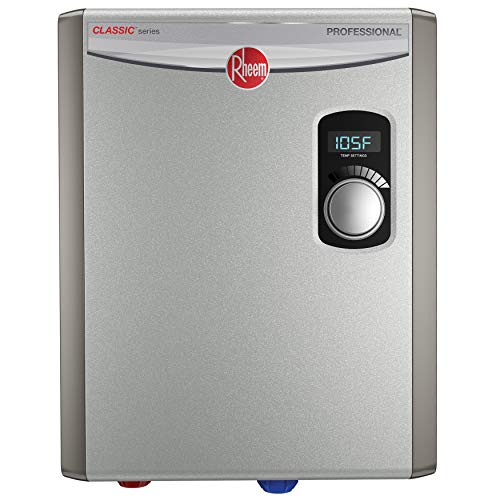
Rheem’s 18kW tankless model provides on-demand hot water with an external digital thermostat and LED display for precise temperature control. The unit uses self-modulating technology to adjust power according to demand, improving efficiency and reducing energy waste during periods of low usage. Copper immersion heating elements are durable and field serviceable, supporting easier maintenance without replacing the entire unit. With a maximum flow rate up to 4.4 GPM, this model accommodates typical single- or dual-fixture use in many homes, especially where space is limited and electrical service can support a high-demand heater.
Installation considerations focus on a reliable 240V circuit and proximity to plumbing lines. This Rheem model is well-suited for apartments or small houses where space is at a premium and full-size tanks are impractical. Because the unit can modulate power, it adapts to fluctuating hot-water demand without oversizing the circuit. For buyers seeking predictable performance and straightforward serviceability, this option offers an effective balance between capacity, footprint, and ease of maintenance.
EcoSmart ECO 11 Electric Tankless Water Heater

EcoSmart ECO 11 is a compact, 13 kW tankless electric heater that delivers on-demand hot water. Its patented self-modulating technology heats only the water that flows, reducing energy use while maintaining steady output. Temperature is kept within about one degree of the target via continuous monitoring of incoming water temperature and controlled flow. On 240V, the unit draws approximately 54 A, yet its footprint is modest—roughly 11.5 x 8 x 3.75 inches—allowing wall mounting or point-of-use installation and helping conserve space in tight closets or utility areas.
Designed for energy efficiency and space savings, EcoSmart emphasizes that it only heats water when needed, minimizing standby losses common with storage tanks. Its small size and efficiency appeal to homes seeking a balance between hot-water reliability and reduced energy bills. Prospective buyers should confirm electrical panel capacity and ensure proper clearances for safe operation, especially in retrofit projects where service upgrades may be necessary.
Rheem RTEX-24 24kW Tankless Electric Water Heater
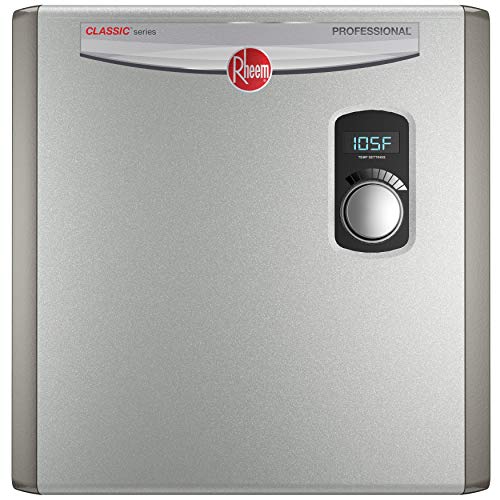
Rheem RTEX-24 is a robust 24kW tankless option designed for higher hot-water demand. It requires a strong electrical setup: three 40-amp double-pole breakers and a 200-amp service recommended, with ample space in the breaker panel for installation. The unit provides continuous hot water, though actual flow depends on inlet water temperature and geographic location. It features an ON/OFF dial control and a digital temperature display, allowing precise adjustments in 1-degree increments from 80 to 140 degrees Fahrenheit, enabling tailored comfort for homes with varying climate conditions.
Choosing this model involves ensuring adequate electrical service and compatible plumbing. It is well-suited for larger homes or environments where multiple fixtures demand hot water simultaneously. While installation may be more intensive, the payoff is higher capacity and reliable performance across a broader temperature range, making it a strong option for households with significant simultaneous hot-water needs.
Orbek 18kW Tankless Electric Water Heater
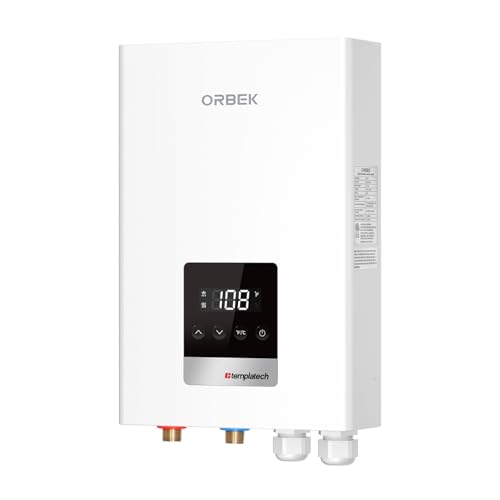
Orbek’s 18kW tankless heater targets mid-to-high demand homes with efficient on-demand hot water. It requires two 240V/40A two-pole breakers, plus two runs of 8 AWG wire and 3/4″ NPT water connections, ensuring a solid, code-compliant installation. The unit delivers up to 4.17 GPM and can serve two to three fixtures simultaneously, depending on inlet temperature. Its design emphasizes energy efficiency through water-electricity separation, which can help reduce mineral buildup and corrosion while providing rapid hot water delivery in seconds.
Installers should verify electrical service capacity and proper clearance in the electrical panel. This model is ideal for homes needing dependable hot water at higher flow rates without expanding storage capacity. When weighing options, balance peak demand, climate and inlet temperature, and available electrical service to determine whether this Orbek unit meets your household needs.
BOSCH Tronic 3000 Mini-Tank Water Heater
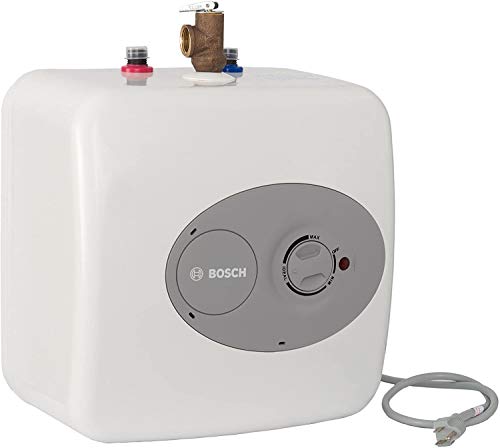
BOSCH Tronic 3000 Mini-Tank ES2.5 offers a compact 2.5-gallon point-of-use solution designed to deliver hot water exactly where it’s needed. With 98% thermal efficiency, this 120-volt system uses a 12-amp supply and a 36-37 inch cord, facilitating flexible placement under a sink or in a cabinet without complex installation. Its glass-lined tank and compact footprint make it ideal for apartments, offices, or dedicated fixtures where space optimization matters. While it cannot supply high-demand concurrent hot water, it excels as a quick, independent heater for single-use scenarios.
Best uses include small spaces or fixtures that require rapid hot water without tying into a larger system. When evaluating options, consider whether you need a full-home tankless solution or a dedicated mini-tank for a specific sink or appliance. Space, electrical service, and water-use patterns should guide the final choice for reliable, on-demand hot water.
Buying Guide
Assess Your Hot Water Demand
Start by listing the fixtures that will draw hot water at the same time. Typical draws include showers, sinks, dishwashers, and laundry. Estimate combined flow in gallons per minute (GPM) to determine whether a tankless unit with higher GPM is needed or a smaller mini-tank will suffice. In colder climates, incoming water is cooler, reducing effective GPM; plan for this in your calculations to avoid depleting hot water during peak usage.
Tankless Or Mini-Tank: Pros And Cons
Tankless models deliver endless hot water and save space but require strong electrical service and precise sizing. They excel in homes with higher demand and where you can upgrade electrical panels. Mini-tanks are straightforward to install, ideal for point-of-use or small spaces, and provide quick hot water at a single location. However, they hold limited hot water and may need multiple units for larger households.
Electrical Service And Installation
Many high-capacity electric water heaters demand substantial electrical service. Common requirements include multiple 40-amp circuits for tankless units and a robust main service (often 200 amps or more). Verify available amperage and panel space before purchasing. Some homes may require panel upgrades or professional re-wiring. Electric heater installation should comply with local codes and may necessitate a licensed electrician for safe, compliant operation.
Space, Mounting, And Plumbing
Assess available space for mounting and access to water connections. Tankless units are usually wall-mounted near plumbing and electrical lines, while mini-tanks must be placed where warm water is needed and can be accessed for maintenance. Consider whether extra clearances or protective housing are needed in garages or closets. For point-of-use models, ensure proper drainage and venting considerations where applicable to prevent condensation and overheating.
Temperature Control, Safety, And Reliability
Look for models with precise digital thermostats, clear temperature readouts, and safety features such as overheat protection and anti-scaling design. Self-modulating technology improves efficiency for many tankless units. Reliability hinges on durable components (like copper heating elements), ease of service, and warranty coverage. A strong warranty and readily available replacement parts reduce long-term ownership costs and downtime.
Efficiency, Warranty, And Support
Energy-efficient models can lower operating costs, especially in colder climates where more energy is needed to reach desired temperatures. Compare warranties, part availability, and customer support from the brand. Higher initial cost can be offset by long-term energy savings and robust service networks. When choosing among the five options, align your decision with actual hot-water needs, electrical readiness, and the level of ongoing support you require.
Quick Reference Comparison
| Model | Type | Voltage / Power | Best For | Key Benefit |
|---|---|---|---|---|
| Rheem 18kW | Tankless | 240V / 18kW | Higher-demand, compact spaces | LED thermostat, self-modulating |
| EcoSmart ECO 11 | Tankless | 240V / 13kW | Small spaces, point-of-use | Self-modulating, ultra-compact |
| Rheem RTEX-24 | Tankless | 240V / 24kW | Whole-home, larger homes | High capacity, precise control |
| Orbek 18kW | Tankless | 240V / 18kW | Mid-to-high demand, multi-fixture | Fast hot water, efficient |
| BOSCH Tronic 3000 | Mini-Tank | 120V / 2.5 gal | Point-of-use, under-sink | Easy install, high efficiency |