Answering the question of which water-based wood sealer to choose, these top picks balance quick drying, low odor, durable protection, and easy cleanup. They are suitable for different buyers: DIY hobbyists, homeowners tackling outdoor decks, and professionals sealing furniture or cabinets. The list below highlights five strong options with clear reasons to choose each one and a practical caveat where applicable.
| Product | Best For | Finish Type | Notes |
|---|---|---|---|
| Varathane Water-Based Crystal-Clear Ultimate Polyurethane (Satin, Half Pint) | Indoor furniture, cabinets, trim | Satin | Fast dry; easy cleanup |
| Seal-Once Marine (1 Gallon) | Outdoor wood near water | Clear, water-based protective | Marine-grade protection; UV-stable |
| Varathane Water-Based Crystal-Clear Ultimate Polyurethane (Matte, Quart) | Indoor wood projects with a matte look | Matte | High coverage; quick recoat |
| Thompson’s Clear Wood Sealer (1 Gallon) | General wood sealing and weather protection | Clear | Multi-use for wood and masonry |
| Seal-Once Nano+Poly (1 Gallon) | Outdoor decks, fences, log homes | Gloss | Penetrating, ultra-low VOC |
Varathane Water-Based Crystal-Clear Ultimate Polyurethane — Satin

Best for indoor furniture, windows, cabinets, and trim where a light, satin finish is preferred. This water-based polyurethane dries fast and cleans up with soap and water, reducing downtime during re-staining or refinishing projects. It dries to the touch in about 30 minutes and covers up to roughly 31.25 sq. ft. per coat, enabling a quicker completion of small to mid-size projects. Recoating is possible after about two hours, making it convenient for layered protection on frequently used items such as coffee tables or kitchen cabinets.
Who it’s best for: homeowners seeking a clear, low-odor finish that preserves the natural color of wood while providing durable surface protection. It’s especially suitable for indoor wood pieces that are handled regularly, where a satin sheen helps disguise small imperfections.
Limitations: as with most water-based finishes, it’s best applied in moderate temperatures and proper ventilation. While durable, high-traffic surfaces might benefit from additional coats, and long-term outdoor exposure is not advised for indoor-only products.
Key considerations
- Finish option: Satin provides a soft, non-glossy look that hides minor surface flaws.
- Dry time: Fast dry enables quick project turnaround.
- Surface type: Ideal for indoor wood surfaces that require a clear protective layer.
Seal-Once Marine — Penetrating Water-Based Sealer

Best for outdoor wood near water, docks, decks, piers, and retaining walls where moisture exposure is high. This marine-grade, water-based sealer creates a UV-stable coating that resists saltwater spray and general water damage. It’s designed to protect wood in high-moisture environments and is noted as non-hazardous to aquatic life, making it a practical choice for waterfront properties. Do not rely on it for certain hardwoods such as ipe, mahogany, or teak, where different sealing needs may apply.
Who it’s best for: outdoor enthusiasts and homeowners with outdoor structures exposed to constant moisture or salt air who want a water-based option with marine-grade protection.
Limitations: not suitable for all hardwood species; verify wood type before application to ensure compatibility. Application requires attention to ventilation and moisture conditions for best results.
Why choose this
- Marine-grade protection from moisture and UV exposure.
- Low odor and water-based, easing indoor use in adjacent spaces after outdoor projects.
- Combines sealing, waterproofing, and color protection in one step for certain outdoor installations.
Varathane Water-Based Crystal-Clear Ultimate Polyurethane — Matte (Quart)

This matte-finish polyurethane is well suited for indoor wood projects that require a low-sheen look. The water-based formula dries quickly and cleans up with soap and water. It dries to the touch in about 30 minutes and provides substantial coverage per coat (up to 125 sq. ft.), enabling rapid completion of larger indoor pieces such as cabinets, trim, or tabletops while preserving the natural wood grain with a subtle, non-glossy finish.
Who it’s best for: DIYers and interior remodelers who want a durable, matte coating without the warmth of an amber tone often seen in oil-based finishes. It’s a practical choice for modern kitchens and living spaces where a crisp, contemporary look is desired.
Caution: Matte finishes may reveal surface texture or dust more readily than glossier options during drying, so clean workpieces thoroughly before application.
Key considerations
- Finish: Matte to minimize shine; good for modern interiors.
- Coverage: High per-coat area helps reduce the number of applications on larger projects.
- Cleanup: Soap and water cleanup simplifies maintenance.
Thompson’s WaterSeal Clear Wood Sealer
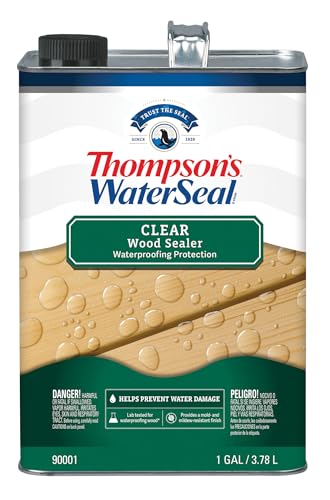
Best for general wood sealing, with versatility for wood, brick, and concrete surfaces. Thompson’s Clear Wood Sealer protects against water infiltration while maintaining natural color. It’s presented as a broad-use sealer suitable for exterior wood projects where a transparent layer is desired to preserve wood tone and texture. It can be used on various substrates, making it a practical choice for mixed-material projects such as porches or outdoor furniture that combine wood with other elements.
Who it’s best for: homeowners seeking a single, clear sealer that can be used on multiple exterior surfaces, including wood and masonry, to reduce the need for multiple products.
Limitation: not a dedicated high-performance outdoor deck coating; for prolonged heavy exposure, consider a product specifically formulated for decks or logs where enhanced resistance is required.
Best-use guidance
- Exterior wood projects benefit from clear sealing without added color.
- Best applied in dry, mild-weather windows to ensure proper curing.
- As a multipurpose sealer, verify compatibility with other materials on the project.
Seal-Once Nano+Poly — Penetrating Wood Sealer

Best for decks, fences, log homes, and exterior wood where a penetrating, water-based polyurethane finish is desired. Nano+Poly combines water-based polyurethane protection with deep penetration to form a water-resistant shield around wood fibers. It is ultra-low VOC and suitable for outdoor surfaces, including areas around landscaping and water features. The product claims to be appropriate for a variety of exterior wood projects and can improve the long-term life of outdoor flooring and furniture.
Who it’s best for: outdoor-focused buyers who want a penetrating sealant that guards against the elements while keeping odor and VOCs low.
Limitation: as with most penetrating sealers, it may require multiple coats for optimal protection on high-wear surfaces, and color or finish options are more limited than some topcoats.
Key considerations
- Penetrating protection helps prevent surface cracking and water damage.
- Ultra-low VOC for safer application around people and vegetation.
- Best used on exterior wood where moisture is a concern.
Buying Guide
What’s the difference between water-based sealers and other options?
Water-based sealers cure through water evaporation and harden without heavy solvents. They typically dry faster, have lower odor, and are easier to clean up, making them suitable for indoor projects and spaces with limited ventilation. Compare to oil-based finishes, which often provide deeper amber hues and sometimes longer curing times.
Finish choice matters: satin, matte, gloss
Satin hides minor scratches well and provides a soft shine, ideal for furniture and trim. Matte finishes offer a modern appearance with very low reflectivity but can highlight surface texture. Gloss and high-gloss seals give a brighter look and are easier to wipe clean but show imperfections more readily.
Indoor vs outdoor use
Indoor sealers focus on aesthetics and easy cleaning, with less moisture exposure. Outdoor products emphasize water resistance, UV protection, and durability against weather and humidity. When choosing, match the product to environmental exposure and wood type.
VOC levels and safety
Lower VOC formulations reduce odor and improve air quality during and after application. Ultra-low VOC options are preferable for spaces with children, pets, or limited ventilation. Always follow manufacturer instructions for ventilation and safety gear.
Application and maintenance tips
- Prepare the surface: clean and sand as needed for optimal adhesion.
- Apply in thin, even coats; avoid puddling on edges and end grains.
- Allow proper drying and curing between coats as recommended by the product.
- Lightly sand between coats for a smoother finish when required.
FAQ
- What is the fastest-drying water-based polyurethane? Most options offer touch-dry times around 30 minutes, with recoat windows of 2 hours in typical indoor conditions.
- Can water-based sealers be used on outdoor wood? Yes, several products are designed for exterior use, with varying levels of UV resistance and moisture protection. Always check the label for outdoor suitability.
- Do water-based sealers alter wood color? Some sealers are clear, while others may impart a slight tint; matte or satin finishes tend to appear closer to natural color.
- Are low-VOC products less effective? Not necessarily; many low-VOC sealers provide strong protection while reducing odor and emissions. Performance often depends on the specific formulation and application conditions.
- Is it necessary to seal every surface? Sealing is recommended for wood surfaces exposed to moisture, wear, or staining. Unsealed wood is prone to water damage and staining over time.
- What is the best finish for high-traffic indoor surfaces? A durable water-based polyurethane with multiple coats and a smooth finish is commonly preferred for desks, tables, and cabinets.