When cooling spaces with horizontal sliding windows, choosing a window fan that securely fits and directs airflow effectively is essential. The following five options are highly compatible with sliding or horizontal window setups, offering adjustable widths, multiple speeds, reversible airflow, and convenient controls. Each model is designed to mount securely in sliding windows, with expanders and stabilizers to reduce gaps and drafts. Compare installation options, airflow features, and control features to find the best fit for bedrooms, kitchens, living rooms, or home offices.
| Product | Brand | Key Feature |
|---|---|---|
| Shinic Twin Window Fan: Rotatable Heads | shinic | 180°/90° rotatable dual heads; auto-locking expanders; width 21.65″–33.27″; horizontal or vertical mounting |
| BLACK+DECKER Dual Window Fan For Sliding Windows | BLACK+DECKER | 2 speeds; twin heads; accordion expanders; fits sliding windows up to 33″ W |
| Shinic Window Fan With Reversible Airflow: Remote | shinic | Remote control; three modes; three speeds; width adjustable 23.5″–37″; ETL certified |
| Shinic Twin Window Fan: Reversible Airflow | shinic | Three modes; three speeds; thermostat control; expands 23.8″–37″ |
| Vornado Transom Window Fan: Reversible Exhaust | Vornado | 4 speeds; reversible exhaust; low-profile fit for 26″–40″ wide openings |
Shinic Twin Window Fan: Rotatable Heads

This 9″ twin window fan features two heads that rotate to 180° and 90°, enabling precise airflow direction across sliding or vertically mounted windows. Two speeds are controlled by a simple knob, delivering quick cooling or ongoing air circulation. The unit uses auto-locking expanders plus two rigid expanders to adjust from 21.65″ to 33.27″, providing a secure fit for most horizontal sliding windows. Its versatility supports three modes: dual cooling, dual exhaust, or intake plus exhaust, allowing customized ventilation for kitchens, bedrooms, or offices.
BLACK+DECKER Dual Window Fan For Sliding Windows

BLACK+DECKER’s 9″ dual window fan provides twin heads with a mechanical dial for two speeds, designed explicitly for sliding windows up to 33″ wide. It includes accordion expanders to secure the unit in place and removable legs for flexible placement. The reversible twin fans allow you to pull fresh air in or push stale air out, enabling simple room ventilation adjustments. The combination of speed control, secure fit, and sliding-window compatibility makes it a practical choice for bedrooms, kitchens, and living spaces.
Shinic Window Fan With Reversible Airflow: Remote

Equipped with a full remote, this Shinic window fan supports three modes of operation—cooling, exhausting, or air exchange—paired with three speed settings (Low, Medium, High). The width is adjustable from 23.5″ to 37″, suitable for a variety of sliding or horizontal window openings. The remote control enables convenient operation from across the room, ideal for bedrooms, kitchens, or home offices where quick airflow adjustments are desirable without manual interaction at the unit.
Shinic Twin Window Fan: Reversible Airflow

This Shinic model features three cooling modes—draw in cool air, exhaust hot air, or exchange air with the outside—paired with three wind speeds. A programmable thermostat helps maintain a preferred room temperature by automatically cycling the fan on or off within a 60°F–85°F range. The 23.8″–37″ expandable width and ETL certification provide reliable performance for sliding windows, kitchens, or home offices where continuous air adjustment is needed.
Vornado Transom Window Fan: Reversible Exhaust
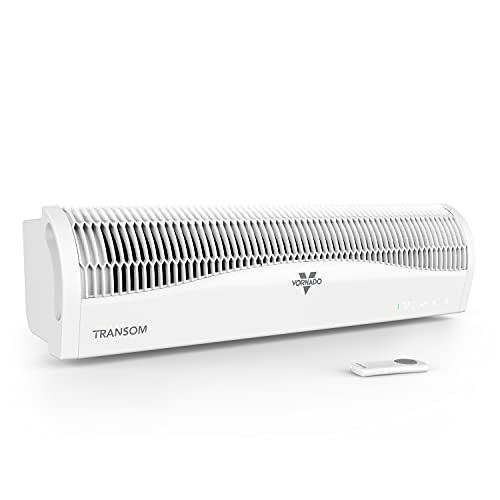
Vornado’s Transom window fan is a compact, low-profile option designed for single- to larger-hung window openings. It offers four speeds and an electronically reversible chamber, allowing simple switching between intake and exhaust to optimize cross-ventilation. The Soft-fit foam blocks provide a secure seal in windows between 26″ and 40″ wide, reducing drafts. This model is well-suited for rooms where a quiet, efficient window fan with a durable build and remote-like control is valued for horizontal or sliding window setups.
Buying Guide
Key Fit Considerations for Sliding Windows
Look for adjustable expanders, auto-locking mechanisms, and rigid panels that secure the unit in place in sliding windows. Expanders should accommodate a range wide enough for your window width, without leaving gaps that let air leak in. Horizontal installation should be possible or easily convertible, with mounting hardware that minimizes wobble. For sliding configurations, a flatter, low-profile body helps it fit beside frames and screens while offering clear airflow paths.
Airflow Options and Controls
Choosing between reversible airflow, multiple speeds, and remote control affects daily comfort. Units with reversible exhaust let you vent hot air without opening the window fully, while multiple speeds let you tailor the breeze for different rooms and times of day. Remote controls add convenience for adjusting airflow from bed or a desk, especially when the fan is mounted in a high position or hard-to-reach area.
Durability, Materials, and Maintenance
Fire- and ETL-certifications indicate safety and reliability. Look for corrosion-resistant grilles and housings, easy-to-clean screens, and removable drainable parts for easier maintenance. Fans with stable expanders and secure locking systems reduce wear and rattling. Regular cleaning of grills and screens helps maintain airflow efficiency and prolongs the fan’s life in kitchens or bathrooms where moisture is higher.
Installation and Compatibility
Consider whether the fan supports horizontal (sliding) and vertical mounting, as well as the window’s depth and sill clearance. Some models include removable legs or a low-profile design to fit under window shades; others rely on expanders and rigid panels. If your window is particularly wide or narrow, ensure the product’s adjustable range covers your exact opening, and verify that the included hardware supports secure installation in a sliding configuration.
Energy Use and Noise Level
Window fans typically consume modest power, but models with multiple speeds and larger blades can draw more current. If you’re sensitive to noise, check decibel ratings or customer reviews for real-world performance. In spaces like bedrooms or home offices, a quieter option with a robust airflow profile balances comfort and energy use without becoming disruptive.