Choosing a propane tankless water heater can improve efficiency and ensure on-demand hot water across multiple fixtures. This guide highlights five top options suitable for whole-house setups, balancing flow, efficiency, and outdoor or indoor installation. Each model is evaluated on capacity, reliability, and ease of use to help you compare at a glance.
| Product | BTU | Max GPM | Install Type | Key Feature |
|---|---|---|---|---|
| APUS 140k Indoor | 140,000 | 6.8 | Indoor | Instant hot water with zero cold water delay and booster pump |
| RIWORY 102k Indoor | 102,000 | 4.3 | Indoor | 4-stage energy-saving combustion + freeze protection |
| APUS 190k Outdoor | 190,000 | 8.1 | Outdoor | High flow for whole-house use with WiFi and remote control |
| Westinghouse 180k Outdoor | 180,000 | 8.1 | Outdoor | On-demand efficiency with remote control and stable temperature |
| Rinnai RX199iN | 199,000 | 11.1 | Indoor/Outdoor | Versa Vent, Smart Sense control, up to 11.1 GPM |
Below are five detailed product sections to help you compare features and suitability for your home. Each section includes our concise take on capacity, control, and installation considerations.
APUS 140,000 BTU Indoor Tankless Water Heater
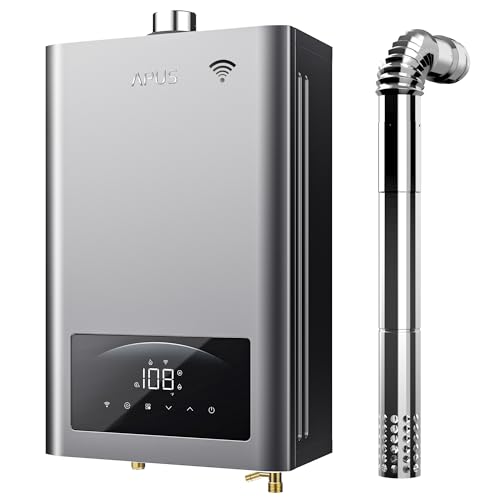
This APUS model delivers a 140,000 BTU burner paired with an oxygen-free copper heat exchanger for durable performance. It features APUS’s Zero Cold Water Tech, delivering hot water in about 1 second and reducing wait time for on-demand comfort. A built-in booster pump can increase flow by up to 130%, achieving as much as 6.8 GPM, suitable for multiple fixtures simultaneously while maintaining steady temperatures.
Considerations: Best for homes where indoor installation is feasible and where instant hot water and strong simultaneous-use performance are priorities. Expect a smart cycle that emphasizes eco-friendly operation and continuous supply without noticeable temperature drops.
RIWORY 102k Indoor Tankless Water Heater

RIWORY’s 102,000 BTU unit provides up to 4.3 GPM with intelligent staged combustion for energy efficiency. It includes four-stage combustion technology and antifreeze protection, ensuring reliable hot water even during winter conditions. The system is designed to handle common residential demands for 3–4 water points and offers dependable performance with freeze protection to prevent outages in cold climates.
Considerations: A solid choice for medium-sized homes with moderate simultaneous usage. Pay attention to climate where anti-freeze and wind protection features help avoid heat exchanger freezing and outdoor exposure concerns if installed near exterior lines.
APUS 190,000 BTU Outdoor Tankless Water Heater

This outdoor model packs 190,000 BTU and an impressive 8.1 GPM flow, designed for whole-house on-demand hot water. It supports multiple outlets—up to 3 showers and 2 faucets—while maintaining a minimal minimum flow of 0.79 GPM for reliable operation under lower water pressure. The unit includes WiFi and remote control for convenient temperature adjustments from your phone or controller.
Considerations: Ideal for exterior installation where space is available and where remote management and high flow are desired. Ensure proper clearance for outdoor units and adherence to venting and ventilation requirements as specified by local codes.
Westinghouse 180k Outdoor Tankless Water Heater

Westinghouse delivers 180,000 BTU with up to 8.1 GPM of hot water, suitable for larger homes or higher simultaneous-use scenarios. The unit emphasizes on-demand efficiency and offers a remote control panel for indoor monitoring and adjustment of temperature and status. Its high-power output helps maintain comfortable water temperatures across multiple fixtures with minimal lag.
Considerations: Excellent for homes with higher hot water demands or when you need robust performance outdoors. Verify compatibility with existing gas lines and venting configurations and ensure indoor monitoring is accessible for convenient temperature management.
Rinnai RX199iN Condensing Tankless Water Heater

Rinnai’s RX199iN combines indoor/outdoor versatility with a high 199,000 BTU input and up to 11.1 GPM capacity. The Smart Sense control system supports flexible propane or natural gas operation and Versa Vent compatibility for outdoor installs. Its compact form relative to output helps fit many spaces while delivering high flow for simultaneous fixtures. The unit emphasizes efficiency with a high UEF and built-in features like a Quick Flush for maintenance and a WiFi-connected control module (sold separately).
Considerations: A premium option for larger households or installations requiring high flow and flexible placement. Confirm venting compatibility and whether you plan to integrate the optional control module for remote management.
Buying Guide: Key Purchase Considerations
- Propane capacity and GPM needs: Estimate the number of showers and faucets used simultaneously to pick a unit that comfortably covers peak demand. Higher BTU often correlates with higher GPM, but installation conditions matter.
- Indoor vs outdoor installation: Indoor units save space but require venting and exhaust considerations. Outdoor units simplify venting but demand weatherproofing and corrosion resistance suitable for your climate.
- Temperature control and stability: Look for units with ±1°F temperature accuracy or better, and consider models offering remote or app-based control for convenient adjustments.
- Energy efficiency: Examine the thermal efficiency and UEF ratings to estimate long-term operating costs. Features like staged combustion and anti-freeze protection add reliability in variable climates.
- Installation and maintenance: Some units require professional installation for gas line connections and venting. Check ease of maintenance features, such as flush modes and accessible service panels.
- Smart features and connectivity: WiFi or app control can simplify monitoring and settings, but verify compatibility with your home network and any required accessories.
- Warranty and service: Review warranty duration and what it covers (heat exchanger, parts, labor). Access to local service providers can affect long-term satisfaction.
- Budget and space considerations: Outdoor units may require larger installation clearances and weather protection, while compact indoor models fit smaller utility spaces.
- Code compliance: Ensure the chosen unit meets local gas codes, venting requirements, and any permit needs for propane systems in your area.
Each option listed above presents a distinct balance of capacity, installation flexibility, and modern controls. When selecting a unit for a whole-house setup, align the model’s maximum GPM with your household’s peak hot-water demand, confirm venting and clearance requirements, and plan for future usage patterns such as additional bathrooms or expanded living spaces.