Whole house charcoal water filters provide a simple, effective way to improve water quality across every faucet in a home. This guide highlights carbon-based CTO (chlorine taste and odor) cartridges and complete filter systems that fit common 10-inch housings, helping you choose reliable options for better-tasting water. The selections below emphasize NSF/ANSI certifications, compatible fittings, and practical replacement guidance, so American households can compare performance and maintenance without guesswork.
Summary of selected products:
| Brand | ||
|---|---|---|
| ICEPURE | 1 Micron CTO Filter (Pack of 4) 2.5″ x 10″ | High chlorine reduction; 13,000 gallon capacity; compatible with many 10″ housings |
| Waterdrop | 5-Stage WD-WHF21-PG Whole House System | Comprehensive filtration with carbon and sediment stages; strong flow stability |
| GE | FXWTC Whole House Filter (2-Pack) | NSF-certified reduction of chlorine, sediment, rust; standard 10″ x 2.5″ |
| Brightify | 5 Micron Carbon CTO Filter (10″x2.5″, 4-Pack) | Wide compatibility; high carbon filtration with coconut shell carbon |
| PUREPLUS | 1 Micron CTO Filter 2.5″ x 10″ (4-Pack) | NSF/ANSI 42 certified; 13,000 gallon capacity; BPA-free and EC1935 compliant |
ICEPURE 1 Micron CTO Filter (Pack of 4)
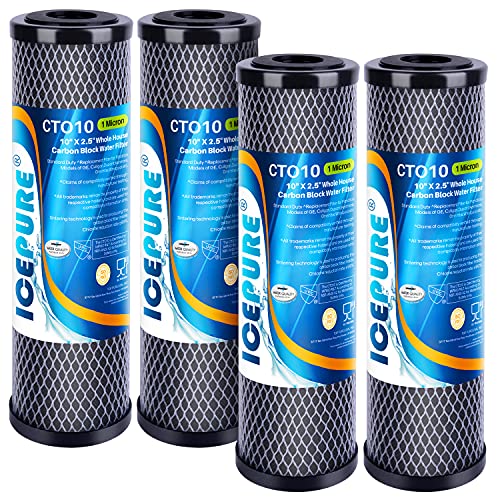
The ICEPURE CTO cartridge is designed for whole-house use with 2.5″ x 10″ housings. It carries NSF/ANSI 42 certification, focusing on chlorine taste and odor reduction to deliver cleaner-tasting water. Built with sintering technology, it targets 99% of chlorine and finer particulates while maintaining a practical replacement cycle. The manufacturer notes a typical lifespan up to 13,000 gallons, with a recommendation to replace every ~6 months depending on water quality. This makes it a strong option for city water lines seeking improved taste and odor without frequent changes.
Key considerations include compatibility with DuPont WFPFC8002 and similar models, plus the pack-of-four format allowing staged replacements. Water quality, water pressure, and household usage will influence actual performance and replacement timing. If your water contains larger particulates or well-water contaminants, you may need additional filtration or pre-filtration to protect the cartridge.
Waterdrop 5-Stage Whole House Filter WD-WHF21-PG

Waterdrop’s system uses a 5-stage filtration approach combining a 10” x 4.5” PP sediment filter with a GAC carbon filter. The GAC is sourced from natural coconut shell, helping to reduce chlorine taste and odor while improving overall water flavor. The sediment stage captures larger particles, contributing to longer overall filter life. The setup is designed for a stable flow and sustained performance under typical US household pressure ranges (25-90 psi). The GAC and PP filters are planned for periodic replacement, with the GAC often swapped every six months and PP every 3-6 months, depending on water quality and usage.
With multiple stage filtration, this option is best for households seeking noticeable taste improvements and broad contaminant reduction beyond chlorine alone. It is compatible with standard fittings and emphasizes a durable housing and food-grade materials. As always, confirm your system’s inlet/outlet sizes and verify local water conditions to optimize replacement schedules and filter selection.
GE FXWTC Whole House Filter (2-Pack)

GE’s FXWTC pair provides a straightforward approach to whole-house filtration with 10″ x 2.5″ cartridges. The filters are designed to reduce chlorine taste and odor, sediment, rust, and other impurities that affect water quality across appliances and fixtures. The product emphasizes compatibility with GXWH04F and GXWH20S systems and standard 10″ x 2.5″ housings, making it easy to replace in many existing setups. The package typically highlights multiple filtration stages and a focus on improving perceived water quality, particularly for households relying on municipal supply.
Considerations include the need for regular replacement every few months for optimal results and ensuring the system’s flow rate meets household demand. The two-filter configuration can be cost-effective for households starting with basic whole-house filtration, but users should plan for periodic maintenance and potential upgrades if water quality is variable.
Brightify 5 Micron Carbon CTO Filter (10×2.5″)
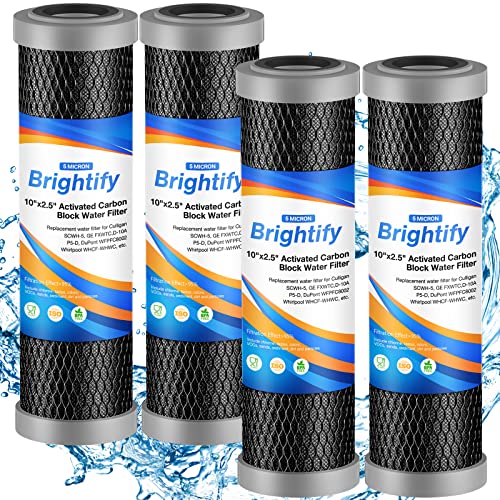
Brightify offers a 4-pack of 10″x2.5″ carbon block cartridges with a 5-micron rating. The filter cartridge is described as 100% activated coconut shell carbon, designed to remove a broad range of sediments, rust, and chlorine taste and odor. The listing notes compatibility with a wide array of standard housings and brands, including DuPont WFPFC8002, GE FXWTC, and Whirlpool models. The emphasis is on safe, reliable filtration for whole-house use, with 5-micron performance providing a balance between sediment removal and flow rate.
Before purchasing, verify your housing compatibility and ensure the unit size matches your existing setup. The 4-pack format is convenient for multi-stage replacement or for households with high water usage. Consider your water quality—if you have very fine particulates or heavy chlorination, you might prefer a smaller micron rating or an additional pre-filter stage.
PUREPLUS 1 Micron CTO Filter 2.5″ x 10″ (4-Pack)

The PUREPLUS cartridge carries NSF/ANSI 42 certification and IAPMO certifications, indicating a focus on regulatory compliance and safety. It uses 1 micron CTO carbon for strong chlorine reduction and taste improvement, with a reported capacity of up to 13,000 gallons depending on water quality. The filter is compatible with most standard 10″ x 2.5″ RO and whole-house systems and is marketed as BPA-free and European EC1935-2004 compliant. Replacement frequency typically ranges from 3 to 6 months, driven by water quality and household usage.
Key factors include compatibility with your DuPont WFPFC8002 and other 10″ x 2.5″ housings, certification integrity, and the cartridge’s ability to meet taste and odor improvement goals. The four-pack offers cost efficiency for regular replacements, especially in households with higher filtration demands or harder water.
Buying Guide
- Filtration goal and micron rating: For broad taste and odor improvement, carbon CTO filters in the 1–5 micron range are common. A 1 micron option offers finer reduction of chlorine and particulates, while a 5 micron cartridge can support higher flow and longer intervals between changes in some water conditions.
- Stage count and system design: Multi-stage configurations (like 5-stage systems) provide layered protection by combining sediment and carbon stages. Consider whether you want a simple 2-filter setup or a full multi-stage unit for enhanced contaminant removal.
- Certifications and safety: Look for NSF/ANSI 42 certification for taste and odor reduction, and other approvals (IAPMO or EC1935-2004) when available. Certifications help verify performance and safety across brands.
- Housing compatibility and sizing: Most whole-house carbon filters use standard 10″ x 2.5″ housings. Confirm your housing size, inlet/outlet dimensions, and whether a housing upgrade is needed to accommodate a larger cartridge (e.g., 10″ x 4.5″).
- Capacity and replacement schedule: Manufacturer gallon-life estimates (e.g., 13,000 gallons) depend on water quality and usage. Plan for regular replacements to maintain filtration efficiency, typically every 3–6 months for municipal water, longer for mild-quality water and higher-quality filtration.
- Water pressure and flow considerations: Ensure your water pressure stays within the filter’s rated range (commonly 25–90 psi). Some systems emphasize stable flow with hammer tests; others may require pre-filtration if pressure is inconsistent.
- Cost of ownership: Compare cartridge packs (packs of 2, 3, or 4) to understand long-term costs. Factor in the cost of housings, fittings, and any potential pre-filters you might need for well water or heavily contaminated sources.
- Well water vs. city water: Well water can contain sediment, rust, and minerals that may clog carbon cartridges sooner. If you rely on well water, consider a pre-filter or a higher-flow stage before the CTO cartridge to extend life and performance.
- Installation and maintenance: Some products include mounting hardware and installation tools. If you’re a DIY installer, choose a model with clear instructions and widely available replacement parts.