Choosing a whole-house charcoal water filter improves taste, odor, and overall water quality for every faucet. This guide profiles five top options that fit standard 10-inch housings and deliver carbon-based filtration for homes across the United States. Each pick reduces chlorine, sediment, and common contaminants, helping you enjoy fresher water from every tap. The selections below emphasize compatibility, filter life, and certifications to help you compare quickly.
| Product | Brand | Highlights |
|---|---|---|
| ICEPURE 1 Micron 2.5″ x 10″ CTO Carbon | ICEPURE | 99% chlorine removal, 6-month replacement guidance, standard 2.5″ diameter |
| ICEPURE 10″ x 4.5″ 1 Micron CTO | ICEPURE | Long filtration life, compatible with many 10″ housings, strong sediment capture |
| Culligan SCWH-5 Standard-Duty | Culligan | 5-micron reduction with sediment & chlorine taste/odor |
| PUREPLUS 5 Micron 10″ x 4.5″ | PUREPLUS | Multi-layer carbon filtration, BPA-free, high capacity |
| PUREPLUS 1 Micron 2.5″ x 10″ CTO | PUREPLUS | High-certification filtration, compact 2.5″ cartridge |
ICEPURE 1 Micron 2.5″ CTO Carbon Filter
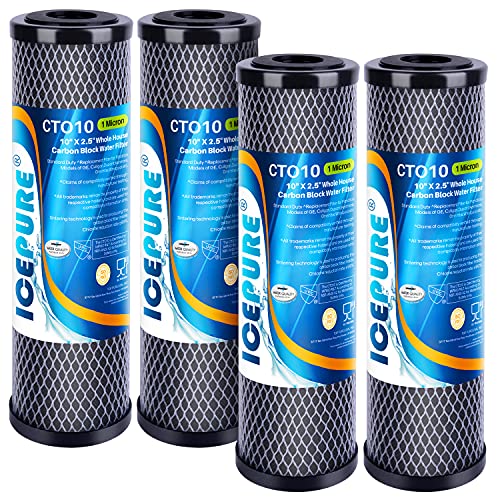
The ICEPURE 1 Micron 2.5″ x 10″ Whole House CTO Carbon Filter is designed to fit compact 2.5-inch housings and is compatible with multiple common DuPont and GE/Whirlpool models. It is NSF/ANSI 42 certified, ensuring effective chlorine taste and odor reduction while maintaining a clean, fresh taste across the entire home. The filter uses sintering technology to capture chlorine and smaller particulates, helping reduce odor and improve the overall water experience. It is advised to replace every 6 months under typical family usage, with a reported life of up to 13,000 gallons depending on water quality. Note that well water can reduce filter longevity due to larger particulates, so well-water users may need different filtration solutions.
Key features:
– NSF/ANSI 42 certification
– 2.5″ diameter fits many compact whole-house housings
– 1 micron filtration for finer sediment and taste/odor removal
– Suitable for municipal tap water; check compatibility with your specific unit
– Replacement guidance of about 6 months; up to 13,000 gallons
ICEPURE 10″ x 4.5″ 1 Micron CTO Carbon Filter

This 10″ long ICEPURE CTO filter uses a 1-micron carbon block to remove up to 99% of chlorine, improving taste and odor across your entire home. It’s certified by IAMPO to NSF/ANSI 42 and meets European EC1935-2004, Australian Water Mark, and BPA-free standards. The longer 10″ length provides extended filtration life, typically around 30,000 gallons, depending on water quality. It is designed to fit standard 10″ housings and is compatible with a wide range of model systems, including DuPont and GE/Whirlpool configurations. For well water, performance may vary due to larger particulates, so consider specialized filtration if needed.
Key features:
– 1 micron filtration for finer sediment removal
– Certified for chlorine reduction and taste/odor improvements
– Long lifespan with up to 30,000 gallons
– Broad compatibility with many 10″ housings and common house filtration models
– BPA-free and EC-compliant materials
Culligan SCWH-5 Standard-Duty Carbon Filter

The Culligan SCWH-5 is a standard-duty carbon filter cartridge designed for whole-house systems. It reduces sediment and chlorine taste and odor, helping to deliver cleaner water for drinking, cooking, and bathing. The cartridge is compatible with several Culligan and common 10″ filter housings, with a recommended replacement cadence of every 3 months or about 15,000 gallons for typical household usage. It targets particles larger than 5 microns, offering an affordable option for homeowners seeking straightforward chlorine taste and odor reduction and general sediment control.
Key features:
– Reduces sediment, rust, scale, dirt, and chlorine taste/odor
– Compatible with multiple HF-series housings
– 3-month/15,000-gallon replacement guidance
– Simple, standard filtration for whole-house systems
– Good option for cost-conscious households
PUREPLUS 5 Micron 10″ x 4.5″ CTO Filter

The PUREPLUS 5 Micron 10″ x 4.5″ CTO carbon filter blends multi-layer density technology with coconut shell carbon to maximize contaminant removal while maintaining a high flow rate. It carries authoritative certifications (IAMPO/NSF 42 and related marks) and is BPA-free, designed for municipal water filtration. With a high capacity of up to 30,000 gallons depending on water quality, this filter is intended for standard 10″ filter housings. Water quality, especially in well-water scenarios, can influence performance and lifecycle, so users with well water may want a specialized filter strategy.
Key features:
– 5 micron CTO carbon block for broad contaminant reduction
– Certifications include NSF/ANSI 42 and related marks
– Long filtration life, up to tens of thousands of gallons
– Compatible with common 10″ whole-house housings
– BPA-free materials and food-grade construction
PUREPLUS 1 Micron 2.5″ CTO Filter

The PUREPLUS 1 Micron 2.5″ x 10″ CTO filter is certified against NSF/ANSI 42 for chlorine and odor reduction, delivering a significant improvement in water taste. It also carries ECC/EU and Australian Water Mark certifications, and is BPA-free. While suitable for municipal water, the filter is not optimized for many well-water sources with large particulates. The compact 2.5″ diameter makes it suitable for tighter setups, and the filter is compatible with standard 10″ x 2.5″ whole-house filtration models, including DuPont WFPFC8002 and similar units. Replacement guidance is typically 3-6 months depending on usage.
Key features:
– 99% chlorine reduction and odor improvement
– Certified and BPA-free
– High compatibility with standard 10″ x 2.5″ housings
– 3-6 month replacement cadence is common for households
– Suitable for municipal water; assess well-water suitability if applicable
Buying Guide: Key Considerations For Choosing A Whole House Charcoal Filter
When selecting a whole-house charcoal water filter, consider these factors to align with your home’s needs:
- Filtration goal: Decide if you want primary chlorine/taste and odor reduction, sediment removal, or broader contaminant capture. Carbon CTO filters excel at chlorine reduction and taste improvement, while adding sediment capture may require a multi-stage approach.
- Micron rating: A lower micron count means finer filtration but potentially faster clogging. 1-3 micron cartridges are common for chlorine and taste/odor reduction in municipal water. 5 micron options are useful for sediment-heavy water but may not remove fine odors as effectively.
- Capacity and replacement interval: Most filters last from 3 months to 30,000+ gallons, depending on water quality and usage. Hydrate expectations with a replacement plan to maintain filtration effectiveness and water taste.
- Certifications and safety: Look for NSF/ANSI 42 certification and other marks (EC1935-2004, BPA-free, etc.) to ensure safety and performance.
- Compatibility: Confirm that the cartridge dimensions (10″ x 2.5″, 10″ x 4.5″, or 2.5″ diameter) match your existing housing and that the brand/model is compatible with your water system.
- Water source: Municipal tap water and well water behave differently. Well water often contains larger particulates and minerals that may reduce carbon filter lifespan or require pre-filtering.
- Cost and availability: Plan for ongoing replacement costs and ensure the filters you choose are readily available to avoid gaps in filtration.
- Installation and maintenance: Some housings include extra features like a built-in pressure-relief button or heavy-duty brackets, which can simplify maintenance and replacement.
In selecting five options, the focus is on widely compatible carbon block cartridges with strong filtration credentials, good lifecycle estimates, and consumer-friendly replacement schedules. Homeowners should assess their specific water quality, faucet usage, and housing compatibility to choose the best combination of performance and value.