Cracked asphalt can let in water and debris, leading to bigger problems over time. Choosing the right crack filler or sealant can extend the life of a driveway and prevent costly repairs. This guide highlights five top products designed to seal, sealant, and protect asphalt surfaces in American conditions. Each option prioritizes flexibility, weather resistance, and durable adhesion to fit varying crack sizes and climates.
Summary of selected products:
| Product | Brand | Size | |
|---|---|---|---|
| Sikaflex-410 Asphalt Sealant (9 fl oz) | SIKA | 9 fl oz | Self-leveling, durable elasticity |
| Red Devil 0637 Asphalt Crack Filler | Red Devil | 10.1 fl oz | Colored to match asphalt, flexible seal |
| Liquid Rubber Asphalt Crack Filler (4-Pack) | Liquid Rubber | 10 oz each | Professional-grade, waterproof, deep penetration |
| Bluestar Flexible Asphalt Crack Filler | Blue Star | 16 fl oz | No special tools, highly flexible |
| LUVBOATE Asphalt Crack Filler | LUVBOATE | 9 lb (approx.) | High elasticity, weather resistant |
SIKA Sikaflex-410 Asphalt Sealant

SIKA Sikaflex-410 is a black, self-leveling hybrid sealant designed to fill cracks in asphalt driveways, pavements, and roads. It provides permanent elasticity to help prevent tearing and cracking while withstanding weathering. The formula is well-suited for long-term protection against water intrusion and surface movement, making it a strong option for broad asphalt applications.
Red Devil 0637 Asphalt Crack Filler

Red Devil 0637 offers a black acrylic sealant for cracks and joints with an asphalt-matching finish. It forms a water-resistant seal that remains flexible to combat cracking from temperature shifts and movement. This option is particularly suitable for driveways, parking areas, and walkways needing a uniform, durable appearance and reliable moisture protection.
Liquid Rubber Asphalt Crack Filler

This professional-grade, self-leveling sealant is designed to deeply penetrate cracks and form a waterproof, flexible bond. It works in damp conditions and at low temperatures, making it versatile for various climates. It also bonds well to multiple surfaces beyond asphalt, providing durable protection against water infiltration and UV damage.
Bluestar Flexible Asphalt Crack Filler
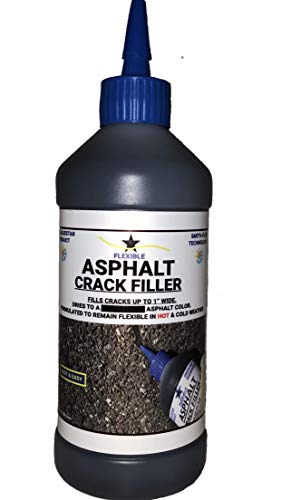
Bluestar’s DIY crack filler is designed for quick, tool-free application. It remains flexible in hot and cold weather and is ideal for cracks up to one inch wide. This makes it suitable for homeowners performing fast, cost-effective repairs on driveways and parking areas without professional equipment.
LUVBOATE Asphalt Crack Filler

LUVBOATE provides a high-elasticity, self-leveling filler designed for wide cracks and heavy use areas. It emphasizes strong adhesion, weather resistance, and adaptability to ground movement, offering a durable seal for both indoor and outdoor asphalt surfaces that endure traffic and temperature changes.
Buying Guide
Key considerations when selecting an asphalt crack filler or sealant include crack width, expected movement, climate, traffic load, and ease of application. Here are some practical perspectives to help compare options:
- Crack width and movement: For cracks up to about 1 inch wide with variable movement, highly elastic products such as self-leveling sealants perform best. They accommodate expansion and contraction without losing adhesion.
- Flexibility vs. rigidity: Flexible fillers resist future cracking but may require more time to cure. Rigid products can seal quickly but might crack again if movement is significant.
- Climate performance: In colder regions, choose materials rated for low temperatures and frost resistance. In hot climates, look for products that stay flexible under heat.
- Application and surface compatibility: Some sealants are designed specifically for asphalt, while others bond well to concrete and other substrates. Consider multi-surface compatibility if joints connect different materials.
- Durability and longevity: Professional-grade formulas typically offer longer-lasting protection and deeper penetration, reducing the need for frequent repairs.
When planning a repair, assess the crack network first—narrow, non-structural cracks may be suitable for a quick-drying sealant, while wider or shifting cracks benefit from a highly elastic, self-leveling filler. Always follow manufacturer instructions for surface preparation, curing times, and weather considerations to maximize adhesion and performance.