Lake water can offer a vital hydration source during camping, hiking, or emergencies, but it often contains microbes, particulates, and contaminants. The following picks represent compact, field-tested filtration and purification options suitable for converting lake water into safe, great-tasting drinking water. This guide highlights five reliable devices from trusted brands, plus practical buying tips to help you compare performance, capacity, and ease of use in outdoor settings.
| Product | Brand |
|---|---|
| LifeStraw Personal Water Purifier | LifeStraw |
| Waterdrop Gravity Water Filter Straw | Waterdrop |
| Membrane Solutions Personal Water Filter (4 Pack) | Membrane Solutions |
| Survivor Filter PRO Hand Pump | Survivor Filter |
| BKLES 3-in-1 Solar Electric Water Filter | BKLES |
LifeStraw Personal Water Purifier For Outdoors
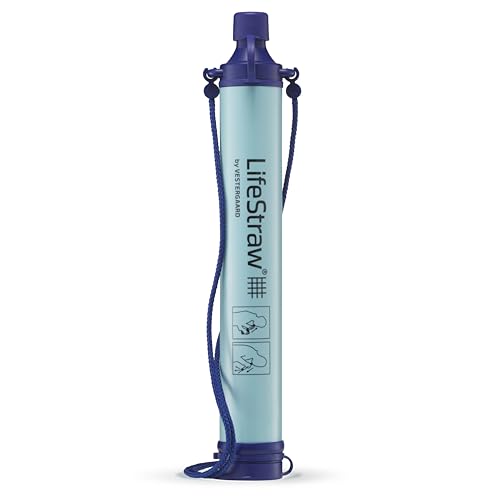
The LifeStraw Personal Water Purifier uses a microfiltration membrane to remove 99.999999% of waterborne bacteria and 99.999% of parasites, including E. coli, Salmonella, Giardia, and Cryptosporidium. It also reduces turbidity to 0.2 microns and tackles microplastics down to 1 micron. This compact device requires no batteries or moving parts, making it ideal for hikers and travelers who need reliable defense against lake-water contaminants. Its tested claims are backed by labs adhering to EPA, NSF, and ASTM standards, supporting consistent performance in field conditions. For lake use, it provides a quick chances-to-sip solution when water is uncertain.
Key considerations:
- Weight and compact size support easy packing for day trips or longer expeditions.
- No pumping or priming required—simply drink through the straw.
- Plastic construction is lightweight, but ensure local discard guidelines for single-use devices.
Waterdrop Gravity Filtration Straw With Large Bag
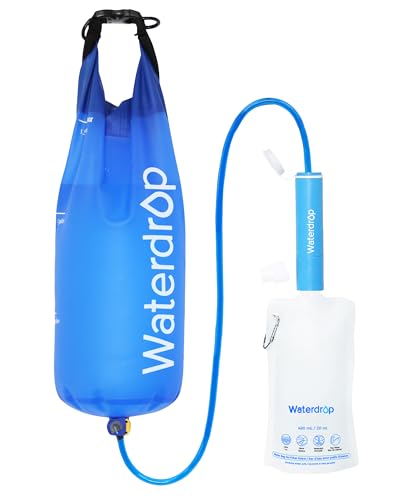
The Waterdrop Gravity Water Filter Straw combines a 5-stage filtration system with a 1.5-gallon gravity-fed bag. It uses premium coconut shell activated carbon and a 0.1 μm ultrafiltration membrane to cut chlorine, particulates, sediment, and off-tastes, providing safer, better-tasting lake water. A large-capacity bag supports all-day use, making it well-suited for base camps, long hikes, or emergencies. The straw itself offers a long lifespan—up to about 1,400 gallons (5,300 liters)—with a flow rate up to 700 ml per minute, balancing efficiency and ease of use in remote settings.
Key considerations:
- Gravity-fed design minimizes pumping effort but requires availability of a reservoir bag.
- High capacity is ideal for groups or extended trips.
- Filtration blends carbon and membrane layers for both taste and safety improvements.
Membrane Solutions Personal Water Filter (4 Pack)
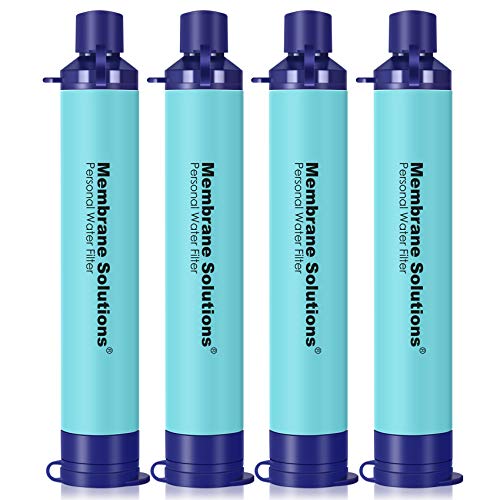
This 4-pack personal water filters provide science-backed filtration with NSF/ANSI certification claims across 42, 372, and 401. The device claims to remove 99.9999% of total coliforms, including E. coli, and reduce metals, microplastics, and particulates while preserving taste. Its compact straw design makes it a practical backup kit for hiking, camping, travel, or group outings. The triple-NSF certification supports reliable cross-application use for diverse outdoor environments, including lake-water scenarios where microbial contamination is a concern.
Key considerations:
- Four-pack affordability and portability for group trips or family kits.
- Certified performance offers confidence in diverse water sources.
- End-user maintenance involves simple cleaning and end-to-end replacement as needed.
Survivor Filter PRO Hand Pump

Survivor Filter PRO is a compact hand-pump system designed for rapid on-demand filtration. It weighs about 12.8 ounces, making it a practical option for backpacks and emergency kits. The unit targets a broad spectrum of contaminants and claims removal of 99.999% of tested viruses, Staph, bacteria, and protozoa, while reducing heavy metals under NSF/ANSI standards. Its flow rate is approximately 500 ml (17 oz) per minute, enabling quick access to drinkable water directly from lake sources. The hand-pump design provides a reliable alternative when energy sources are unavailable.
Key considerations:
- Requires manual pumping—great for low-power scenarios and education on water safety.
- Lightweight, portable, and suitable for group use with shared access.
- NSF/ANSI alignment supports trust in expected performance.
BKLES 3-in-1 Solar Electric Water Filter

BKLES presents a solar-powered, 3-in-1 filtration system with electric and hand-pump modes. Its 6-stage purification includes PP cotton, KDF, and coconut activated carbon components, delivering improved taste and water quality. The 0.01-micron ultrafiltration membranes provide strong protection against small pathogens, while solar charging and manual pumping ensure versatility in remote lake environments. SGS, FCC, and UL certifications offer third-party validation of safety and performance. The device is designed for portability, with a light weight and a case for easy backpack attachment, making it a robust option for emergency kits and outdoor adventures.
Key considerations:
- Multi-mode operation supports diverse power conditions and back-up pumping.
- Certified by multiple reputable bodies adds credibility for complex water sources.
- Compact design with a protective case facilitates travel and storage.
Buying Guide: Key Purchase Considerations For Lake Water
When selecting a water filter or purifier for lake water, consider a mix of safety, capacity, and practicality. These factors help ensure you can reliably drink from lake sources without compromising your trip or safety.
- Filtration vs purification: Filtration (removing particulates and some pathogens) vs purification (removing a broader range of microorganisms). For lake water, a purifier or a multi-stage system with a reliable pathogen barrier is recommended.
- Pathogen coverage: Look for devices validated to remove bacteria and protozoa, and, if possible, viruses. NSF/ANSI certifications offer independent verification of performance claims.
- Flow rate and ease of use: In a lakeside setting, a fast flow rate reduces bottlenecks and increases safety when thirst hits. Pumps and gravity-fed systems vary in comfort and speed.
- Capacity and lifespan: For solo trips, a compact device may suffice, but for families or longer expeditions, choose products with long lifespans per cartridge or filter and/or a large gravity bag.
- Maintenance and durability: Devices should endure outdoor conditions, resist fouling, and allow straightforward cleaning or replacement parts. Materials should be food-grade and BPA-free where applicable.
- Portability and weight: A balance between filtration efficiency and weight is essential. Ultra-light devices are ideal for day hikes, while heavier systems suit base camps.
- Resilience in emergencies: For preparedness kits, prioritize backup systems (e.g., tablets plus filtration straw) that cover diverse water sources and fail-safes when power is limited.
- Environmental impact: Favor devices with replaceable components and minimal waste; properly dispose of used cartridges and filters.
Buying decisions should align with your typical lake-water scenarios: solo hiking, family camping by a lake, or emergency preparedness. Consider a combination approach—one compact purifier for on-the-run use and a gravity system or pump device for home-base or larger groups. Finally, always filter water from lake sources before assessing taste or odor, and follow manufacturer instructions for maintenance and storage to preserve device efficacy.