Direct answer: if you’re upgrading a room with sliding doors, a wall-mounted sliding door guide system keeps floors pristine, reduces noise, and provides stable operation. This guide highlights five top picks that fit a variety of door thicknesses and styles, from concealed tracks to bottom-floor guides. Best for homeowners seeking floor protection, minimal visible hardware, or easy installation. Each option includes a brief profile, who it’s best for, and a clear reason to choose or avoid it. The table below helps you compare key specs at a glance.
| Product | Best For | Why It Stands Out |
|---|---|---|
| JUBEST Sliding Barn Door Floor Guide (1″–1-3/8″) | Hardwood, tile, or carpeted floors, non-grooved doors | Wall-mounted, no floor drilling; strong carbon steel; wide thickness range |
| JUBEST 36″ Concealed Barn Door Hardware Kit | Elegant, hidden rails for 28″–32″ openings | Soft-close, invisible track, high-quality aluminum construction |
| CCJH Sliding Barn Door Floor Guide | Space-saving, compact setups for 1″–2″ doors | Double rollers, solid steel with nylon wheels, quiet glide |
| Jisano Hidden Sliding Barn Door Hardware | Luxurious look with invisible track, 27.56″–47.2″ openings | Premium aluminum, integrated buffers, soft-close options |
| EaseLife Sliding Barn Door Bottom Floor Guide | Versatile, multiple setup options, universal fit | Solid steel, black powder coat, multiple assembly configurations |
JUBEST Sliding Barn Door Floor Guide (1″–1-3/8″)

Best for hardwood and carpeted floors where drilling into the floor isn’t desired. This wall-mounted floor guide protects floors and stabilizes non-grooved doors from 1″ to 1-3/8″ thick. Built with carbon steel and a powder-coated finish, it withstands daily use.
Who it’s for: homeowners needing floor protection and flexible installation without floor modifications. Why selected: it avoids floor damage while widening compatibility across common door thicknesses. Limitation: may require precise wall mounting to ensure perfect alignment with the door track.
JUBEST 36″ Concealed Barn Door Hardware Kit

Best for a sleek, minimalist look where the track remains invisible. The kit uses an aluminum track with smooth rollers and soft-close mechanisms for doors weighing up to 176 lbs (80 kg). Suitable for 1-1/4″–1-3/4″ thick doors and openings 28″–32″ wide.
Who it’s for: homeowners prioritizing aesthetics and quiet operation. Why selected: it hides the track and provides soft-close action. Limitation: requires a door groove or compatible mounting method; not ideal if no groove is present and you need a concealed system from edge to edge.
CCJH Sliding Barn Door Floor Guide
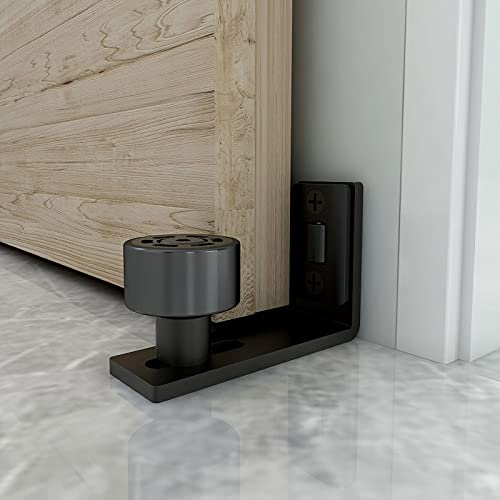
Best for compact systems where space saving is essential. This wall-mounted bottom guide uses a double roller setup and nylon wheels on both sides, stabilizing 1″–2″ thick doors. Its back-rotating wheel design reduces wall gaps and helps glide quietly.
Who it’s for: spaces aiming to reduce door-to-wall clearance while maintaining smooth operation. Why selected: strong, quiet action with a smaller footprint. Limitation: slightly limited to thinner doors compared to larger kits.
Jisano Hidden Sliding Barn Door Hardware

Best for a seamless, high-end look with an invisible track. The system supports openings from 27.56″ to 47.2″ and doors up to 176 lbs. It uses an aluminum alloy frame, precision rollers, and integrated buffers for quiet, soft opening and closing.
Who it’s for: homeowners desiring a luxurious, minimalist appearance. Why selected: premium construction and silent operation. Limitation: installation can be more complex; ensure compatibility with door thickness and opening width.
EaseLife Sliding Barn Door Bottom Floor Guide

Best for versatility and easy installation. This wall-mounted bottom guide comes in an 8-assemble setup with a full range of options to fit various door sizes up to 3″ thick. It features solid steel with a black powder-coated finish for durability and corrosion resistance.
Who it’s for: buyers seeking multiple assembly possibilities and robust construction. Why selected: practical design with broad door compatibility. Limitation: as a bottom-guide, it may require precise alignment with the track for optimal performance.
Buying Guide: Wall Mounted Sliding Door Systems
What to consider when choosing a wall-mounted sliding door guide system:
- Door thickness range: Match the guide’s thickness compatibility with your door, including grooved or non-grooved styles.
- Track visibility: Concealed tracks offer a cleaner look; visible bottom guides emphasize hardware visibility but can be easier to adjust.
- Weight rating: Ensure the system supports your door’s weight, especially for larger openings.
- Floor impact: Wall-mounted designs protect flooring; floor-guided options may be less ideal on soft or uneven floors.
- Noise and movement: Look for soft-close or buffers if quiet operation matters, particularly in bedrooms or study rooms.
- Installation complexity: Concealed kits often require more precise alignment; simpler bottom guides can be easier for DIY projects.
- Aesthetics: Decide between a modern, minimal look or a visible hardware style that complements your room décor.
FAQ
- What is a wall-mounted sliding door guide?
– It is a hardware system attached to the wall that stabilizes a sliding door, guiding its movement and protecting the floor from damage. - Do I need a groove in my door for these systems?
– Some kits require grooves; others are designed for non-grooved doors. Check each product’s specifications for compatibility. - Can these systems support heavy doors?
– Weight ratings vary by product. Choose a kit that explicitly supports the door weight you plan to install. - Is soft-close available with wall-mounted guides?
– Some kits include soft-close mechanisms or buffers, providing quieter operation and gentle door action. - Are concealed tracks worth it?
– Concealed tracks hide hardware for a sleek look, but may require more precise installation and door preparation. - What is the typical installation process?
– Most kits require wall mounting, alignment with the door track, and securing rollers. Always follow the manufacturer’s mounting instructions.