Choosing a natural gas tankless water heater delivers on-demand hot water with compact efficiency and potential utility savings. This guide highlights five strong options that balance flow, reliability, and safety for typical American homes. Each model is evaluated for its maximum hot water output (GPM), heating capacity (BTU), and notable features such as safety protections and smart controls. Use the summary below to compare key specs at a glance, then read detailed sections to understand which unit best fits your household’s hot-water needs.
| Product | Brand | Max GPM | BTU | Notable Feature |
|---|---|---|---|---|
| Rinnai RX199iN Condensing | Rinnai | 11.1 | 199,000 | Indoor/Outdoor with Versa Vent; Smart Sense gas control; WiFi ready |
| RTG-95DVLN-3 | Rheem | 9.5 | Not specified | Continuous hot water; Water Saving Setting |
| GEN II Natural Gas Tankless (Ranein) | Ranein | 8.5 | 190,000 | Bottom blower; Steady temperature; LED control |
| Orbek Gas Tankless | Orbek | 4.3 | 100,000 | CSA certified; Three heating modes; multiple protections |
| Rinnai V53DeN | Rinnai | 5.3 | Not specified | Outdoor installation; reliable heat, long warranty on heat exchanger |
Rinnai RX199iN Condensing Tankless Water Heater

The Rinnai RX199iN is a high-capacity condensing tankless water heater rated up to 11.1 GPM and 199,000 BTU. It supports indoor or outdoor installation via Versa Vent and can be fueled by natural gas or propane through a Smart Sense gas control system. Outdoor setups require the RX-OVC vent cap. The unit is designed for compact spaces while delivering robust hot water across multiple fixtures, making it suitable for larger households or homes with demanding hot-water needs.
Efficiency and control features include a high-efficiency condensating design with an estimated UEF around .98. It offers maintenance-friendly options such as Quick Flush and, when paired with the ControlR module, possible WiFi control (module not included). This model supports flexible deployment and strong reliability for everyday use.
In terms of usage, the RX199iN is well-suited for homes with simultaneous demands — such as multiple showers, kitchens, and laundry — where consistent water temperature is valued. Its robust flow, combined with smart controls and flexible venting, positions it as a premium option for demanding households.
Rheem RTG-95DVLN-3 Tankless Water Heater

The Rheem RTG-95DVLN-3 offers up to 9.5 GPM with Non-Condensing indoor operation. It emphasizes continuous hot water for households when multiple applications run simultaneously, such as showers and dishwashers. The design focuses on straightforward installation and reliable performance for homes needing solid flow without complex venting or advanced controls.
Energy-conscious features include operation only when hot water is needed, helping to reduce energy costs. A built-in Water Saving Setting can further conserve water by reducing flow when appropriate. While not featuring condensing technology, this Rheem model provides dependable performance with a more accessible upfront cost and simpler maintenance.
Overall, the RTG-95DVLN-3 is a practical choice for medium-to-large homes that want steady hot water without advanced smart integrations or premium venting requirements.
Ranein GEN II Natural Gas Tankless Water Heater

Ranein’s GEN II model delivers up to 8.5 GPM with 190,000 BTU, making it suitable for households that require hot water across 4–6 fixtures, such as multiple showers, kitchens, and laundry simultaneously. It is designed for indoor installation and emphasizes efficient gas usage with a bottom-mounted blower that promotes full gas combustion while reducing noise and extending service life.
Temperature stability is a core focus: the unit auto-adjusts water flow and heating to maintain a steady output, minimizing temperature fluctuations during showers or simultaneous uses. The combination of strong capacity and smart flow management makes this model a balanced option for busy homes seeking reliable on-demand hot water without storage tanks.
Orbek Natural Gas Tankless Water Heater

Orbek offers a compact gas tankless heater with up to 4.3 GPM and 100,000 BTU, making it a practical option for smaller homes or spaces with limited installation room. The unit is CSA certified and includes comprehensive safety protections such as dry combustion protection, overheat protection, water leakage protection, flame failure protection, and high water pressure protection.
Seasonal adaptability is addressed with three heating modes designed to meet changing hot-water needs. This versatility can help balance comfort and gas usage, particularly in apartments or smaller houses where demand fluctuates, while maintaining reliable on-demand hot water.
Rinnai V53DeN Natural Gas Tankless Water Heater
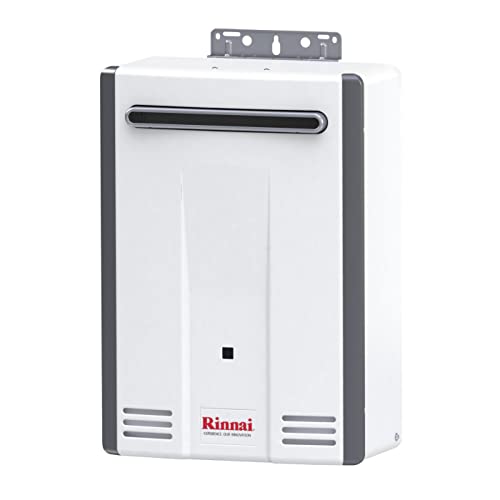
The Rinnai V53DeN provides up to 5.3 GPM for outdoor installation, offering flexible placement when interior space is limited. This outdoor-rated model is designed for reliability in exterior environments where venting is feasible and space allows for outdoor equipment placement. Rinnai backs its units with established warranty support, including a 10-year warranty on the heat exchanger in many configurations, underscoring long-term durability for exterior use.
For households with moderate hot-water demand, the V53DeN delivers dependable performance in a compact, outdoor-friendly package. The outdoor installation option makes it a practical pick for patios, garages, or utility areas where inside space is at a premium.
Buying Guide
When selecting a natural gas tankless water heater, consider how you use hot water, your home’s layout, and your venting options. The following points help compare the five models above and identify which unit best fits your home’s needs.
- Sizing and flow needs: Estimate your peak hot-water demand by counting fixtures that run simultaneously (showers, sinks, dishwashers). Choose a unit with a higher GPM rating if your household often runs multiple hot-water tasks at once. Condensing models typically offer higher efficiency at comparable flows but may come with a larger initial investment.
- Ventilation and installation space: Indoor installations require appropriate venting and clearance, while some models are designed for outdoor use. Ensure your space supports the selected vent type, and verify whether optional vent components are needed for outdoor setups.
- Condensing vs non-condensing: Condensing units capture exhaust heat for added efficiency but can involve more complex venting and maintenance. Non-condensing designs are typically simpler and sometimes less expensive upfront but may consume more gas per gallon of hot water.
- Efficiency metrics: Look for high efficiency ratings (UEF or equivalent) and energy-saving features such as auto-shutoff, smart controls, and flow-reducing settings. Higher efficiency reduces ongoing energy costs over time.
- Safety and safeguards: CSA/UL listings, dry-combustion protection, overheat protection, flame failure protection, and leak detection are important for safe operation. Check for certifications and warranties to gauge long-term reliability.
- Maintenance and serviceability: Features like Quick Flush or accessible service ports simplify routine maintenance. Plan for annual flushing and professional inspections to extend the unit’s life.
- Warranty and support: A longer heat exchanger warranty and responsive customer support reflect device durability. Review the specific warranty terms for each model to understand coverage over time.
In summary, match the heater to your home’s hot-water footprint. For large households with multiple simultaneous needs, higher GPM models such as the RX199iN or similar capacity units may deliver the most reliable experience. For spaces with limited ventilation or outdoor-ready setups, consider models like the V53DeN or other outdoor-capable units. Always verify installation requirements and consult a licensed professional to ensure proper venting and gas supply configurations before purchase.