Well water often carries minerals that cause scale buildup and reduce heater efficiency. Selecting a tankless model with robust corrosion resistance, good heat exchanger materials, and easy maintenance is essential for long-term performance. The following five products are chosen for reliability, performance in mineral-rich water, and maintenance support. The included table highlights key specs to help compare options at a glance.
| Product | Brand | Type | Notable Benefit | Flow (GPM) |
|---|---|---|---|---|
| Rinnai RX199iN Condensing Tankless Water Heater | Rinnai | Gas Tankless | Indoor/Outdoor with Versa Vent; Quick Flush | Up to 11.1 |
| Rheem 18kW 240V Tankless Electric Water Heater | Rheem | Electric Tankless | Self-modulating; Up to 4.4 GPM | Up to 4.4 |
| Chromex Tankless Water Heater Flush Kit | Chromex | Flush Kit / Descaler | 6-piece kit with pump; descaler included | N/A |
| QwikDescaler Descaler For Tankless Heaters | QwikProducts | Descaler Solution | Zero VOCs; color-change indicator | N/A |
| Rheem RTEX-13 Tankless Electric Water Heater | Rheem | Electric Tankless | External thermostat; self-modulating | N/A |
Across well-water scenarios, these products offer a mix of high-flow gas models, efficient electric options, and maintenance tools that help prevent mineral buildup. Use the table as a quick reference when evaluating heat output, install location, and maintenance needs. The following sections provide detailed information on each selection to help you compare performance, installation requirements, and long-term value.
Rinnai RX199iN Condensing Tankless Water Heater

The RX199iN is a condensing gas tankless model designed for versatile installation, indoors or outdoors with Versa Vent. It delivers up to 11.1 GPM and handles up to 199,000 BTU input, supporting multiple fixtures with reliable on-demand hot water. Key features include Smart Sense gas control for efficient operation and a Quick Flush option for easier maintenance. An optional ControlR module enables WiFi control when purchased separately, adding remote monitoring and adjustments for US homes with variable hot-water needs.
- Up to 11.1 GPM flow capacity
- 199,000 BTU input
- Indoor/Outdoor installation with Versa Vent
- Smart Sense control and Quick Flush
- Optional ControlR WiFi control (not included)
Rheem 18kW 240V Tankless Electric Water Heater
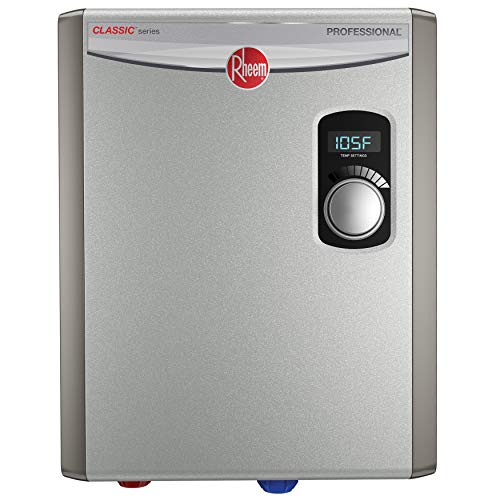
This electric model provides on-demand hot water with precise temperature control. It features external digital thermostatic control with an LED display for easy monitoring and a self-modulating power mechanism that adjusts energy use to demand. Built with durable copper immersion heating elements, it is field serviceable and can deliver up to 4.4 GPM, making it suitable for 2-3 fixtures in many homes with well water requiring careful mineral management.
- External digital thermostat with LED display
- Self-modulating power control
- Copper immersion two heating elements
- Field serviceable
- Flow rate up to 4.4 GPM
Chromex Tankless Flush Kit

Chromex offers a six-piece tankless water heater flush kit designed to maintain efficiency by removing scale deposits. The kit includes a 1/6 HP pump, hoses, a bucket with lid, descaler solution, and an elevated pump grate. It is compatible with most tankless heaters and uses a citric acid-based, solvent-free formula that is non-corrosive and safe for metals and potable water systems, helping extend heater life in mineral-rich wells.
- 6-piece flush kit with pump
- Includes descaler solution and hoses
- Works with most tankless models
- Citric acid-based, solvent-free formula
- Safe for metals, PVC, rubber, and ABS hoses
QwikDescaler Descaler For Tankless Heaters
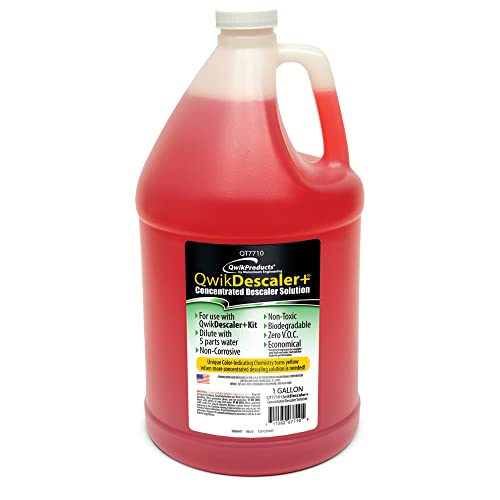
QwikDescaler is a concentrated descaler designed to quickly flush flow passages and dissolve mineral buildup in tankless heat exchangers. It is formulated to be safe with zero VOCs, reducing environmental impact. A visual color-change indicator (red to yellow) confirms when additional solution is needed, providing clear maintenance guidance without guesswork for well-water systems.
- Rapidly flushes flow passages to remove deposits
- Zero VOCs; safe to handle
- Color-change indicator signals when to add more
- Effective against scale, lime, tarnish
Rheem RTEX-13 Tankless Electric Water Heater

Rheem’s RTEX-13 is a compact electric tankless heater designed for straightforward installation. It offers external adjustable digital thermostat with LED display, plus self-modulating power control for efficient energy use. Copper immersion heating elements provide durability, and the unit ships with 1/2 NPT adapters and 1/2 inch compression connections for simple installation in smaller spaces.
- External digital thermostat with LED display
- Self-modulating power control
- Copper immersion heating elements
- Simple installation with 1/2 NPT adapters and compression connections
Buying Guide
When selecting a tankless heater for well water, key considerations include how much hot water you need at once, water quality, and how easy the unit is to maintain. The right choice balances flow capacity, installation requirements, and maintenance options to keep minerals from reducing performance over time. Below are practical factors to weigh, along with comparisons across fuel types and maintenance strategies.
Water quality and scale management
Well water often carries minerals that form scale on heat exchangers. For this reason, prioritize models with robust corrosion resistance (copper or stainless steel heat exchangers) and consider integrating a descaler or flush solution as part of your regular maintenance. Kits that support quick flushing or include descaler solutions simplify upkeep and help sustain efficiency in mineral-rich water. Look for products that advertise safe, non-toxic descalers or VOC-free formulas.
Flow rate and fixture count
Estimate the maximum simultaneous hot-water needs in your home. If several fixtures run at once (shower, sink, dishwasher), you’ll want a higher GPM rating. Gas-fired models often deliver higher flow, while electric units can be sufficient for smaller households or limited usage. For well water, matching GPM with the number of fixtures reduces the chance of sudden cold-water bursts during peak demand.
Energy source and venting
Gas models require venting and proper clearance, which can influence installation cost and complexity, especially in tight spaces. Electric models skip venting but rely on adequate electrical supply. Consider local codes, electrical service capacity, and climate when choosing between gas and electric to ensure efficient operation and safe installation.
Maintenance and descaling options
Maintenance accessibility matters. Heaters that pair with flush kits or descalers simplify regular cleaning, especially in mineral-laden wells. Check compatibility with descaler solutions and whether the manufacturer provides recommended flushing intervals. A maintenance-friendly system reduces long-term downtime and preserves performance thresholds.
Durability, warranty, and serviceability
Durable heat exchangers (often copper or stainless steel) plus well-supported warranties provide long-term protection for your investment. Field serviceability can save costs on repairs, particularly if you live in a rural area where service visits may take longer. Review warranty terms for the heat exchanger and overall unit coverage to gauge long-term reliability.
Installation space, location, and codes
Consider available space, indoor versus outdoor placement, and accessibility for ongoing maintenance. Some models require dedicated electrical circuits or specific venting configurations. Verify local building codes and required clearances for safe operation, especially in areas with extreme temperatures or seismically active regions.
Bottom-line considerations for well-water households
For well water, prioritize models with strong flow capability and proven maintenance options. Gas models can offer higher GPM, but electric options often suit smaller homes or limited hot-water needs with easier installation. Regardless of choice, pairing your heater with a rust- and scale-prevention strategy and a regular descaling schedule will help sustain efficiency and prolong the life of your tankless system.