Looking for a compact, bucket-friendly sump pump solution that still packs performance? This guide highlights practical, small-footprint pumps you can drop into a bucket or basin for fast water removal. Ideal buyers include DIY homeowners managing basements, crawl spaces, or utility areas; contractors needing portable options; and renters seeking temporary drainage solutions. The featured products emphasize automatic operation, reliable solids handling, and easy setup. Below is a quick comparison of the best five choices, followed by detailed product sections and a buying guide to help you pick the right model for your needs.
| Product | Best For | Key Benefit | Limitations |
|---|---|---|---|
| Zoeller 105-001 Automatic Drain Pump System | Basements and utility spaces | Solid handling up to ½″ with a compact form | Requires baseline electrical setup; standard 115V |
| WAYNE CDU980E 3/4 HP Submersible | Heavy-duty basements | High capacity up to 5,490 GPH | Heavier and larger footprint |
| WAYNE CDU790-1/3 HP Submersible | Budget-friendly basements | Good flow with easy installation | Lower capacity than higher HP models |
| RainBro PSU051V | General purpose, small buckets | 1/2 HP with robust float switch | Basic design, may lack advanced features |
| Chsuiwe 950GPH Submersible | Portable water removal | Adjustable flow for versatile use | Lower max head than larger units |
Zoeller 105-001 Automatic Drain Pump System

The Zoeller 105-001 is a 3/10 HP submersible sump pump designed for tight spaces. It passes solids up to ½ inch, making it suitable for basements, wet bars, utility sinks, and even appliance drainage. Best for applications where space is limited and modest flow is sufficient. The compact footprint (~11¾” × 12½”) helps it fit under sinks or in small basements. A potential limitation is that it relies on standard 115V power, so place it where outlets are accessible. Overall, choose this for small, solid-containing drainage tasks in confined areas.
Best for: tight spaces where a reliable, low-profile pump is needed and occasional solid debris is expected.
Why selected: This model offers dependable performance in a compact package, ideal for adding a drain in existing utility areas without major renovations. It handles lint and small particles effectively to minimize clogs.
Caution: Ensure the receiving basin is sized to accommodate the footprint and that the outlet is accessible for continuous use.
Automatic Small Sump Pump With Water Sensor (MSELTOS)

This compact pump is designed for condensate removal, dehumidifier drainage, or small basins. It features dual water level sensors for automatic on/off control, reducing the need for manual intervention. The 5 ft lift and 55 GPH flow rate cover most light drainage tasks. It is suitable for small basins, portable AC units, and similar equipment. A limitation is its modest flow rate, which may not satisfy larger flood scenarios. Best for: auto drainage in tight spaces where precision water level control matters.
Why selected: Its dual-sensor automation helps avoid nuisance startups and stops, extending pump life for continuous operations in small setups.
Caution: Not ideal for high-volume pumping or long-run drainage without verifying the reservoir capacity.
WAYNE CDU980E 3/4 HP Submersible

The Wayne CDU980E is a 3/4 HP submersible sump pump built for high-capacity pumping, rated up to 5,490 gallons per hour. Its cast iron and stainless steel construction stands up to demanding sump conditions, and the vertical float switch ensures automatic operation in narrow basins. Best for larger basements or frequent heavy rainfall where higher throughput is needed. A potential limitation is the heavier build, which may require more storage space and robust electrical setup. Choose this for strong, continuous drainage in tougher environments.
Why selected: It combines strong throughput with durable materials, making it a solid choice when reliable, high-volume pumping is essential.
Caution: Ensure your sump pit can accommodate the larger unit and that you have a compatible outlet and power supply.
WAYNE CDU790-1/3 HP Submersible

The CDU790-1/3 HP is a cost-conscious Wayne option with practical performance for moderate basement drainage. It uses a cast-iron volute and an epoxy-coated motor housing for durability. The integrated vertical float switch provides automatic operation. Best for budget-minded buyers who need dependable daily drainage without paying for higher horsepower. Limitation: lower capacity than larger HP models, so not ideal for severe flooding or very large pits. Choose this if you want a straightforward, reliable pump at a reasonable price.
Why selected: It offers essential features with durable construction at a more accessible price point, perfect for typical home basements and smaller utility spaces.
Caution: Verify that the GPH rating meets your expected peak drainage needs to avoid undersizing the pump.
Sump Pump Basin With Lid (Medoore)

This combination set includes a 15 x 13 x 11.5 inch perforated sump basin with a breathable lid and 40 drilled holes for drainage. The basin variation supports most standard sewage or utility pumps, making it a flexible bucket option for larger drainage tasks. Best for users who want a ready-to-use basin with a tailored lid for hurricane-like rain events or crawl spaces. Limitation: beyond the smallest basins, this is a basin-centric accessory rather than a high-flow pump itself. Use when you need a compatible, ready-made sump bucket solution.
Why selected: It provides a sturdy, pre-fitted basin option that can host many submersible pumps, streamlining setup for bucket-style drainage tasks.
Caution: Confirm pump compatibility with the universal basin dimensions before purchasing.
Rainbro 1/2 HP Thermoplastic Sump Pump
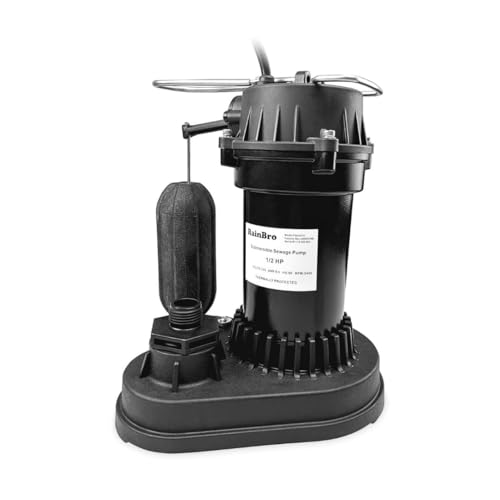
The Rainbro PSU051V is a 1/2 HP thermoplastic sump pump designed for both clean and dirty water with a vertical float switch. It can pump up to 3600 GPH, with a maximum immersion depth of 22 feet and a head of 31 feet. It features a 10-foot power cord for flexible placement and multiple outlet diameters for hose compatibility. Best for mid-size basins and varied water removal tasks where a plastic body helps resist corrosion. Limitation: lower head than some submersibles, which can affect performance in tall basins. Choose this when you need good flow and reasonable durability in a lighter pump.
Why selected: Combines robust flow with practical features, making it a versatile option for many bucket-and-basin drainage setups.
Buying Guide: How To Choose The Right Sump Pump In A Bucket
- Assess the water source: Is it clean water, dirty water, condensate, or rainwater? This determines material choice and wear on components.
- Flow rate needs: For small leaks or condensate, 50–100 GPH may suffice. For basements or larger pits, look for 3600–5500+ GPH models.
- Head height: Consider the vertical distance the water must be pumped. Higher heads require units with greater head capacity.
- Power and outlets: Ensure a safe, accessible electrical outlet and consider using a GFCI outlet in damp areas.
- Automatic vs manual: Automatic sensors prevent constant supervision, but you may prefer a manual option for occasional use.
- Durability and material: Cast iron and stainless steel offer longevity; thermoplastic bodies reduce weight and corrosion risk in specific environments.
- Footprint and installation: For bucket or small basin setups, confirm the unit size, suction design, and basin compatibility.
- Debris handling: If debris is expected, a pump with a higher solids handling capacity (½″ or more) reduces clogs.
Frequently Asked Questions
- What is a sump pump in a bucket useful for? — It provides portable drainage for small basins, basements, and crawl spaces where a full sump pit isn’t feasible.
- Can these pumps handle dirty water? — Some models are designed for dirty water with higher solids tolerance, while others are for condensate or clean water only.
- Do these pumps require professional installation? — Most can be installed by the user with basic electrical access and a suitable basin or bucket.
- What maintenance is needed? — Regular inspection for clogs, cleaning of the intake and impeller, and verifying the float switch operation.
- What should I consider for safety? — Use a GFCI-protected outlet and keep connections dry; place pumps on stable, level surfaces.
- How do I know if I bought the right size? — Compare the GPH rating and head height to your expected drainage scenario; choose higher capacity if in doubt.