Choosing a sump pump backup system helps ensure your basement stays dry during power outages or heavy rainfall. This guide compares five reliable options, covering primary and battery-backed setups as well as portable, off-grid solutions. Each product is evaluated on power, reliability, monitoring features, and ease of installation to help you pick the right model for your home.
| Product | Key Benefit | Best For |
|---|---|---|
| The Basement Watchdog Big Combo CONNECT | WiFi-capable multi‑system | Homes needing integrated monitoring |
| VEVOR Sump Pump Battery Backup System | High power, LCD monitoring | Outage-prone areas needing strong backup |
| The Basement Watchdog Emergency Battery Backup Sump Pump | 24/7 monitoring and alarms | Simple, reliable protection |
| Westinghouse Sump Pump | High flow, durable submersible | Basements with flood risk |
| 20V Cordless Submersible Water Transfer Pump | Cordless portability | Remote or temporary pumping tasks |
Below are detailed product sections highlighting features, performance, and practical considerations for American homeowners evaluating sump pump backup systems.
The Basement Watchdog Big Combo CONNECT

The Basement Watchdog Big Combo CONNECT is a preassembled primary and battery backup sump pump system with WiFi capability. It integrates monitoring with an add-on module to alert you to pump status and power conditions. This setup is designed for households needing continuous oversight during outages or heavy precipitation, and it supports remote access via a connected module for real-time status updates.
Basement Watchdog Big Combo Overview
Key features include a preassembled primary pump plus a compatible battery backup, WiFi-enabled monitoring, and easy add-on module integration. This option is suited for homeowners who want a centralized alert system and automatic operation when the primary power fails.
VEVOR Sump Pump Battery Backup System

Powered by a 3000W rated backup with 6000W peak, this system auto-switches to battery during outages. Dual outlets allow two pumps to run simultaneously. It features a real-time LCD display showing voltage, power, and battery level, plus a plug-and-go design for straightforward installation. It aims to minimize installation complexity while delivering robust backup performance.
Basement Watchdog Emergency Battery Backup

The Emergency Battery Backup offers up to 2,000 GPH pumping capacity and 24/7 monitoring with audible and visual alarms. Its dual float switch provides enhanced protection, and the system is designed for straightforward maintenance and reliable operation during power outages or critical conditions in the basement environment.
Westinghouse Sump Pump With Automatic Float

The Westinghouse unit emphasizes high flow and durable submersible construction. With an automatic vertical float switch, it supports efficient water removal for basements, crawl spaces, and flood-prone areas. It’s a robust option for homeowners needing a dependable single-pump backup or primary unit with reliable activation during rising water scenarios.
20V Cordless Submersible Transfer Pump
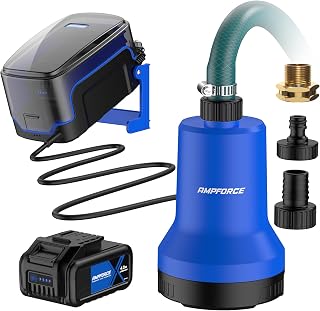
This cordless transfer pump runs on a 20V battery, delivering up to 1003 GPH. It’s ideal for portable or temporary pumping tasks—such as clearing water from flooded areas, pools, or outdoor projects—where access to power sources is limited. The battery-powered design adds flexibility for short-term emergency use.
Buying Guide: Key Purchase Considerations
- Power backup vs. primary pumping needs: Decide whether you require a dedicated battery backup, a full backup-combo system, or a portable pump for temporary scenarios.
- Power reliability and location: Consider local outages and the ability to keep backup units charged or running in a damp environment. Battery health and generator compatibility are important.
- Monitoring and alerts: WiFi-enabled or LCD-monitoring options help track pump status, battery level, and alarms. Decide how hands-on you want to be with monitoring.
- Installation complexity: Some systems are plug-and-play with simple wiring, while others require integration with existing sump pumps and electrical panels. Assess DIY readiness or the need for professional installation.
- Flow rate and lift height: Ensure the backup pump can handle typical basement flooding scenarios for your home. Match GPH ratings to the typical lift from your pit to outside drainage.
- Redundancy: If your area experiences frequent outages, dual-pump setups or two-pump configurations can provide higher reliability.
- Maintenance and alarms: Look for easy-to-replace batteries, clear alarms, and serviceable float switches. Regularly test the system to ensure readiness.
- Durability and warranty: Choose models with durable housings, corrosion resistance, and solid warranty terms to protect your investment.
In evaluating sump pump backup systems, consider how each option aligns with your home’s exposure to floods, energy reliability, and whether you prefer integrated monitoring or straightforward, robust performance without ongoing connectivity needs. The selections above provide a range of features—from WiFi-enabled monitoring to powerful battery backups and portable options—to address different home setups and risk tolerances.