Square wooden floor tiles offer a simple, stylish way to refresh patios, balconies, and even indoor spaces. This guide highlights durable options that are easy to install and maintain, helping you choose tiles that fit both your design and environment. The top picks below are suited for outdoor decks, poolside areas, home gyms, and sunlit living spaces. Each product includes a clear best-use scenario to help you compare quickly and decide which tile system best matches your space and lifestyle.
Buyer at a glance: the following table summarizes the five highlighted products, their material emphasis, and ideal use cases. Use this as a quick reference when scanning product pages or planning your layout.
| Product | Main Material | Best For | |
|---|---|---|---|
| THYOI Premium Acacia Deck Tiles (Dark Brown, 10 sq ft) | Acacia Wood | Outdoor balcony, backyard, poolside | Excellent drainage and all-weather durability |
| DECKIFY 9Pcs Acacia Wood Interlocking Tiles | Acacia Wood | Wet areas, pool decks, balconies | Quick tool-free installation |
| Sorbus Wood Grain Foam Mats (144 sq ft) | Wood grain EVA foam | Indoor playrooms, basements, multi-use spaces | Extra cushioning and expansion options |
| GREEN ALLUVIUM Acacia Wood Interlocking Tiles (Dark Brown) | Acacia Wood | Balconies, patios, showers | Raised base for drainage and moisture management |
| Yaheetech Fir Wood Interlocking Deck Tiles (27 pcs) | Fir wood | Budget-friendly patio and garden upgrades | Interlocking, relatively simple setup |
THYOI Premium Acacia Deck Tiles, Dark Brown, 10 sq ft

Best for: Outdoor spaces that require durable, water-resistant surface with natural wood aesthetics. Ideal for balconies, front porches, and pool-adjacent areas where a warm, inviting look is desired. These tiles are designed to interlock with a PPC base and offer fast drainage thanks to spaced slats.
Why selected: This THYOI deck tile uses 100% natural acacia wood and a sturdy base to endure all-weather use. The tiles are designed to be cut for irregular areas and can be used indoors or outdoors, giving flexibility for renovations and seasonal events. The drainage-friendly design reduces moisture buildup and slip risk compared to non-draining surfaces.
Best use tip: Choose this if you want a classic teak-like finish with reliable outdoor performance and easy customization for irregular patio shapes. Caution: excessive standing water in poor drainage areas can still affect longevity, so ensure proper installation on a clean, flat surface.
DECKIFY 9Pcs Acacia Wood Interlocking Tiles

Best for: Wet or exposed outdoor areas where strong drainage and slip resistance matter, such as poolside decks and entryways. The raised base and cross-cut slats promote airflow and water flow beneath the tile surface.
Why selected: The DECKIFY tiles emphasize a heavy-duty, tool-free snap-fit installation, making them an attractive option for quick upgrades. The thick acacia slats and reinforced base help keep tiles stable over time, even in high-traffic zones. A potential limitation is the need for a flat, solid substrate to maintain seamless connections across all tiles.
Best use tip: Opt for these when you want fast, no-tools setup and a robust edge-to-edge appearance. Avoid this if your substrate is uneven or if you expect heavy weight above the tiles, as that can challenge the interlocking system.
Sorbus 144 Sq. Ft. Wood Grain Foam Mats

Best for: Indoor playrooms, home gyms, basements, and multipurpose spaces that benefit from cushioned floor comfort and easy expansion. The set ships with a large total area and allows flexible layout with detachable edges for corners and borders.
Why selected: Sorbus mats provide a soft, faux wood aesthetic with interlocking puzzle tiles, offering a safe and comfortable flooring option for kids, pets, or workouts. These mats are highly adaptable for temporary installations in events or studios. A limitation is that they are foam-based, which may not suit heavy furniture or high-heat outdoor environments without protection.
Best use tip: Choose Sorbus when you need a portable, cushioned surface for high-traffic indoor areas. Avoid outdoor use in direct sunlight or extreme weather, as foam can degrade faster than solid wood in certain conditions.
GREEN ALLUVIUM Premium Acacia Tiles, Dark Brown
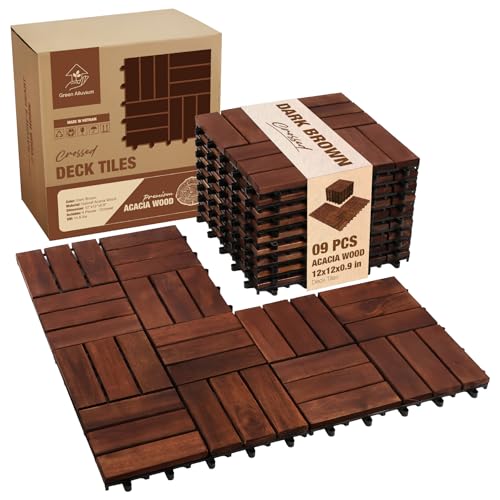
Best for: Wet areas that require water drainage underneath, such as balconies, patios, and shower-adjacent spaces. These tiles combine a raised base with solid acacia wood for a sturdy, moisture-friendly surface.
Why selected: The raised base design enables efficient water drainage, helping prevent pooling and slip hazards. The deep-oil finish helps preserve color and wood grain over time, making it a robust choice for consistently outdoor exposure. A potential limitation is that refinishing may be needed to refresh color after prolonged sun exposure.
Best use tip: Choose this tile for outdoor showers or hot tub surroundings where moisture is common. Avoid choosing if your substrate is not properly leveled, as warping or misalignment can occur with uneven support.
THYOI 10Pcs Premium Acacia Tiles (Round Style)

Best for: Outdoor patios and indoor-outdoor transitions where a round-edged tile design complements a custom layout. These offer the same all-weather performance with a distinct rounded tile aesthetic.
Why selected: This round-tinish variant uses the same trusted acacia wood and snap-lock system, enabling flexible layouts and temporary gatherings. A caution is that rounded tiles may require more planning to achieve a seamless edge when paired with standard square tiles.
Best use tip: Use this as a creative accent in combination with square tiles to create a unique pattern. Avoid if you prefer a uniform, square-grid look across the entire space, as mixing shapes may require careful planning.
Yaheetech 27PCS Interlocking Fir Wood Tiles

Best for: Budget-conscious DIY projects where a sturdy, natural wood look is preferred without premium hardwood costs. Fir wood provides a warm tone that complements many outdoor and indoor spaces.
Why selected: Yaheetech tiles use natural fir wood with a PVC base and interlocking snaps, enabling quick assembly on various hard surfaces. They suit temporary or semi-permanent installations and can be a good entry point into wood tile flooring. A limitation is that fir wood may show wear differently than harder woods over time, especially in high-traffic areas.
Best use tip: Choose Yaheetech for a cost-effective patio refresh or a simple DIY project. Avoid in areas with heavy, constant traffic or where prolonged, direct sun exposure could accelerate weathering without protection.
Buying Guide: Key Purchase Considerations
What should I consider before buying square wood tiles?
- Material durability: Outdoor tiles should resist weather, moisture, and UV exposure. Acacia wood and fir wood offer different longevity.
- Drainage and base design: Raised bases or spaced slats help prevent water pooling and slip hazards.
- Substrate compatibility: Ensure the surface beneath is flat, dry, and clean for best installation results.
- Installation method: Interlocking systems are common; tool-free setups save time. Some options allow cutting for irregular spaces.
- Aesthetics: Choose color tones and grain patterns that match your exterior or interior design.
- Maintenance: Outdoor wood may require sealing or oiling to maintain color and reduce weathering.
How do I plan a layout for square tiles?
Decide between a strictly square-grid layout or a mixed pattern with occasional round tiles or borders. For outdoor decks, a uniform grid often provides the cleanest look and simplest maintenance. Use edge pieces to complete the borders and, if necessary, cut pieces to fit irregular outlines.
What are the best practices for outdoor tile longevity?
- Ensure proper drainage to prevent standing water under tiles.
- Prepare a clean, level substrate; fix any uneven areas before installation.
- Choose tiles with a raised or breathable base to support moisture management.
- Seal or oil wood as recommended by the manufacturer to extend color and life.
Is foam-backed tile suitable for long-term use?
Foam-based tiles offer comfort and fast setup for indoor use in playrooms, gyms, or temporary exhibitions. They are not typically recommended for heavy furniture or prolonged outdoor exposure due to durability and weather sensitivity.
How should I compare tile options quickly?
Look for three quick metrics: core material (wood type), drainage design (slats or raised base), and installation approach (tool-free interlock versus glue-down). The combination of these factors determines how easy the tile is to install, how well it drains, and how it holds up over time.
FAQ
- Q: Are square wooden floor tiles hard to install? A: Most interlocking options are designed for tool-free installation and can be set up on flat, clean surfaces in minutes.
- Q: Do wooden tiles require maintenance? A: Yes, outdoor wood tiles often benefit from periodic sealing or oiling to preserve color and weather resistance.
- Q: Can I use outdoor wooden tiles indoors? A: Yes, many tiles are suitable for indoor use, especially in sunlit rooms or entryways; check for moisture suitability.
- Q: How do I choose between acacia and fir wood? A: Acacia wood tends to be harder and more durable for outdoor use; fir wood is typically budget-friendly and suitable for indoor or sheltered outdoor settings.
- Q: Will these tiles prevent water pooling? A: Tiles with raised bases or spaced slats improve drainage and minimize standing water on the surface.
- Q: Can I mix tile shapes? A: Mixing shapes can create a decorative pattern but requires careful planning to ensure edges align cleanly.