Find the right soundproof foam for your studio with clarity. This guide highlights five solid options, each suited to different spaces and needs. Best for residential home studios, small offices, or professional recording rooms, these panels reduce echoes, flutter, and reverberation. Use the brief buyer table below to compare at a glance, then dive into detailed sections to see which panel fits your space and workflow.
| Product | Best For | Key Benefit |
|---|---|---|
| Focusound 52 Pack | Home studios and offices | High-density foam with adhesive inclusion |
| TroyStudio 52 Pcs | Medium rooms with decorative tiles | Open-cell foam with groove design |
| Burdurry 50 Pack | Budget-conscious setups | High-density, easy recovery |
| JBER 12 Pack | Small to mid spaces | High-density, fire retardant |
| SD SODOCT 12 Pack | Professional studios | Pyramid design for flutter echoes |
Focusound 52 Pack Acoustic Foam Panels

Best for beginners and small home studios needing quick setup. Focusound panels feature a triangular groove structure that improves noise absorption, reducing echoes, waves, and flutter. An included 300-piece double-sided adhesive makes wall installation easier and wall-safe. If the foam loses shape, a quick water soak and air dry can restore its form within 24–48 hours. Choose this when you want a cost-effective, plug-and-play kit with strong wall protection.
TroyStudio Thick Acoustic Foam Panels
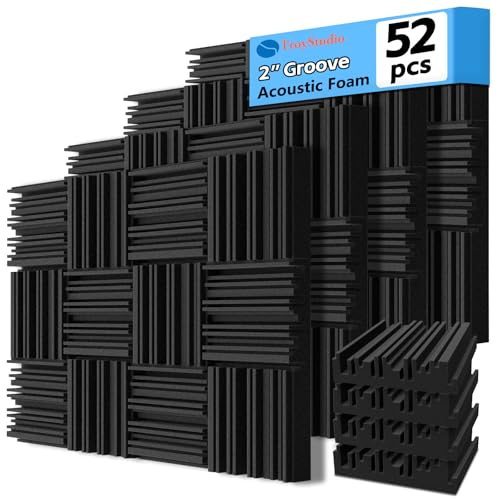
Best for medium-sized rooms seeking robust reverberation control with a decorative 3D groove. Each panel is 12″ x 12″ x 2″ and packed as 52 pieces, covering about 52 square feet. The foam boasts high density for superior absorption and a low-noise boundary, with a respectable NRC around 0.8. It’s flame retardant and eco-friendly, making it suitable for home studios and small professional spaces. However, installation may be more visible due to its thicker profile.
Burdurry 50 Pack Acoustic Panels

Best value option for broad coverage and solid acoustics. Burdurry panels are high-density polyurethane, designed to reduce echoes and reverberations on walls. They ship vacuum-packed and recover within 24–48 hours, with faster recovery possible through warm-water treatment and drying. They are odorless, fade-resistant, and safe to handle. Use this when you want cost-effective, larger-area treatment for home studios or control rooms, but be aware of longer unpacking recovery in some spaces.
JBER 12 Pack Acoustic Foam Panels

Best for compact studios or rooms with irregular shapes. JBER panels use dense 30 kg/m³ polyurethane for strong absorption, reducing disruptive echoes for clearer audio. They are designed to expand back to their original shape after unpacking, promoting long-term performance. They carry flame-retardant properties, aligning with safety expectations. Choose this when you need reliable, compact coverage with strong safety features, but note that full room coverage may require more panels for larger spaces.
SD SODOCT Acoustic Panels – 12 Pack

Best for studios needing flutter echo reduction and a professional look. The pyramid 3D design aids absorption of flutter and mid-to-high frequencies, covering 12 square feet in this 12-pack. When unpacked, vacuum-sealed packaging may require 24–48 hours for full expansion. It’s a straightforward choice for music rooms or recording spaces seeking a bold, modern aesthetic with acoustic benefits, though expansion times may vary in cooler environments.
Buying Guide
What room size and shape should guide your choice? For small spaces, thinner profiles like 1″ panels work well, while larger rooms benefit from thicker 2″ tiles for deeper absorption. Consider the thickness, density, and NRC values to match your desired noise reduction. Choose panels with easy installation if you rent or prefer non-damage wall solutions. If you want decorative harmony, look for groove or pyramid designs that blend with your studio aesthetic. Always verify that materials are flame retardant and low-VOC for safe indoor use.
What’s the right density and coverage?
Higher density panels generally offer better performance per square foot. For medium rooms, aim for 40–60 square feet of coverage with a mix of 1″ and 2″ panels. In smaller spaces, start with 20–40 square feet and add as needed after listening tests.
How easy is installation?
Adhesive-backed panels reduce installation time and wall damage risk. Some products include extra adhesive; others require separate purchase. If you frequently rearrange rooms or rent, opt for removable mounting methods and light-weight panels.
Are there safety and environmental considerations?
Look for flame retardant and low-emission materials. Open-cell polyurethane with SGS or similar testing is a positive sign. Odorless and non-toxic panels improve comfort for long recording sessions.
How should I place panels?
Place panels at first-reflection points, around walls and ceiling, and in corners if possible. A checkerboard or staggered pattern helps avoid mechanical ringing. For broader coverage, layer different designs (grooves, pyramids) to balance absorption across frequencies.
How do I maintain panels?
Keep panels dry and free of dust. If panels become deformed, a gentle water soak and air-dry can restore shape. Avoid direct heat sources that could warp foam over time.
FAQ
- Which foam is best for vocal recording? High-density, 2″ panels with a coverage plan around the mic area and reflections off walls typically provide the cleanest vocal recordings.
- Can I install acoustic foam myself? Yes. Most panels use adhesive, mounting spray, or simple nail-free options. Follow the product’s installation instructions for best results.
- Will foam panels affect room temperature? Panels have minimal impact on room temperature; focus on placement rather than insulating value for sound control.
- Do foam panels reduce bass frequencies? Foam panels mainly address mid-to-high frequencies. For bass management, consider corner bass traps in addition to standard panels.
- Are there safe options for a kids’ room or studio? Choose panels labeled flame retardant and low-VOC to minimize hazards and odors during long sessions.
- How do I choose the number of panels? Start with 20–40 square feet in a small room and adjust based on listening tests and echo measurements.