Teardrop campers are perfect for off-grid adventures, but powering them reliably requires compact, durable solar solutions. This guide highlights five top-rated solar panel kits and modules that balance weight, efficiency, and ease of installation for teardrop setups. Each option is suitable for RVs, campers, boats, and off-grid vehicles, with varying flexibilities for curved roofs, mounting spots, or compact spaces.
Summary of chosen products
| Product | Brand | Key Benefit |
|---|---|---|
| ECO-WORTHY 200W Kit | ECO-WORTHY | High efficiency monocrystalline cells with robust framing for RVs and campers |
| Renogy Flexible 100W Panel | Renogy | Ultra flexible, lightweight, ideal for curved surfaces |
| DOKIO 600W Flexible Panels | DOKIO | Multiple panels for scalable off-grid power with 600W total |
| Rvpozwer 200W N-Type Kit | Rvpozwer | High efficiency N-type cells with strong weather resistance |
| Renogy Adventurer 200W Kit | Renogy | Compact RV-ready kit with LCD PWM controller and mounting brackets |
ECO-WORTHY 200 Watts Kit With PWM Controller

The ECO-WORTHY kit uses high-performance monocrystalline solar cells to deliver up to 21.5% efficiency, with a 30A PWM charge controller designed for RVs and off-grid use. The system is rated for daily output around 800Wh under optimal sunlight and features a corrosion-resistant aluminum frame and IP65-rated junction box. It is designed for extended service life and compatibility with a variety of off-grid applications, including campers and boats.
Renogy Flexible 100W Solar Panel

This 100-watt flexible panel is designed for curved or irregular surfaces, such as the roof of a teardrop trailer. It weighs about 70% less than rigid panels thanks to advanced polymer materials, and its ultra-thin lamination keeps a low profile. The kit is ideal for installations where weight and space matter, offering practical mounting on non-traditional rooftops.
DOKIO 600W Flexible Solar Panels

Featuring six 100W panels, this kit offers scalable off-grid power with flexible mounting options for larger teardrop configurations. It supports series or parallel wiring and is designed for off-grid power needs across campers, boats, and trailers. The installation emphasizes adequate ventilation and avoiding mounting on combustible materials to maintain safety and performance.
Rvpozwer 200W N-Type Kit

Rvpozwer offers a single 200W N-type panel with an advanced 25% efficiency, delivering consistent daily power generation around 1000Wh in 5-6 hours of sun. It includes a 30A PWM charge controller designed for a reliable battery charging cycle, with protections and durable construction suited for off-grid setups like campers and boats. The kit emphasizes high efficiency and robust framing for mobile habitats.
Renogy 200W Adventurer Kit
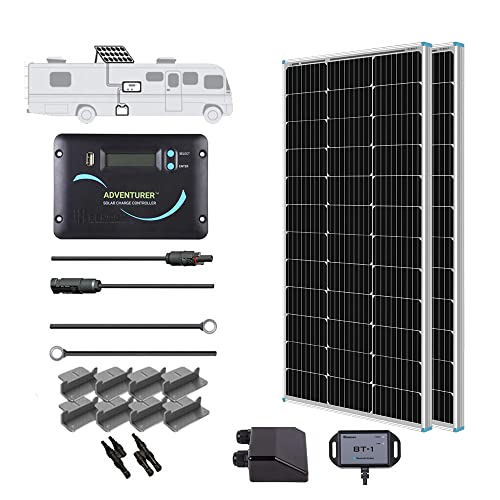
Renogy’s Adventurer 200W kit is designed for RVs, campers, and boats with a focus on reliable performance and a compact footprint. It includes an Adventurer 30A PWM charge controller and mounting brackets for simple installation. The kit’s 22% cell efficiency supports durable energy generation in a variety of climates, with a corrosion-resistant frame built to endure outdoor use and weather exposure.
Buying Guide
Key considerations when selecting solar panels for a teardrop camper include efficiency, weight, and mounting compatibility. For curved or compact roofs, flexible panels like Renogy’s 100W or DOKIO’s modular 600W kit provide low-profile solutions, but ensure you have adequate sun exposure and airflow to prevent overheating. For larger power needs, a higher wattage system such as a 200W kit with a PWM controller or a modular 600W setup offers more daily energy, especially in marginal sun conditions.
Important factors to compare:
- Panel type: monocrystalline (high efficiency) vs. polycrystalline (cost-effective). Flex panels enable curved surface mounting, but may be slightly less durable than rigid panels in rough travel conditions.
- Weight and form factor: weigh options for roof load and space. Flexible panels can reduce weight but require secure mounting to withstand wind drag.
- Efficiency and temperature performance: higher efficiency panels are effective in limited space, while temperature coefficients affect output in hot climates.
- Durability and build quality: frame construction, weather sealing (IP ratings), and mounting hardware compatibility with teardrop rigs.
- Charge controller compatibility: PWM controllers are common and reliable for lead-acid and some lithium batteries; MPPT controllers offer higher efficiency in variable light but can add cost.
Installation approach considerations include roof ventilation, non-conductive mounting surfaces, and cable routing to a central battery or power center. Balanced with battery capacity, a teardrop setup should align solar capacity with daily energy goals, such as lighting, fans, small appliances, and USB charging needs. For emergencies, consider expandable kits or additional panels that can be added as the camper’s power load grows.