Finding efficient snow removal solutions for harsh winter conditions is essential for homeowners and property managers. This article highlights five top snow melting heat mats and explains who each product is best for, based on installation needs, durability, and heat performance. Whether you need a rugged, vehicle-grade mat for driveways or a compact, easy-to-install option for stairs and walkways, these picks offer clear, ice-free surfaces with minimal effort. The following summaries help you compare suitability, safety features, and potential limitations at a glance.
| Product | Brand |
|---|---|
| WarmlyYours 3×15 ft. Electric Ice and Snow Melting Mat | WarmlyYours |
| 10″ x 30″ Premium Heated Snow Melting Mat | GEARBONE |
| HeatTrak Heated Snow Melting Mats (30” x 60”) | HeatTrak |
| HeatTrak Heated Snow Melting Mats (20” x 30”) | HeatTrak |
| HETFOENT 3 Pcs Heated Snow Melting Mats | HETFOENT |
WarmlyYours 3×15 ft. Electric Ice and Snow Melting Mat
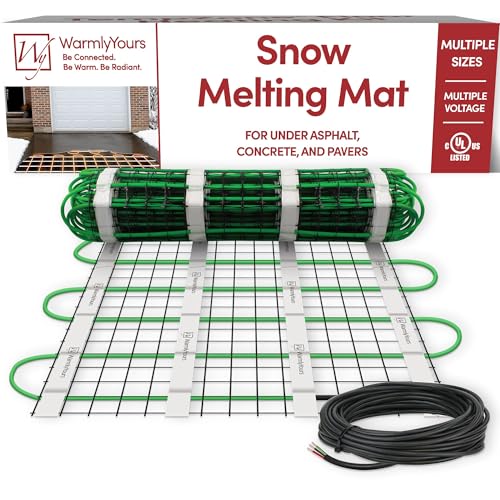
The WarmlyYours mat is designed to melt snow and ice on driveways, sidewalks, and other concrete surfaces. It is embedded under asphalt, concrete, or pavers, allowing a discreet installation that preserves surface aesthetics while enabling reliable deicing. Best for long, continuous stretches such as driveways or wide walkways, this model is CSA certified and uses a twin-conductor heating cable for dependable performance in tough winter conditions. A potential limitation is installation complexity for large, multi-section coverage, which may require planning for power routing.
Who it’s best for: Homeowners seeking hidden, high-coverage deicing for long driveways and larger exterior paths. It’s suitable for installations that prioritize a clean surface with strong thermal output and durable outdoor reliability.
Why selected: It offers substantial length (3×15 ft) for full or sectional coverage, and its embedded design minimizes visible hardware while delivering consistent heat. The CSA certification supports safety in outdoor use.
Things to watch: Ensure proper subgrade preparation and electrical wiring compatibility with your local regulations. Planning for winter power supply is essential for continuous operation.
10″ x 30″ Premium Heated Snow Melting Mat

This mat uses premium TPO material designed to resist cracking and damage in temperatures as low as -40°F (-40°C). Its 0.22″ thickness gives vehicle-grade strength, making it suitable for garage entrances and driveways where heavy foot and vehicle traffic are common. The built-in thermostat and overload protection add safety for continuous use. A potential limitation is the heavier, vehicle-grade construction, which may be less flexible for small, intricate areas.
Who it’s best for: Homeowners needing a rugged, long-lasting mat for vehicle entry points or wider walkways where cold tolerance and durability matter most.
Why selected: Its cold-weather performance and higher thickness provide confidence for frequent winter use and potential vehicle passage. The thermostat helps maintain a stable surface temperature while reducing overheating risk.
Caution: The mat’s stiffness may complicate installation in tight corners or textured surfaces. Plan routing accordingly.
HeatTrak Heated Snow Melting Mats (30” x 60”)

HeatTrak’s 30” x 60” mat emphasizes durability and easy installation. It’s designed to withstand winter storms and stay in place all season. The system is energy-efficient, melting snow at about 2 inches per hour and capable of functioning with surface temperatures about 40 degrees Fahrenheit above ambient. It operates effectively down to -8°F. A caveat is that larger mats may require more powerful electrical wiring and considerate placement to avoid tripping hazards.
Who it’s best for: Properties needing a robust, long-walkway solution that can handle continuous snow drainage and frequent use without frequent maintenance.
Why selected: The combination of durability, convenience, and energy efficiency makes it a strong choice for higher-traffic exterior surfaces.
Limitation: Installation complexity increases with size; proper electrical planning is essential to maximize performance.
HeatTrak Heated Snow Melting Mats for Entrances

This mat is designed specifically for entrances, offering a durable and corrosion-resistant exterior suitable for doorways and entryways. Easy installation and low maintenance appeal to homeowners seeking a straightforward solution to keep entry paths clear. Like other HeatTrak mats, it operates with energy efficiency in mind and provides reliable deicing. The mat’s size is optimized for door thresholds, making it a practical choice for preventing icy entry hazards.
Who it’s best for: Homeowners prioritizing a no-slip entrance mat that is quick to install and focuses on entry-way safety, especially in shaded or high-traffic doorway areas.
Why selected: Its door-focused design helps minimize ice buildup where people enter and leave most frequently, reducing slip risk at practical touchpoints.
Limitation: Smaller surface area compared to full-width walkway mats; may require additional mats for larger adjacent paths.
HETFOENT 3 Pcs Heated Snow Melting Mats

This 3-piece set offers a flexible, modular approach to snow removal. Each mat provides up to about 2 inches per hour melting speed and features anti-slip SBR material with IP68 waterproofing and hot-melt sealing. The kit is designed for stairs, walkways, and doorways, with easy fixation options to prevent movement. A potential limitation is that performance can vary with ambient temperature and snow depth, so staging multiple mats in sequence may be needed for larger areas.
Who it’s best for: Property owners who want a modular, affordable approach to deicing stairs, steps, and narrow walkways without compromising grip or safety.
Why selected: The 3-piece configuration enables adaptable coverage, making it easier to tailor deployment to irregular layouts.
Buying Guide: Snow Melting Mats — Key Considerations
What surface will receive heat? Determine whether you need mats for driveways, walkways, stairs, or entrances. Larger, vehicle-grade mats are suited for driveways, while smaller, stairs-focused kits fit steps and entryways.
Where will you run power? Plan electrical routing to a suitable outdoor outlet or dedicated circuit. Consider using mats with built-in thermostats and overload protection for safer operation.
What temperatures will you encounter? Check the mat’s rated operating temperatures and cold-weather performance to ensure reliable melting in your climate. Higher tolerance reduces brittleness in extreme cold.
Durability and installation: Materials like premium TPO or corrosion-resistant housings improve longevity. Evaluate whether you want embedded mats beneath surfaces or flexible, surface-mounted options for easier retrofits.
Maintenance and safety: Look for anti-slip surfaces and IP ratings for water exposure. Ensure that installation accounts for potential snow buildup and runoff paths to maintain traction.
FAQ
- What size mat should I choose for a standard walkway? For typical walkways, consider mats in the 20″ x 30″ to 30″ x 60″ range, depending on the width of the path and whether you want to cover the entire surface or key sections.
- Do these mats require a professional installation? Some installations can be DIY, especially smaller mats, but larger driveways or embedded installations may benefit from professional electrical planning and adherence to local codes.
- Are all mats weatherproof? Most are designed for outdoor use with waterproofing and durable housings, but verify IP ratings and warranty terms for your climate and placement.
- Can I connect multiple mats to cover a larger area? Yes, several models are designed to be used in combination or connected in sequence to expand coverage while maintaining safety features.
- How energy-efficient are snow melting mats? They generally use less energy than traditional salt-based methods and can melt snow at estimated rates around 2 inches per hour, depending on ambient conditions and mat size.
- What’s the best choice for stairs? Look for anti-slip surfaces, compact sizes, and secure fixation options. A modular or 3-piece set can be advantageous for stair configurations.