When floor space is scarce, choosing compact, efficient shoe storage matters. This guide highlights five space-saving options ideal for entryways, closets, and narrow hallways. The picks are suitable for different buyers: families needing versatile storage, professionals organizing work shoes, students sharing dorm space, and apartment dwellers seeking tidy, low-profile solutions. Below, you’ll find a quick product comparison, followed by detailed sections and practical buying guidance.
| Product | Best For | Key Benefit |
|---|---|---|
| Vertical Shoe Rack – Tall Narrow Shoe Rack Organizer for Small Spaces (AFOORD) | Small closets, entryways | Slim footprint with stacked shelves |
| GRUSIGN Shoe Cabinet (White) | Minimalist hallways | Hidden storage with flip doors |
| UNITSTAGE 5 Tier Shoe Rack (Black) | Families needing capacity | Five tiers, versatile placement |
| Songmics Shoe Rack Bench (Ink Black) | Entryways that double as seating | Shoe storage plus bench top |
| QIVOMIX Shoe Cabinet (Walnut) | Narrow footprint with doors | Compact cabinet with two flip drawers |
Vertical Shoe Rack By AFOORD: Tall Narrow and Durable

The AFOORD Vertical Shoe Rack is designed for small spaces and large storage potential. It uses alpine bamboo, emphasizing durability and a natural finish. The design features a deep, flat groove for stable shoe placement, accommodating larger sizes without crowding each shelf. Suitable for entryways and closets where a neat, layered display matters. A caution: bamboo shelves may require periodic tightening of connectors to maintain load stability over time.
GRUSIGN Shoe Cabinet With Flip Doors

GRUSIGN offers a compact cabinet with four storage tiers and two adjustable shelves, capable of holding 16+ pairs. Flip doors protect shoes from dust and pets while minimizing bending with a 60-degree opening. Its 9.45-inch width makes it an ideal fit for narrow entryways. Best for households needing hidden storage; not ideal for bulkier boots on every shelf. Note: assembly requires careful alignment to ensure smooth door operation.
UNITSTAGE 5 Tier Shoe Rack With Door
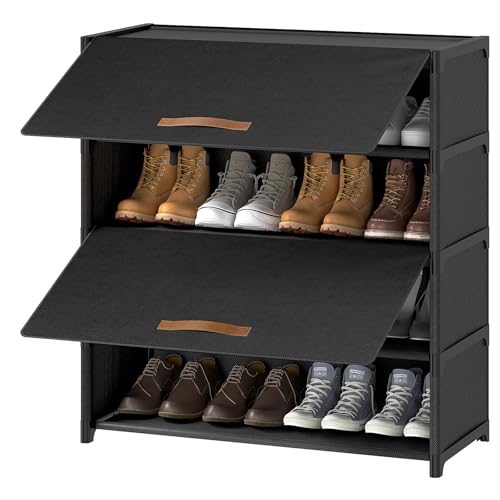
The UNITSTAGE solution provides five tiers with a sturdy fabric frame and a protective door for dust control and pet protection. It stores up to 20 pairs, balancing capacity with a compact footprint. This unit is best for families seeking organized storage in closets or entryways. A potential limitation is the fabric material’s sensitivity to moisture—avoid placing in damp areas.
Autonomier 4 Tier Extra Small Shoe Rack

This stackable design emphasizes expandability. The 4-tier unit uses durable, waterproof non-woven fabric with reinforced plastic connectors and metal tubes. It is ideal for kids’ shoes or shared spaces where you may want to stack additional units vertically. Be mindful that stacking may increase assembly complexity and require careful alignment to avoid wobble.
SONGMICS Shoe Rack Bench: Storage Meets Seating

SONGMICS combines a three-tier shoe storage cabinet with a roomy top bench, supporting up to 286 lb. It’s well-suited for entryways that double as seating areas while providing ample shoe capacity. Best for households needing an all-in-one entry solution. Limitation: wood-based tops require occasional cleaning to maintain appearance and prevent scratches on delicate fabrics or bags placed on top.
QIVOMIX Narrow Two-Door Cabinet

QIVOMIX offers a two-door cabinet with two flip drawers and a compact footprint ideal for narrow walls. It accommodates roughly 14 pairs of shoes and features a wall-anchoring anti-tip device, adding safety in homes with children. Best for small apartments; choose this if you want a closed cabinet to keep footwear out of sight. Limitation: it may feel tight for larger boot styles on every shelf.
Buying Guide: How to Choose the Right Small Space Shoe Storage
- Footprint versus capacity: Measure the available floor space and compare it to the number of shoes you need to store. If you have a long hallway, a tall, slim rack may maximize capacity without crowding the area.
- Open shelves versus doors: Open shelves provide quick access but can gather dust. Closed cabinets keep footwear hidden and protected from pets or moisture.
- Material durability: Bamboo, wood composites, and metal frameworks offer different load capacities. For high-traffic entryways, prioritize sturdy frames and reinforced shelves.
- Jumping-off features: Flip doors, top benches, or adjustable shelves add value by enabling easy access and versatile usage beyond shoes.
- Safety considerations: Anti-tip devices and wall anchoring help protect households with children or pets. Consider models with these features for added stability.
- Assembly and maintenance: Look for straightforward assembly and easy-to-clean surfaces. Non-woven fabrics are light and affordable but can collect dust—plan cleaning accordingly.
FAQ
- Q: What storage solution fits a narrow entryway best?
A: Look for a tall, slim rack or a narrow cabinet (around 9–10 inches wide) to maximize space while preserving walkable clearance. - Q: Should I choose open shelves or a closed cabinet?
A: Open shelves are quick to access; closed cabinets protect against dust and pets. Your choice should reflect how often you need to retrieve shoes and whether dust control is important for you. - Q: Can these units hold boots as well as sneakers?
A: Many 4–5 tier designs include adjustable shelves or deeper tiers that can accommodate boots, but verify the height clearance per shelf for boot storage. - Q: Are anti-tip features necessary?
A: Yes, especially in homes with children or small pets. Anti-tip devices improve stability and safety on taller units. - Q: How do I maintain wooden or bamboo shelves?
A: Wipe with a dry or damp cloth and avoid excess moisture. Use furniture polish sparingly on wooden tops to maintain finish. - Q: Can I expand my storage later?
A: Some systems are stackable or expandable; consider modular designs that let you add units without moving existing furniture.