Protecting a shed or outbuilding often requires a rugged, WiFi-free alert option, or a robust WiFi system that can handles deterring intruders at the perimeter. This guide highlights five dependable shed alarm systems that fit a range of needs—from standalone, no-network setups to WiFi-enabled hubs suitable for remote monitoring. Each option includes sirens, doors and motion sensors, and clear alerting to deter thieves and alert property owners promptly.
| Product | Brand | Type | Key Feature |
|---|---|---|---|
| KERUI Standalone Home Office Shop Security Alarm System Kit | KERUI | Standalone Wireless | Up to 115dB siren; DIY expandable |
| 135dB Remote Motion Sensor Alarm for Garage/Shed | Mosaic Alarm | Standalone Motion Sensor | 135dB alarm; no app needed |
| H-COME Wireless Home Security Defender | H-COME | Standalone/Hybrid | Multiple alert modes; keypad control |
| WiFi Alarm Home Security System (120dB) | TOWODE | WiFi Smart System | 2.4GHz WiFi; remote control via app |
| 1byone Driveway Alarm Wireless System | 1byone | Outdoor/Indoor Wireless | Long-range, multiple alert options |
Note: All five selections are suitable for sheds, garages, or outbuildings and offer a mix of wireless sensors and audible alerts to deter intruders. When choosing, consider whether you need a standalone siren system or a WiFi-enabled hub with mobile notifications.
KERUI Standalone System Kit For Sheds

The KERUI kit is designed as a complete, do-it-yourself wireless burglar alarm system. It includes a main siren host, door contacts, motion sensors, and remote controls. It supports up to 30 wireless detectors and up to eight remote key fobs, with a loud siren reaching up to 115dB. The system is marketed as weatherproof and suitable for indoor and outdoor use, making it a practical choice for sheds, outbuildings, or garages. Setup emphasizes remote code arming/disarming and a DIY expansion path for larger perimeters. A notable note is the required timing sensitivity during operation—sensors must trigger within a short window to avoid re-entry steps. This is a solid pick for a self-contained shed security solution without WiFi or cellular dependence.
135dB Remote Motion Sensor Alarm (Mosaic Alarm)

This Mosaic Alarm model centers on a high-decibel 135dB siren with a PIR motion sensor. It is battery-powered and portable, suitable for garages, sheds, and campsites where a hardwired connection isn’t feasible. The unit emphasizes ease of use: no app required, with a remote-based arm/disarm function and a long operating range. It’s particularly appropriate for temporary or mobile setups where a loud, immediate deterrent is the priority over continuous connectivity. The absence of waterproofing is a consideration for exposed outdoor installations.
H-COME Wireless Security Defender With Keypad

The H-COME system is described as a versatile door/window alarm with a keypad for easy arming and disarming. It supports multiple alert states, including CHIME, INSTANT, and DELAY, and utilizes a magnetic sensor pair to trigger a siren. The setup focuses on user-friendly operation, with audible cues such as distinct chimes and sirens. For shed or garage security, this model offers straightforward, keypad-based control and a clear audible deterrent, without relying on cloud connectivity. Battery-powered options and clear status indicators are advantages for quick deployment in outbuildings.
WiFi Alarm System With 120dB Siren (TOWODE)

This TOWODE offering integrates with 2.4GHz WiFi and the Tuya app, enabling remote arming, door/motion sensor integration, and configurable delays. It promises a robust sound level of 120dB and is marketed as suitable for sheds, garages, and other outbuildings requiring a connected deterrent. The system is pre-programmed for straightforward setup, ensuring users can deploy quickly without extensive configuration. It suits households wanting app-based monitoring and the ability to receive notifications when alarms trigger.
WiFi Alarm System For Shed Or Garage (TOWODE)
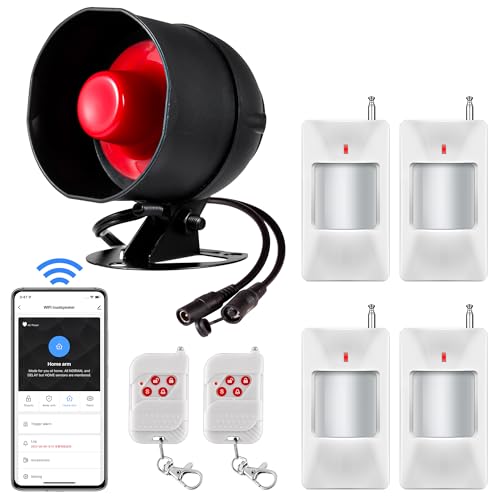
This TOWODE model expands on the same concept with additional sensors and a wider capacity for multiple devices. It supports up to 30 wireless detectors, 10 remote controls, and a maximum of 120 decibels. The app-based notification system makes it a practical option for remote monitoring of a shed or garage, offering convenient alert management, history logs, and remote arming/disarming. Users should weigh the need for cloud-based monitoring against potential connectivity issues in exposed outdoor locations.
Driveway Alarm Wireless System (1byone)

The 1byone driveway system provides long-range wireless monitoring with weatherproof infrared sensors. It’s designed for outdoor perimeter monitoring, making it well-suited for driveways leading to sheds or garages. The system’s receiver offers multiple alert options, including sound and LED indicators, to deter trespassers and notify occupants. The package emphasizes a broad detection range and simple installation, suitable for those who want a loud, immediate alert at the property edge without a constant online connection.
Buying Guide: Key Considerations For Shed Alarm Purchases
- Standalone vs. WiFi: Choose a standalone system for basic, local deterrence and simpler setup. Opt for a WiFi-enabled system if you want remote alerts, smartphone control, and activity logs.
- Siren Loudness and Coverage: Look for systems with 100dB+ sirens for effective deterrence. Check the number and placement of sensors to cover entry doors, windows, and potential blind spots.
- Sensor Type And Placement: Magnetic door sensors are common for doors, while PIR motion sensors cover open spaces. Weatherproofing matters for outdoor installation; ensure sensors are rated for outdoor use if placed outside sheds.
- Power Options: Battery-powered components offer flexibility and easier installation but require periodic battery changes. AC-powered hubs provide constant operation but need outlets, which matters for sheds without power.
- Expandability: If you plan to grow your security perimeter, select systems that support additional sensors, remotes, and peripherals without complex reconfiguration.
- App Integration And Privacy: For WiFi-based systems, verify app reliability, notification speed, and data privacy policies. Some users prefer local control without cloud dependencies.
- Installation Simplicity: Quick setup with clear guides reduces the chance of misconfiguration. DIY-friendly kits with labeled sensors and remote controls minimize installation time.
- Durability: Consider weather resistance and build quality, especially for outdoor sensors. Look for IP ratings or mentions of weatherproof enclosures.
- Emergency Planning: Pair shed alarms with other safety measures (lighting, cameras, and proper door/entry checks) to create a layered security approach.
These options provide a range of shed security approaches—from rugged, standalone sirens ideal for simple perimeters to connected systems that send alerts to a phone. When selecting, map out entry points, potential vulnerabilities, and whether you prioritize immediate audible deterrence or remote monitoring for ongoing protection.