Kerosene heaters offer portable warmth for large spaces like warehouses, garages, barns, and workshops. This guide highlights five highly rated models with strong safety features, multi-fuel flexibility, and solid run times. Each option is suitable for environments ranging from small garages to expansive workspaces. Use the brief product table below to compare core specs at a glance, then dive into detailed sections to learn what sets each heater apart and how to choose the right one for your needs.
| Product | Brand | BTU / Heating Capacity | Fuel Flexibility | Typical Use |
|---|---|---|---|---|
| Remington 80,000 BTU | Remington | 80,000 BTU | K-1 kerosene, #1 & #2 diesel, JP8/Jet A, fuel oil | Warehouses, garages, workshops |
| Reddy Heater 80,000 BTU | Reddy Heater | 80,000 BTU | K-1 kerosene, #1 & #2 fuel oil, diesel, JP8, jet fuel | Large spaces, work sites |
| Mr. Heater 140,000 BTU | Mr. Heater | 140,000 BTU | Diesel or kerosene (approximate multi-fuel support) | Very large spaces, industrial settings |
| Dura Heat 23,800 BTU | Dura Heat | 23,800 BTU | Kerosene | Indoor heating up to 1,000 sq ft |
| SUNFIRE SF80 80,000 BTU | Sunfire | 80,000 BTU | Diesel or #2 fuel oil; kerosene | Shop floors, barns, warehouses |
The following sections examine each model in depth, focusing on heating capacity, fuel flexibility, safety features, and practical use cases. Each product is evaluated for environments typical of American workspaces such as garages, barns, and small warehouses. The goal is to help you compare performance, operating costs, and reliability across popular kerosene heater choices.
Remington 80,000 BTU Kerosene/Diesel Heater
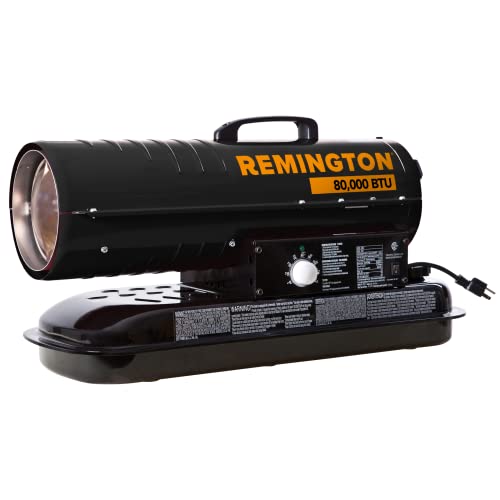
The Remington REM-80T-KFA-B delivers instant heat for spaces up to 2,000 square feet, making it suitable for larger garages or workspace areas. It runs on a variety of fuels, including K-1 kerosene, #1 and #2 diesel, JP8/Jet A, and fuel oil, which adds flexibility in fuel sourcing. A built-in 5-point safety system includes high-temperature limit shut off, flameout protection, circuit breaker, heat sensor, and protective guards. Typical maintenance is minimal, designed to sustain reliable operation over years of use. This model emphasizes quick warmth with dependable safety protections for demanding environments.
Sengoku HeatMate 10,000 BTU (Cordless, Indoor/Outdoor)

The Sengoku HeatMate 110 is a compact, portable kerosene heater designed for versatility in both indoor and outdoor settings. With a 1.2-gallon tank, it can run up to 14 hours, offering dependable warmth for smaller rooms or temporary heat needs on jobsites. It features an automatic safety shut-off and a straightforward push-button start, enabling fast setup without requiring electrical connections. While its footprint is smaller than industrial models, its portability makes it a practical option for brief heating tasks or supplemental warmth in diverse locations.
Reddy Heater Forced Air 80,000 BTU

The Reddy Heater RFA80T provides 80,000 BTU of forced-air heating suitable for large spaces up to 2,000 square feet. It supports multiple fuels, including K-1 kerosene, #1 & #2 fuel oil, diesel, JP8, and jet fuel, offering flexibility for varying fuel availability on job sites. The unit emphasizes a high-performance motor to deliver rapid, even heating across large areas, which is helpful when warming expansive workshops or outdoor workspaces. The combination of strong airflow and multi-fuel compatibility makes it a robust choice for contractors and industrial use.
Mr. Heater 140,000 BTU Forced Air Kerosene Heater

The Mr. Heater 140,000 BTU model is designed for very large spaces, capable of heating up to approximately 3,500 square feet with an 8-hour operating duration on a full tank. This unit targets industrial and large workshop environments where substantial heat output is required. Its easy-fill 8-gallon tank reduces refueling stops and supports extended use. The heater is built to handle demanding workloads and provides robust warmth in open or semi-open indoor spaces where more moderate models may fall short.
SUNFIRE Radiant Heater SF80

The Sunfire SF80 delivers 80,000 BTU of radiant heat with a focus on odorless operation and cleaner burning for diesel or kerosene fuels. It can heat areas up to about 1,900 square feet, with a sizable six-gallon tank for extended runtime. The design emphasizes quiet indoor and outdoor performance, making it well-suited for workshops, barns, and warehouses where noise and fumes need to be minimized. Radiant warmth is particularly beneficial in drafty or high-ceiling spaces where convection-focused heaters may be less effective.
Buying Guide: Key Purchase Considerations
When selecting a kerosene heater for workspace use, consider the following factors to ensure safe, cost-effective, and reliable performance:
- Heat output vs. space: Match BTU rating to the size of the area you intend to heat. Larger spaces may require 60,000–140,000 BTU models, while smaller rooms can be comfortable with 20,000–40,000 BTU units.
- Fuel flexibility: Multi-fuel models offer resilience against fuel shortages. Check compatibility with K-1 kerosene, diesel, JP8, and fuel oils to fit your supply chain.
- Safety features: Look for automatic shut-off, flame-out protection, tip-over switches, and sturdy guards. A lower risk of accidental ignition is essential in busy work environments.
- Ventilation: Kerosenes heaters should be used in well-ventilated spaces. Consider models with sealed designs or ventilation recommendations to minimize indoor fumes.
- Run time and tank size: Larger tanks enable longer operation between refuels. Balance run time with the weight and mobility of the heater for your setup.
- Portability vs. installation: Portable units support shifting heat between rooms or job sites, while stationary or semi-permanent setups can maximize efficiency in a fixed workspace.
- Maintenance needs: Some models emphasize simple maintenance and easy wick replacement. Factor in the maintenance interval to minimize downtime.
- Cost of operation: Fuel efficiency, fuel price, and energy consumption influence long-term operating costs. Compare liters per hour or gallons per hour estimates when available.
- Warranty and support: A robust warranty and responsive support can reduce total cost of ownership in industrial settings.
These considerations help balance upfront cost, ongoing fuel costs, safety, and heat delivery. For workshop owners, mechanics, and contractors, selecting a model with strong safety features, reliable fuel flexibility, and a heat output appropriate to the space is essential for consistent comfort and productivity.