Radon gas exposure remains a leading cause of lung cancer risk in homes. A reliable radon test kit helps you detect elevated levels quickly and take corrective action. This article reviews five top options, highlighting how they measure radon, ease of use, and monitoring capabilities. Whether you want short-term screening or long-term continuous monitoring, the selections below cover EPA-approved tests, portable detectors, and user-friendly home kits for American households.
| Product | Brand | Notes |
|---|---|---|
| First Alert Radon Gas Test Kit, RD1 | First Alert | Simple test with lab processing |
| PRO-LAB Radon Test Kit for Home | PRO-LAB | Two detectors, lab results |
| EPA-Approved Radon Test Kit for Home | Leaping Lynx | Lab analysis included |
| Airthings Corentium Home Radon Detector 223 | Airthings | Portable, battery-powered |
| X-Sense Radon Detector for Home | X-Sense | Continuous monitoring, LCD display |
Choosing the right test kit involves considering accuracy, time to results, and whether you prefer passive sample kits or continuous digital monitoring. The following five products are particularly relevant for American homes evaluating radon risk.
First Alert Radon Test Kit RD1
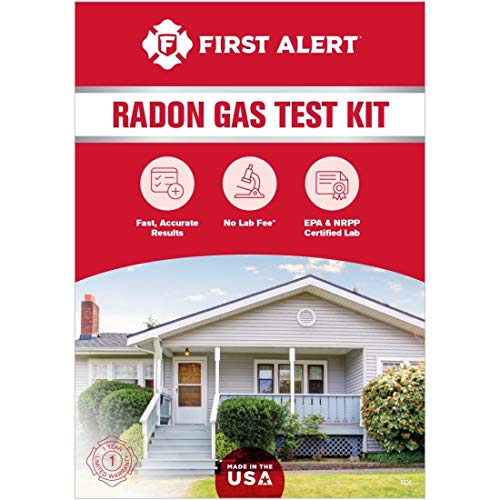
The First Alert RD1 provides a straightforward method to screen for radon with laboratory processing included in the kit. It is listed under the EPA radon gas measurement proficiency program, ensuring a recognized standard of accuracy. The package includes test materials and lab fees, with NJ state fees excluded. Suitable for homeowners seeking an official short-term test with clear lab-backed results.
AEGTEST HOUND-1011 Portable Radon Detector

The AEGTEST HOUND-1011 is a compact, portable radon detector designed for continuous monitoring. It measures radon from 0.09 to 1000 pCi/L and supports switching between pCi/L and Bq/m³. It provides fast results with hourly updates and allows restarting tests anytime. Suitable for quick spot checks and ongoing monitoring in basements, living spaces, or work areas.
Airthings Corentium Home Radon Detector 223

The Corentium Home 223 is the original battery-operated, digital radon detector. It enables long-term monitoring without an outlet, helping homeowners track cancer-causing radon considerations over extended periods. It emphasizes continuous, real-time visibility of radon levels with on-device readings and easy stand-alone operation.
X-Sense Radon Detector for Home
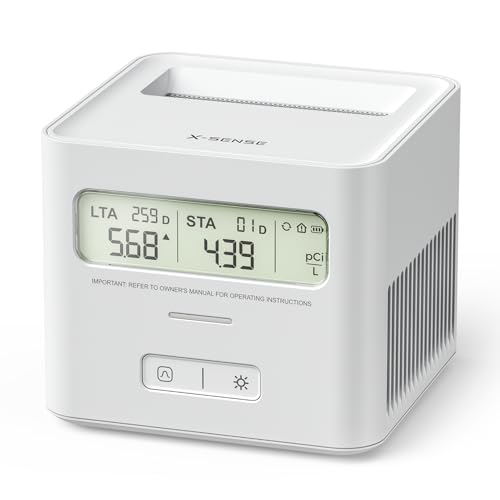
The X-Sense XR0A-SR provides continuous monitoring with a clear LCD readout. It emphasizes data retention, ensures records persist after power outages, and offers ongoing tracking of short-term and long-term radon averages. It’s designed to deliver stable, repeatable results over time without the need for lab fees.
PRO-LAB Radon Test Kit for Home

The PRO-LAB kit emphasizes prompt, in-depth radon analysis. It includes two detectors for simultaneous screening and lab results within a standard workweek after receipt at the lab. It remains EPA-approved for accuracy and provides a clear pathway to timely safety actions if elevated radon is detected.
Buying Guide
- Test Type: Passive kits (set-and-wait) yield a single short-term result, while continuous monitors provide ongoing data. Decide if you need a one-off screening or long-term monitoring to understand fluctuations.
- Laboratory Analysis: Some kits include lab processing; others rely on in-home readings. EPA-approved tests often provide lab-confirmed results, but may require longer turnaround.
- Detection Range: A wider range improves reliability across low and high radon levels. Look for devices that report in pCi/L or Bq/m³ with clear unit switching when needed.
- Power and Portability: Battery-powered detectors offer flexibility for basements and off-grid areas; plug-in units reduce battery management but require outlets.
- Data Access: Real-time dashboards and graphs help interpret trends. If permanence matters, choose devices with long-term data storage and export options.
- Validation and Certifications: EPA or equivalent validation improves confidence in results. For home kits, ensure the kit has reputable processing or manufacturer standards.
- Cost of Follow-Up: Some tests require additional lab fees per detector or per test. Consider total cost for multiple detectors or repeat testing if needed.
- Installation and Handling: Easy-to-use kits reduce user error. Read included instructions about exposure duration, placement, and sealing for results.
- Local Regulations: Some states have specific radon testing requirements or fees. Check local guidelines when planning testing and remediation steps.
- Remediation Readiness: If results are elevated, plan for remediation steps such as sealing, ventilation improvements, or mitigation systems with professional guidance.
In summary, for quick awareness, consider a simple, EPA-listed kit with lab analysis like First Alert RD1 or PRO-LAB. If continuous insights are needed, portable detectors from Airthings or X-Sense provide ongoing data and alerts. Always verify whether the product includes lab processing and review the testing duration to ensure your safety plan aligns with your home environment.