PVC pipes often require coatings or real joints that resist moisture, chemical exposure, and temperature changes. While many projects rely on solvent cement for durable connections, there are times when a finish or protective coating helps with visibility, aging, or cosmetic repair. The products below span plastic-safe spray paints and PVC cement primers, offering options for both cosmetic finishes and joint-safe sealing. This guide highlights five Amazon-listed products most relevant to painting, sealing, or priming PVC pipe and fittings in residential or light commercial settings.
In the table that follows, you’ll find quick-reference details to help compare these items at a glance before diving into individual product sections.
| Product | Brand | Type | Key Benefit |
|---|---|---|---|
| Krylon Fusion All-In-One Spray Paint | Krylon | Spray Paint | Excellent adhesion to PVC and other plastics; indoor/outdoor use; rust protection |
| Rust-Oleum Painter’s Touch 2X Spray Paint | Rust-Oleum | Spray Paint | Long-lasting finish on plastic and other surfaces; quick dry |
| Oatey PVC Cement and Purple Primer Handy Pack | Oatey | Cement & Primer | Code-verified primer and cement for PVC piping; potable water ready |
| Christy’s Wet Or Dry PVC Cement | Christy’s | Cement | Fast set, low-VOC; works in wet or dry conditions |
| Krylon Fusion For Plastic Spray Paint, River Rock | Krylon | Spray Paint | Plastic-specific formula with no sanding or priming required |
Krylon Fusion All-In-One Spray Paint

Krylon Fusion All-In-One is designed for broad adhesion across difficult surfaces, including PVC. This 12-ounce aerosol provides durable coverage with rust protection, eliminating the need for priming or sanding in many cases. It is formulated for both indoor and outdoor projects, making it suitable for pipe fittings, valve covers, or exterior PVC installations where a protective coat is desired. The product’s binding agents target plastic, wood, metal, and ceramic surfaces, delivering a versatile finish that resists chipping and weathering across the life of a project.
The spray’s “all-in-one” promise emphasizes strong initial grip on plastics and other materials, reducing preparation time and simplifying maintenance. When applying to PVC, ensure the surface is clean, dry, and free of oils; shake well, apply in light coats, and allow adequate curing time between layers. The finish options vary by color and sheen, so choose a shade that matches your project—especially for visibility or code-friendly installations. This product is well-suited for hobbyist repairs and small-to-medium PVC updates where a cosmetic layer is desirable.
Rust-Oleum Painter’s Touch 2X Ultra Cover Spray Paint

Rust-Oleum Painter’s Touch 2X Ultra Cover is an oil-based spray designed for broad interior and exterior use, including plastic surfaces. It’s particularly effective for PVC if you want a color finish or protective coat beyond clear adhesives. The paint dries to the touch in roughly 20 minutes and can cover up to about 12 square feet per can, depending on spray technique and surface texture. The formula resists chipping and provides a durable finish, making it a practical choice for projects where a visible finish on PVC pipes, fittings, or adjacent components is required.
For PVC pipe work, consider a light, even spray pattern and multiple thin coats rather than heavy application. Although this paint is versatile, always verify compatibility with any primer or cement in non-structural applications and follow local codes for exposed piping in living spaces or outdoor installations. This product is a solid choice when a matte or semi-gloss black finish is desired to blend PVC with surrounding surfaces.
Oatey PVC Regular Cement and Purple Primer Handy Pack

This handy pack combines a 4-ounce regular clear cement with a 4-ounce NSF-purple primer. It’s designed for PVC pipe and fittings, supporting a range of applications from potable water to DWV. The regular cement flows smoothly and sets quickly within the recommended 40 to 110 degrees Fahrenheit range, while the purple primer helps verify that primer has been applied before cementing. The product is appropriate for code-compliant installations where a clear solvent cement and primer meet local standards, including CPVC/PVC variations and different schedules and diameters.
For pipe systems that require visible joint verification, this pack provides both essential components in one package. It’s particularly useful for DIY repairs, renovations, or small-scale plumbing projects where you want a reliable, code-friendly bond. As with any cement, ensure proper ventilation and follow manufacturer directions for curing times, temperatures, and pipe preparation to optimize performance on PVC pipe and fittings.
Christy’s Wet Or Dry Conditions PVC Cement
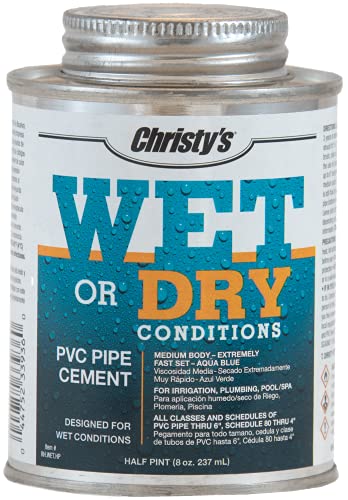
Christy’s PVC cement is formulated to cure quickly in both wet and dry conditions, making it versatile for a range of installation environments. The product is described as medium body and low-VOC, designed for non-pressure up to 6 inches and for pressure systems below 4 inches. It’s suitable for a variety of PVC applications, including pipe, fittings, potable water, conduit, drain, and DWV. This flexibility can help when project conditions aren’t ideal or when a faster set is desired to minimize downtime on PVC installations.
When using wet-or-dry cement, preparation remains essential: ensure joint surfaces are clean, fit is correct, and the environment is within the recommended temperature range. While the product claims ease of use across different conditions, always follow local building codes and manufacturer instructions for curing, application, and compatibility with CPVC or other polymer types used in your project.
Krylon Fusion For Plastic Spray Paint, River Rock

Krylon Fusion For Plastic is specifically designed for plastic surfaces, with a River Rock color option that can blend or accent PVC components. The paint claims an elegant design with a smooth finish and requires no sanding or priming in many cases, simplifying PVC projects where cosmetic finishing is desired. The River Rock shade can be used on pipes, fittings, or exposed plastic parts to match decor or provide a durable, weather-resistant surface on indoor or protected outdoor installations.
As with other plastic paints, prep remains important: clean the surface, apply light coats, and allow proper curing time between layers. This product is especially useful for projects where a plastic-specific coating is preferred, whether for color coordination, touch-ups, or concealment of pipework in visible areas. It offers a straightforward option for achieving a durable, plastic-appropriate finish on PVC components.
Buying Guide
Choosing the right product for PVC pipe involves understanding the purpose of the coating or joint product. Here are key considerations to help you select between paints and cement-based solutions, along with how they compare for common PVC scenarios.
- Purpose: If you need a cosmetic finish on PVC surfaces, plastic paints (Krylon Fusion for Plastic, Krylon Fusion All-In-One) offer color and protection. For joints and pipe fittings, solvent cements and primers (Oatey, Christy’s) provide structural bonds and code-compliant seals.
- Surface compatibility: Paints work on exterior and interior plastics, including PVC, while cements are designed specifically for PVC joints and DWV systems. Check the product label for PVC compatibility and CPVC compatibility if your system uses CPVC parts.
- Indoor vs outdoor exposure: Many paints are formulated for both indoor and outdoor use, but cement products may be specialized for plumbing environments and potable-water coatings. Consider UV exposure, temperature swings, and moisture when selecting a finish or sealant.
- Drying and curing: Paints typically dry quickly to handle but may require several coats. Cements cure via solvent evaporation and solvent-bond chemistry, with precise cure times depending on temperature and humidity. Follow manufacturer instructions for best results.
- Regulatory and safety: Some PVC cement products are low-VOC and designed for residential use. Always provide ventilation when applying solvent-based products and wear appropriate PPE. Verify local codes for potable water systems if cement is used in a water-delivery path.
- Application environment: Wet or dry conditions can affect both paints and cements. Christy’s cement claims performance in wet conditions, while paints generally favor clean, dry surfaces for best adhesion. Assess the job site to choose accordingly.
- Durability and finish: For cosmetic work, choose color, finish (glossy, semi-gloss, matte), and UV resistance. For structural joints, prioritize adhesion, cure time, and code compliance over appearance.
In practice, many DIY projects on PVC pipes benefit from a two-step approach: use a cement or primer to ensure a solid joint, then apply a paint where a visible finish or protection is needed around exposed areas. This combination can provide both reliable plumbing performance and a pleasing aesthetic, especially in basements, garages, or utility rooms where pipes are visible. Always consult local building codes and product labels to verify compatibility with your specific PVC system and climate.