Interior cinder block walls demand paints that resist moisture, prevent mold, and adhere to porous surfaces. The best options balance waterproofing with a breathable finish, staying durable in basements, laundry rooms, or studios. This guide focuses on five proven interior masonry paints that seal, protect, and refresh cinder block walls while keeping indoor air quality in check. Each product section highlights why it suits concrete blocks, how to prepare the surface, and practical application tips. A concise product summary follows to help you compare at a glance.
| Product | Brand | Use | Key Benefit |
|---|---|---|---|
| KILZ Basement And Masonry Waterproofing Paint | KILZ | Interior/Exterior Masonry | Waterproofs porous surfaces; alkali resistant |
| INSL-X WaterBlock Acrylic Masonry Waterproofer Paint | INSL-X | Interior/Exterior Masonry | Fast-drying; high alkali resistance |
| KILZ Self-Priming Masonry, Stucco And Brick Paint | KILZ | Interior/Exterior Masonry | Self-priming; water repellency |
| Zinsser Perma-White Mold & Mildew Proof Interior Paint | Zinsser | Interior Masonry | Mold and mildew resistant; long-lasting film |
| Rust-Oleum Concrete Interior Wall Paint | Rust-Oleum | Interior Concrete Walls | Creates concrete texture; quick-drying finish |
KILZ Basement And Masonry Waterproofing Paint
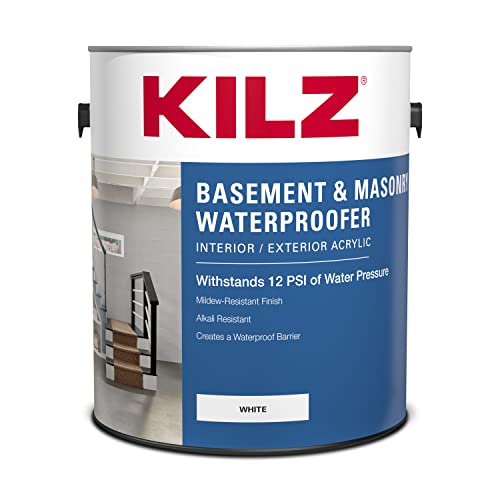
This premium interior/exterior paint is formulated to waterproof and seal porous concrete and masonry surfaces inside and outside your home. Using nanotechnology, this coating forms a barrier to help stop water infiltration while an alkali resistant finish provides long-lasting durability and decorative appeal. It is suitable for properly prepped and cured above and below grade basement walls, masonry walls, retaining walls, cinder and concrete blocks, stucco and brick. Do not use on floors or walls with active water leaks. Apply with a high-quality 1/2″-3/4″ nap roller, a 4″ nylon/polyester brush, or an airless sprayer delivering 2200-3200 PSI with a .023″-.025″ spray tip.
- Waterproofs and seals porous masonry surfaces both inside and outside.
- Nanotechnology barrier plus alkali-resistant coating for durability.
- Ideal for basements, cinder blocks, masonry walls, and brick; not for active leaks or floors.
- Application options include roller, brush, or high-pressure spray.
Surface prep matters: ensure walls are clean, dry, and free of loose material. For best results, repair cracks and allow curing after any masonry work before painting.
INSL-X WaterBlock Acrylic Masonry Waterproofer Paint
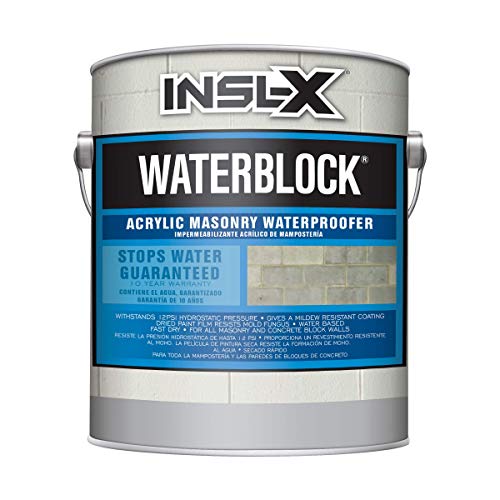
This water-based coating is designed to seal vertical interior and exterior concrete walls, making it a strong choice for basement walls, foundations, and retaining walls. It dries quickly and provides a durable waterproof finish suitable for interior and exterior basement walls, cinder blocks, stucco, brick, and masonry. The product offers high alkali resistance—up to pH 13—helping it stand up to the alkalinity found in masonry substrates.
- Water-based coating for vertical concrete walls; ideal for basements and foundations.
- Fast-drying; suitable for interior and exterior masonry projects.
- High alkali resistance up to pH 13.
Prepare the surface by cleaning and removing efflorescence; ensure walls are dry before application to maximize adhesion and curing.
KILZ Self-Priming Masonry, Stucco And Brick Paint

This high-quality acrylic latex water-base interior/exterior paint offers excellent hiding properties with great adhesion and water repellency on textured interior and exterior surfaces. It is self-priming, delivering a finish on properly prepared smooth, rough, and textured masonry, drywall, stucco, and brick surfaces. Alkali-resistant up to pH 12.0, it’s easy to apply and cleans up with soap and water. It can be rolled, brushed, or sprayed on for versatile use.
- Self-priming with strong adhesion and water repellency.
- Suitable for a variety of masonry surfaces, including textured blocks and brick.
- Alkali resistant up to pH 12; easy cleanup with soap and water.
For best results, ensure proper surface preparation and apply in thin, even coats to avoid lap marks on textured masonry.
Zinsser Perma-White Mold & Mildew Proof Interior Paint

This interior paint offers a self-priming formula that requires no sanding. The Mold & Mildew-Proof paint film is guaranteed for 5 years and resists dirt and moisture on the surface. It’s designed to maintain a cleaner appearance in spaces prone to humidity and dampness, making it a solid option for basements, laundry rooms, and other areas with higher humidity.
- Self-priming; no sanding required.
- Mold & Mildew-Proof film with a 5-year guarantee.
- Resists dirt and moisture on the film coating for easier maintenance.
Rust-Oleum Concrete Interior Wall Paint

This paint creates a unique concrete texture and look on ordinary walls, offering a decorative finish while remaining water-based for easier cleanup. It enhances the appearance of drywall, wood and hardboard with a sleek faux concrete finish. The formula dries to the touch in about 30 minutes, enabling faster project completion and coverage of up to 30 sq. ft. per quart.
- Concrete texture finish for a durable decorative look.
- Water-based formula with quick dry time.
- Coverage up to 30 sq. ft. per quart; suitable for interior applications.
Buying Guide
Key considerations for choosing interior masonry paints
- Moisture control: For cinder block walls, prioritize products that both seal and resist water intrusion. Consider paints labeled as waterproofing or waterproofer for basements and other damp spaces.
- Alkali resistance: Cinder blocks contain lime and other alkalis. Look for paints with high alkali resistance (often listed as pH tolerance) to prevent alkali burn-back and early chalking.
- Mold and mildew protection: In humid areas, mold- and mildew-resistant finishes extend wall life and improve air quality. Mold-proof coatings are especially helpful in basements and laundry rooms.
- Breathability vs. sealing: Some projects benefit from breathable seals that allow moisture to escape; others require a stronger moisture barrier. Choose based on the wall condition and climate.
- Finish and appearance: Matte, eggshell, or satin finishes affect washability and light reflection. Semi-rough textures on blocks may benefit from higher-hide, self-priming formulas.
- Application method: Consider whether you’ll roll, brush, or spray. Some products are self-priming, reducing the number of coats and prep steps; others may require priming for optimal adhesion.
- Drying and curing: Quick-drying options save time but may require meticulous surface prep. Allow adequate cure time, especially in humid environments.
- VOC levels: For indoor spaces, low-VOC formulas improve air quality during application and curing.
- Surface preparation: Clean surfaces, repair cracks, and ensure dryness before painting. Efflorescence and oil residues should be removed for best adhesion.
- Color options and maintenance: While white and grays are common for masonry, consider tinted options or paints that are easy to touch up without visible lines.
How to choose between the options
- Basement or wet areas: Prioritize waterproofing masonry paints or waterproofer options with alkali resistance to reduce moisture intrusion.
- Mildew-prone spaces: Choose products with built-in mold and mildew resistance for longer-lasting results.
- Decorative goals: If the goal is a decorative concrete look, consider texture-friendly finishes that create visual depth and can be cleaned easily.
Practical application tips
- Prep thoroughly: Clean walls, repair any cracks, and ensure surfaces are dry and sound before painting.
- Test a small area: Apply a sample patch to confirm adhesion and finish before full coverage.
- Coat layering: In most cases, two coats provide better coverage and durability; allow appropriate drying time between coats.
- Ventilation and safety: Use proper ventilation when applying paints with solvents or odors; wear protective gear as needed.
- Maintenance: For mold/mildew resistant finishes, routine cleaning with mild detergents helps retain appearance and effectiveness.
By selecting a paint that matches your space and climate, you can protect interior cinder block walls from moisture, maintain a healthier environment, and achieve the finish you want—whether you’re going for a clean white basement wall or a textured decorative block look.