Choosing the right oil-based primer helps ensure a smooth finish on particle board by sealing porous surfaces and blocking tannins, smoke, and other stains. This guide highlights five top oil-based primers suited for particle board, with practical considerations for interior projects, odor control, and adhesion. Each product is evaluated on stain-blocking ability, drying time, and overall coverage, helping you pick a reliable option for both new builds and renovations.
Summary of Selected Products:
- Zinsser 3608 Cover Stain Oil Base Primer Spray
- Zinsser 03504 White Zinsser, Cover-Stain Oil-Based Stain Blocker
- Rust-Oleum Zinsser 3954 Odorless Oil-Base Stain Blocker Primer
- INSL-X Reduced Odor Oil-Based Primer, 1 Quart
- Rust-Oleum 3504 Zinsser Cover Stain Oil Based Primer
Zinsser Cover Stain Oil Base Primer Spray

Zinsser 3608 Cover Stain is a versatile oil-based primer designed for interior and exterior use. It seals and blocks stains, provides excellent adhesion, and minimizes sanding requirements thanks to strong hiding power. It effectively prevents tannin bleed from wood and resists smoke and water stains. Being oil-based, it dries to a hard film, supporting subsequent coats of latex or oil-based paint. Ideal for particle board surfaces prone to bleed-through, this spray format offers convenient coverage in tight spaces and on vertical panels.
White Zinsser Cover-Stain Oil-Based Stain Blocker, 1 Qt
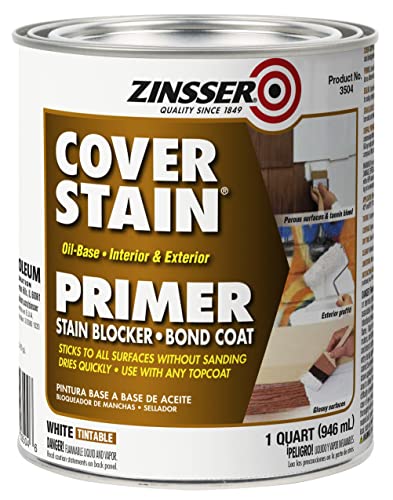
This 1-quart oil-based stain blocker from Zinsser offers strong adhesion and stain-blocking performance. It seals porous substrates and reduces tannin bleed, with a smooth finish that accepts both water-based and oil-based topcoats. The solvent-based formula enhances durability on particle board surfaces, making it suitable for areas with potential moisture exposure. It’s a practical choice for projects requiring a reliable, low-odor oil primer that yields solid hiding power before painting.
Rust-Oleum Zinsser Odorless Oil-Based Primer

The Rust-Oleum Zinsser 3954 Odorless Oil-Base Primer is designed for interior use on wood, drywall, plaster, concrete, and masonry. Its low-VOC formula minimizes harsh odors, making it suitable for occupied spaces. The primer dries to touch in about 30 minutes and covers around 100 square feet per quart, providing robust stain blocking and adhesion. This makes it a strong option for particle board with potential odor concerns or where a quick return to service is desired.
INSL-X Reduced Odor Oil-Based Primer
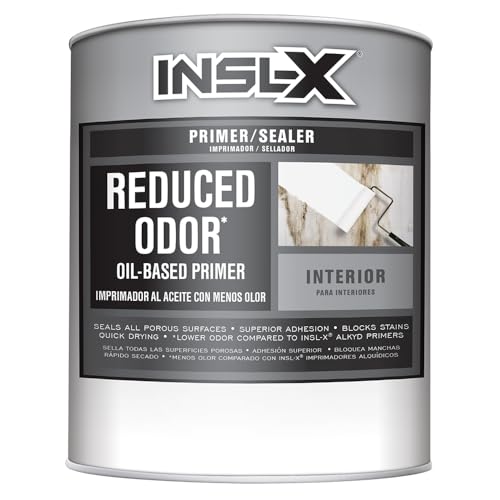
INSL-X Reduced Odor Oil-Based Primer blocks stain bleed and seals porous substrates, delivering a uniform finish. It emphasizes superior adhesion and is particularly effective against tannin and water damage stains. The reduced odor formulation helps improve indoor air quality during application, which is beneficial for occupied rooms. Suitable for particle board, the primer prepares the surface to accept topcoats evenly, reducing the risk of bleed-through and surface imperfections.
Rust-Oleum 3504 Zinsser Cover Stain Oil-Based Primer
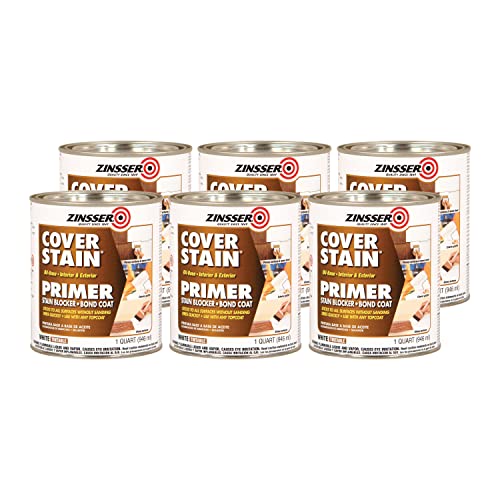
This 6-can kit of Zinsser Cover Stain oil-based primer provides a robust, high-hiding formula designed to block stains from water, smoke, and nicotine. It adheres well to interior surfaces and sands easily for a smooth topcoat. Dries to the touch in about 30 minutes and covers roughly 100–112 square feet per quart, making it suitable for multiple particle board surfaces across larger projects or renovations.
Buying Guide: Oil-Based Primer Considerations
When selecting an oil-based primer for particle board, consider stain-blocking strength, odor, drying time, and compatibility with your topcoat. Oil-based formulas generally offer superior adhesion on porous substrates and better tannin blocking than water-based options, which is important for particle board that may contain resin pockets. However, odor and ventilation are important for indoor projects, so odorless or low-odor options can be advantageous for occupied spaces.
- Stain Blocking and Adhesion: For tannin bleed and smoke stains, prioritize primers marketed as high-hiding or stain-blocking. Look for terms like “seals,” “blocks stains,” and “tannin bleed resistance.”
- Drying Time and Recoat Windows: Quick-drying formulas allow faster project completion. Check the “dries to touch” or “recoat in X hours” guidance to plan topcoat timing.
- VOC and Odor: Low-VOC or odor-reduced variants improve indoor air quality. This is especially relevant for particle boards used in living spaces or offices.
- Surface Compatibility: Ensure the primer is suitable for porous substrates like particle board and can accept latex or oil-based finishes after priming.
- Application Method: Sprays can offer fast coverage on panels and edges, while quarts and gallons may be more economical for larger projects. Consider your working space and equipment availability.
- Topcoat Match: Some oil-based primers pair well with latex topcoats; others perform best with oil-based paints. Verify compatibility with your intended finish to avoid adhesion issues.
For particle board projects, choosing a proven, stain-blocking oil-based primer is essential to prevent bleed-through, ensure uniform paint adhesion, and minimize sanding. The products above represent widely trusted options across different formats and odor profiles, enabling you to select a primer that fits your project scope and indoor environment.