Choosing a non-electric approach to water conditioning means prioritizing chemical-free options that don’t rely on electricity or ongoing salt usage. Salt-free descalers and portable, non-electric softeners can reduce scale, protect appliances, and improve water quality without adding ongoing operating costs. This guide reviews five Amazon-listed products that align with a non-electric or low-energy approach to water conditioning, focusing on scale prevention, maintenance ease, and suitability for various water hardness levels. Readers will find practical considerations for installation, capacity, and long-term performance to help decide which option fits a typical American home or RV setup.
| Product | Brand | Type | Capacity / Coverage |
|---|---|---|---|
| iSpring ED2000 Salt-Free Descaler | iSpring | Salt-free descaler (non-electric) | Whole-house scale prevention; for hard water 10–19 gpg |
| AO Smith Salt Free Descaler | AO Smith | Salt-free descaler (non-electric) | Recommended for homes with moderate hardness; does not soften |
| OTG4-DBLSOFT Portable RV Softener | On The Go | Salt-based softener (manual regeneration) | 16,000 grains; up to ~1600 gallons of soft water |
| Kenmore 350 Water Softener | Kenmore | Salt-based softener | 32,000 grains; reduces hardness up to 90 GPG |
| EcoPure EP42 Water Softener | EcoPure | Salt-based softener | 42,000 grains; autosense regeneration |
iSpring ED2000 Salt-Free Descaler
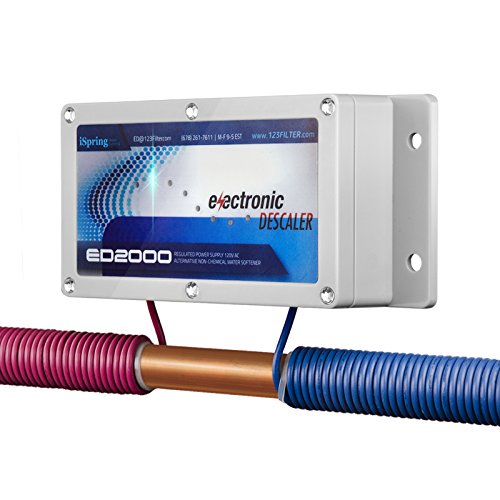
The iSpring ED2000 operates as a non-electric descaler designed to prevent scale deposits throughout a home’s plumbing system. It does not remove minerals or require salt, chemicals, or routine maintenance. Instead, the device aims to alter the mineral scale formation process, allowing existing scale to break down over time and reducing the need for aggressive cleaning or cleaning agents. It is positioned as an energy-efficient option suitable for very hard water areas, with an estimated payback period noted as reasonable by the manufacturer. Installation is typically in the main water line to protect multiple outlets and appliances.
Key features emphasize a broad, whole-house approach without electricity or added salt. By keeping healthy minerals in the water while preventing scale, iSpring markets benefits for appliances, plumbing, and even skin and hair. This model is particularly relevant for households seeking a low-maintenance, chemical-free alternative to traditional softeners, especially where salt use is a concern or where residents follow salt-restricted diets. Consider compatibility with existing filtration systems and the home’s overall water hardness when evaluating this option.
AO Smith Salt Free Descaler

The AO Smith descaler is positioned as a chemical-free, salt-free solution that descalces water systems rather than softening water. It does not reduce mineral content in the way salt-based systems do, and it requires no cleaning, backwashing, salt bags, or electricity. This makes it well-suited for households seeking a simple, maintenance-light approach to scale prevention. The product specs suggest suitability for incoming water hardness below certain thresholds, with additional considerations for alkalinity, pH, and iron content. It’s marketed for use across drinking, cooking, showering, and other household needs without altering TDS significantly.
The descaler intends to address common scale issues without the ongoing costs associated with salt-based regeneration. It is particularly attractive for those living in homes with moderate hardness or for renters seeking a non-permanent solution. Prospective buyers should assess water hardness at the point of entry and verify compatibility with any existing water treatment hardware. The system does not reduce sulfur or iron content, which may influence appliance maintenance in areas with iron-rich water.
OTG4-DBLSOFT Portable RV Softener

The OTG4-DBLSOFT is a portable, salt-based water softener designed for RVs and smaller living spaces. With 16,000 grains of capacity, this unit regenerates with two boxes of table salt in under 30 minutes and can provide soft water for approximately 1,600 gallons or up to 40 days, depending on usage. It emphasizes a compact design suitable for installation in tight spaces and a high flow rate with minimal pressure drop. The model is notably assembled in Indiana, highlighting domestic production for shoppers prioritizing U.S. assembly. This product suits mobile or temporary settings where full‑house installation of a traditional softener is impractical.
Because regeneration relies on salt, it requires periodic maintenance to replenish salt for continued operation. It does not rely on electricity, which aligns with a non-electric preference, though the salt-based approach means ongoing salt management is necessary. Users should consider the combined space available, water demand, and whether a portable unit fits their RV or marine setup best. This option provides a bridge between non-electric conditioning and traditional softening for mobile living scenarios.
Kenmore 350 Water Softener

The Kenmore 350 is a salt-based whole-house softener featuring an IntelliSoft technology-driven control system. It is designed to reduce hardness minerals and clear water iron, with a rated capacity of 32,000 grains. The unit is marketed as a space-saving design suitable for tight installation spaces and is positioned for homes seeking automatic adjustment to water conditions. The combination of a relatively moderate grain capacity and smart control can help optimize salt use and water efficiency, though it relies on salt for regeneration and requires power for the control system in typical setups.
Potential buyers should consider their household water hardness levels, the presence of iron, and the available space for installation. While IntelliSoft technology provides automatic adjustments to water demand, the need for salt and electricity makes this option distinct from fully non-electric or salt-free approaches. It is a practical choice for homes seeking a balance between traditional softening and modern control features in a relatively compact footprint.
EcoPure EP42 Water Softener

The EcoPure EP42 is a salt-based softener that uses autosense technology to determine how much salt and water are required for regeneration. This feature aims to minimize salt usage and water waste while providing standard softening performance. The unit is suitable for households of 1 to 6+ people and claims the ability to remove high hardness and ferrous iron, with certification from NSF. The EP42 is positioned as a mid-to-high capacity system with automated regeneration control, reducing the manual oversight typically associated with older salt-based systems.
For buyers, the EP42 represents a more autonomous option within salt-based softeners, as autosense reduces cycle waste and can lower operating costs over time. Consider your water hardness levels, iron content, household size, and whether you prefer a system with NSF certification and automated regeneration. Note that, unlike salt-free descalers, this option will rely on salt for regeneration and will require an ongoing salt supply and electricity for operation.
Buying Guide
Key purchase considerations include the technology type, water hardness, and installation constraints. Salt-free descalers, such as the iSpring ED2000 and AO Smith Descaler, do not soften water but aim to prevent scale formation. They operate without electricity or salt, which reduces ongoing costs and maintenance. However, they do not remove dissolved minerals and are most effective for mitigating scale in pipelines and appliances in areas with moderate to very hard water. For households that require tangible reduction of mineral content and soft water, salt-based systems like the Kenmore 350 and EcoPure EP42 provide actual softening but will require salt refills and electricity for the control head. Non-electric and salt-free options tend to be favored by renters or homeowners seeking simple, low-maintenance solutions.
Sizing and capacity are critical. Descalers are typically specified by the hardness of the water (gpg) rather than capacity. Softeners use grain capacity ratings (e.g., 16,000, 32,000, 42,000 grains) and must be matched to daily water usage and incoming hardness. RV and small-space applications, such as the OTG4-DBLSOFT, emphasize compactness and portability, whereas whole-house units installed in residential settings require space for a tank and connections. The AO Smith descaler highlights suitability for moderate hardness below a threshold, while models like EcoPure EP42 offer autosense regeneration to manage salt and water use more efficiently.
Maintenance and long-term costs differ across options. Salt-free descalers demand minimal ongoing maintenance beyond occasional inspection, and they avoid salt purchases. Salt-based systems require regular salt replenishment and periodic resin bed maintenance, as indicated by the Morton’s resin cleaner product in the broader market, though not required by all models. If indoor installation is a constraint, look for space-saving designs such as the Kenmore 350 or compact descalers. For households with iron-rich water, consider models that advertise iron reduction or discuss iron content limitations in the product documentation. Certifications, warranties, and manufacturer support should also factor into the decision.
In summary, the best non-electric water softener option depends on your priorities. If you want to minimize energy use and salt purchases while tackling scale, a salt-free descaler like the iSpring ED2000 or AO Smith Descaler is appropriate. If your goal is tangible mineral removal and softer water, evaluate salt-based models such as EcoPure EP42 or Kenmore 350, paying careful attention to space and maintenance requirements. For mobile living, the OTG4-DBLSOFT provides a compact, salt-based solution that does not require electricity. Always verify your water hardness, iron content, and daily water usage before selecting a system, and consult installation guides to ensure compatibility with existing plumbing and filtration components.