For home butchers and those who process game or large cuts, a meat grinder that can handle bones — especially soft bones from poultry or small game — is essential. The following selections emphasize durability, bone-triendliness, and high output, helping you grind meat efficiently while managing bone fragments. Each option below includes key features to help you compare capabilities and decide which model fits your kitchen workflow.
| Product | Brand | Bone Handling | Notes |
|---|---|---|---|
| STX International Turboforce II 4000 | STX INTERNATIONAL | Supports soft bones (chicken, rabbit, quail) | High wattage, six plates, sausage and kibbe tools |
| STX Magnum 1800W | STX INTERNATIONAL | Handles soft bones | Platinum edition with air cooling, large tray |
| Weston Electric Meat Grinder & Sausage Stuffer | Weston | Suitable for bones in small quantities | Die-cast aluminum, dual speeds, reverse |
| CHEFFANO Meat Grinder | CHEFFANO | Includes kubbe kit and sausage attachments | ETL approved, multiple plates and blades |
| AAOBOSI Meat Grinder 3000W Max | AAOBOSI | Can process various meats and bones in home use | 9 presets, built-in storage |
STX International Turboforce II 4000 Electric Grinder
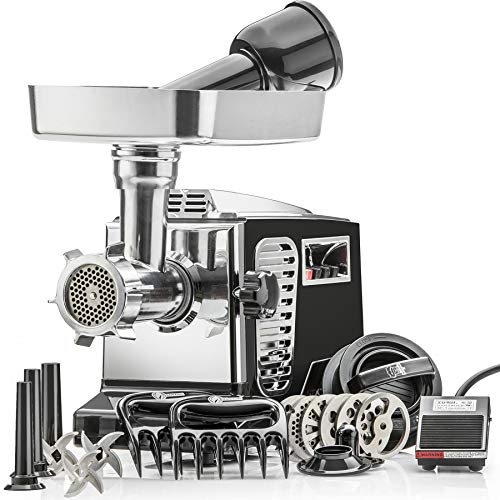
The STX Turboforce II combines high performance with a broad accessory set, including multiple grinding plates and a kubbe maker. It claims capability to grind soft bones such as chicken, rabbit, squirrel, and quail bones, making it a versatile choice for those who process small game or poultry. A large meat tray and air-cooled system support extended grinding sessions for larger batches, while the included sausage tubes and pattie press expand recipe options. Users should monitor motor heat during longer runs.
STX Magnum 1800W Electric Grinder
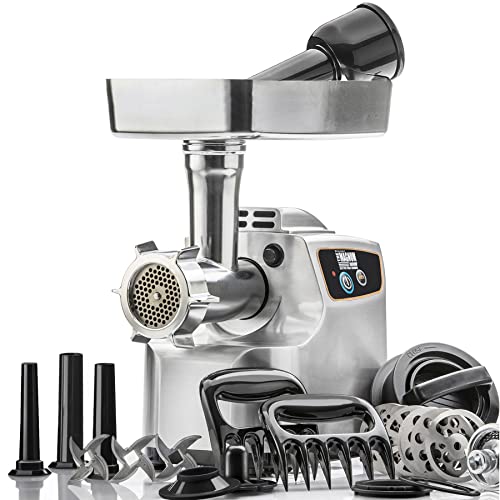
The STX Magnum Platinum Edition emphasizes a robust 1800-watt motor and air-cooled design for safer, longer grinding sessions. It features a sizable meat tray and no-frills operation suitable for home use. The unit’s capabilities extend to soft bones and dense cuts when paired with the right grinding plates, though users should avoid overloading or grinding hard bone material that could stress the motor. This model balances power with practical home-use features.
Weston Electric Meat Grinder & Sausage Stuffer

The Weston grinder is built with a die-cast aluminum body and metal gears for durability. It offers two speeds and a reverse function to reduce jams, which can be valuable when processing meat with small bones. The stuffer feature supports sausages, and the rugged design makes it a reliable choice for steady home use. While capable of handling smaller bone fragments, users should introduce bones gradually to minimize strain on the motor.
CHEFFANO Meat Grinder
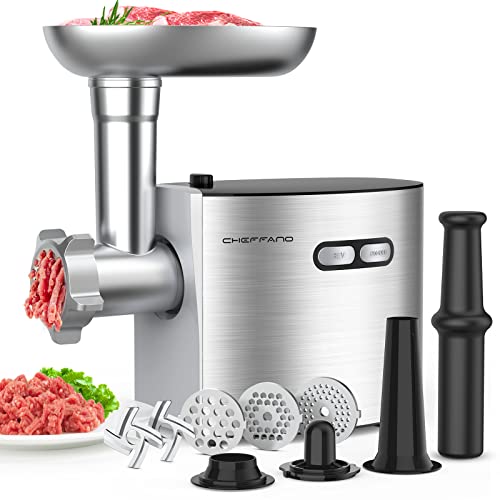
CHEFFANO offers an ETL-approved, heavy-duty setup with a 2600-watt peak power and a 350-watt running rating. It includes three grinding plates, two blades, and a kubbe/kibbe attachment set, enabling varied productions such as sausages and traditional kibbe. The three-layer auger design aims to reduce heat buildup and preserve meat texture. It’s suited for home kitchens processing moderate volumes and seeking versatility across grinding tasks, including bone-inclusive batches.
AAOBOSI Meat Grinder 3000W Max with 9 Presets
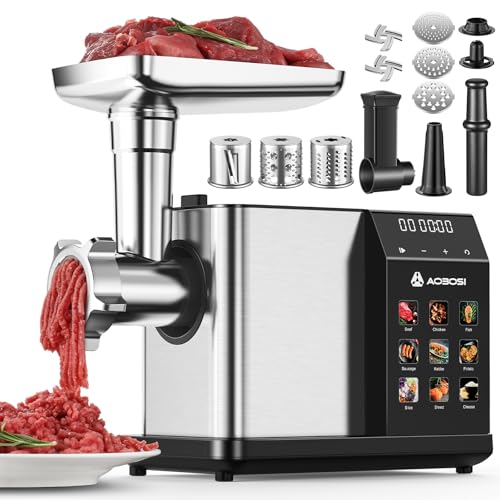
This model features a 3000W maximum output with 9 preset programs and Auto-Reverse to reduce clogging. Built-in storage helps organize blades, plates, and attachments, including sausage and kibbe kits. It offers a high grinding capacity suitable for batches requiring home-level bone-inclusive processing. The integrated cooling and safety features support longer sessions, though continuous operation should follow manufacturer recommendations to prevent overheating.
Buying Guide: Key Considerations For Bone-Handling Meat Grinders
Purpose and bone compatibility: Bone handling varies by model. Most home grinders can process soft poultry bones but not dense, long bones like beef marrow bones. If bone grinding is frequent, prioritize models marketed for bone handling and those with robust cooling, power, and reinforced grinding plates.
Power and efficiency: Wattage and motor design determine how quickly you can process meat and bones. Higher wattage grinders tend to perform better on tough batches but may require more maintenance and care to avoid overheating. Look for air cooling systems and circuit breakers for safety during extended use.
Accessories and versatility: A comprehensive accessory kit—grinding plates (multiple gauges), blades, kubbe/kibbe attachments, sausage tubes, and a stuffer—adds value by expanding your recipe options. Consider built-in storage for accessories if space is limited.
Build quality and materials: Food-grade stainless steel components and a durable housing (die-cast aluminum or stainless steel) improve longevity and hygiene. Check for ease of cleaning and compatibility with dishwasher-safe parts where applicable.
Operating guidelines: To protect the motor, avoid continuous operation beyond recommended times. Many models specify safe runtimes (often around 10 minutes) before a cooling period is needed. Auto-reverse features help prevent jams when grinding meat with small bones or connective tissue.
Safety and certifications: ETL or similar safety certifications indicate compliance with safety standards. Ensure the machine has a secure locking mechanism for the grinding head and a reliable overload protection system.
Maintenance and cleaning: Regular disassembly and thorough cleaning after use prevent cross-contamination and odor buildup. Look for models with easy access blades and plates, and consider a model with fewer crevices where meat residue can accumulate.
Price-to-value balance: While top-end models deliver robust bone-handling capabilities, assess how often you’ll grind bones and the typical batch size. For occasional bone processing, a mid-range model with flexible attachments may offer better overall value.