This guide reviews top-rated leaf guard gutter products to help homeowners select durable, easy-to-install solutions. Each option below is evaluated for material quality, filtration efficiency, installation approach, and long-term value. Use the summary table to compare key attributes at a glance, then read detailed sections to decide which guard best fits your gutters, climate, and DIY readiness.
| Product | Brand | Gutter Fit | Material | Key Benefit |
|---|---|---|---|---|
| SDSNTE Lock-in Gutter Guard | SDSNTE | 6″ K-Style Gutters | Powder-Coated Steel | Durable protection with wide coverage; reduces maintenance. |
| Raptor Gutter Guard | Raptor Gutter Guard | 5″ and Smaller | Stainless Steel Micro-Mesh | Outstanding filtration; rust-resistant; DIY-friendly. |
| LeafTek Gutter Guards | LeafTek DIY Gutter Guards | 5″ Gutters (100′ length) | Aluminum | High filtration with USA-made durability. |
| A-M Gutter Guard | A-M Gutter Guard | 5″–6″ Gutters | Aluminum | Lifetime rust-proof design; nearly invisible from ground. |
| FlowGuard Gutter Guard | FLEXXPOINT | 5″ Gutters | Aluminum | Three-point design for strong water flow; USA-made. |
SDSNTE Lock-in Gutter Guard

The SDSNTE Lock-in Gutter Guard is built from a durable powder-coated steel that resists weather and pest exposure year after year. Designed to fit 6″ K-style gutters, this pack covers a substantial length with a 6″ by 120 ft footprint per bundle, and it comes in a large 40-pack to minimize installation stops. The guard blocks leaves, pine needles, and debris while permitting water to flow freely, helping prevent clogs and water overflow. Its lock-in design aims to provide a secure fit, reducing gaps where debris can infiltrate. Ideal for homeowners seeking long-term protection with a robust metal guard.
Durability is a primary selling point here. Powder-coated steel resists rust and dents, which is beneficial in regions with heavy snowfall or freeze-thaw cycles. The 40-pack arrangement makes it practical for larger homes or repeated gutter sections, and the K-style compatibility ensures reliable alignment with common gutter profiles. Installation tends to be straightforward for DIYers who can handle measuring, cutting, and snapping guards into place, though longer runs may require careful attention to seams. Overall, SDSNTE offers a sturdy, high-coverage option for year-round gutter protection.
Raptor Gutter Guard

Raptor Gutter Guard uses stainless steel micro-mesh engineered for strong filtration and durable performance. The kit is designed to fit 5-inch gutters (and smaller) and includes 48 linear feet of mesh with self-tapping screws for installation. The stainless steel mesh resists rust and corrosion, making it a strong choice for humid climates or areas with pine needles, small branches, and other debris. Raptor’s V-Bend & Trough Technology optimizes water flow, adds rigidity, and helps prevent debris from sticking to the surface. DIY-friendly installation makes it approachable for homeowners who prefer a hands-on approach.
Beyond filtration, the micro-mesh design reduces the frequency of clog-related maintenance, helping gutters drain efficiently during heavy rains. The included hardware simplifies mounting, and the kit’s dimensions suit standard 5-inch gutters commonly found on American homes. While robust, some users may need to cut or trim pieces to fit non-standard runs or unusual rooflines. Overall, Raptor Gutter Guard provides strong protection with a focus on long-lasting stainless steel performance and user-friendly installation.
LeafTek Gutter Guards For Leaves

LeafTek Gutter Guards are built from .019 gauge aluminum for long-lasting durability and a robust, lightweight profile. The system is designed for 5″ gutters and 100-foot sections, with 404 holes per square foot to help water flow while blocking leaves, pine needles, and other debris. The guards are made in the USA, offering strong support for domestic sourcing expectations and a reliable manufacturing standard. The raised ridges aid in shedding leaves and needles, while still allowing rainwater to pass through efficiently.
LeafTek emphasizes a DIY-friendly approach, with a premium metal construction that resists bending, sagging, or warping under heavy weather. The combination of aluminum’s corrosion resistance and a dense mesh helps reduce maintenance cycles. This option is well-suited for homeowners seeking a high-filtration solution that remains nearly invisible from the ground, thanks to its low-profile appearance and light finish. In regions with frequent storms or heavy leaf fall, LeafTek’s design aims to maintain gutter function with minimal upkeep.
A-M Gutter Guard
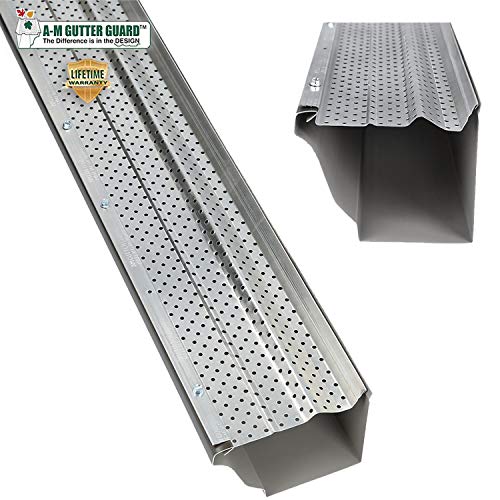
A-M Gutter Guard presents a heavy-duty aluminum solution designed with hidden hangars in mind, maintaining compatibility with various hangar types and preserving roof warranties. The product uses 100% aluminum with an industrial gauge to resist rust and rot, helping it sustain performance over many seasons. A-M highlights a high hole density—380 holes per linear foot—allowing water to pass while guarding against downpours. The guard is marketed as nearly invisible from the ground, aiding curb appeal. This option suits homeowners prioritizing longevity, minimal maintenance, and aesthetically discreet protection.
From a practical standpoint, aluminum guards tend to be lighter and easier to handle during installation. The rust-proof, lifetime-oriented warranty adds long-term value for households in coastal or rainy climates. While some DIY installers may need experience aligning with hidden hangars, the overall design supports secure mounting and dependable filtration. If you want a durable, low-visibility shield that won’t rust, A-M Gutter Guard offers a compelling balance of strength and discretion.
FlowGuard Gutter Guard

FlowGuard, by FLEXXPOINT, is an American-made aluminum gutter guard designed for 5-inch gutters with a long run length of 102 feet per kit. The three-point design elevates wet debris off the guard surface, reducing buildup and helping maintain steady water flow even during heavy rain. Interlocking ends simplify continuous installation, and the system includes stainless steel screws for durability. The flow-enhancing geometry, combined with a robust aluminum construction, aims to provide reliable protection through varying weather conditions while minimizing clogging across seasons.
Key advantages include a strong balance between filtration and drainage, plus straightforward DIY installation suitable for many homeowners. The aluminum construction resists rust and is designed to withstand exposure to wind, rain, and snow. While FlowGuard emphasizes ease of use and consistent performance, users should still verify gutter size compatibility and ensure proper anchoring in high-wind areas. Overall, FlowGuard offers a dependable, U.S.-made option with a focus on sustained rainfall management and long-term value.
Buying Guide
Gutter Size And Fit
Gutter guards come in common sizes such as 4″, 5″, and 6″. Before purchasing, measure your gutter width and confirm the guard’s compatibility with your profile (K-style, half-round, etc.). Some guards are universal with trimming allowances, while others are designed specifically for one size. Assess whether your home has standard or non-standard runs, and check if the system supports your gutter length in the boxes or requires cut-to-length installation. A fit that matches your gutter profile reduces gaps where debris can accumulate and improves overall performance during heavy rain.
Material And Durability
Material choice affects longevity and weight. Aluminum guards tend to be lightweight and corrosion-resistant, making them easy to handle and suitable for coastal areas. Stainless steel guards offer exceptional durability and filtration but can be heavier and cost more. Powder-coated steel provides strength with weather resistance but may be heavier and require careful installation to avoid dents. Consider your climate, tree debris type, and snowfall when selecting material. A higher upfront investment can yield longer service life and fewer maintenance cycles over time.
Filtration And Mesh Size
Filtration quality depends on mesh density. Fine meshes block smaller debris like pine needles but can require occasional cleaning to prevent no-flow buildup atop the guard. Coarser meshes allow faster water passage but may let finer debris through. Some products advertise specific hole counts (for example, LeafTek’s 404 holes per square foot) as a proxy for filtration effectiveness. In pine-heavy or deciduous neighborhoods, a finer micro-mesh often reduces clogs, but ensure it doesn’t impede the required rainfall drainage rate in heavy storms.
Installation And Compatibility
DIY-friendly designs typically include pre-cut lengths, screws, and simple mounting frames, but some guards rely on hidden hangars or more involved alignment. If you’re a first-time installer, choose products with clear instructions and included hardware. Consider whether the guard sits atop the gutter or clips under the shingle line, as this affects compatibility with existing roof edge flashing. For larger homes, packages with longer runs or modular sections reduce seams and simplify the installation process.
Warranty And Long-Term Value
Long-term warranties and rust-proof claims add value. Some products advertise lifetime guarantees on aluminum or rust protection, while others emphasize 50-year durability or “never rust” assurances. Review warranty terms for coverage scope, exclusions (debris buildup, improper installation), and whether replacements are included. A solid warranty reflects confidence in materials and manufacturing, important for homeowners investing in a system expected to perform across multiple seasons.
Maintenance And Cleaning
Leaf guard systems are designed to reduce cleaning, but periodic maintenance is still prudent. Inspect guards after heavy storms to ensure debris isn’t accumulating at the edges or blocking flow. Some guards are easier to rinse off or brush clean, while others shed debris more naturally due to mesh and ridge design. Consider how easily you can access your gutters for cleaning from the ground versus needing a ladder, and whether the design minimizes bypass entry for pests or birds.