Bright light therapy lamps are a practical, science-backed option for addressing seasonal blues and improving mood, energy, and sleep. This guide highlights five top lamps designed to deliver safe, UV-free light and supportive features for adults, families, students, and remote workers. Each pick is chosen for ease of use, controllable brightness, and reliability in daily routines. The introduction also includes a quick comparison table to help you decide at a glance.
Buying quick view
- Verilux HappyLight Lucent: Best for fast, one-button use and portability.
- EVATEALE 670nm Red Light + 10,000 Lux: Best for sleep and circadian support in bedrooms.
- Sotipevs Light Therapy Lamp: Best for customizable color temperatures and timers.
- Verilux HappyLight Lumi Plus: Best for adjustable brightness with a countdown timer.
- Circadian Optics Lumos 2.0: Best for desk-bound users needing a tall, adjustable panel.
The following table compares key features side by side to help buyers choose quickly. All products are UV-free and designed for mood improvement or circadian rhythm support.
| Product | Light Intensity | Color Temperatures | Timers / Settings | Best For |
|---|---|---|---|---|
| Verilux HappyLight Lucent | 10,000 lux | Full-spectrum LED | One-button operation | On-the-go light therapy |
| EVATEALE 670nm Red Light Lamp | 10,000 lux | 670nm red + 3000K–6500K | Multiple brightness levels; remote control | Sleep support and relaxed evenings |
| Sotipevs Light Therapy Lamp | up to 15,000 lux | 3000K/4500K/6500K | 6 timer settings; memory function | Versatile daily use |
| Verilux HappyLight Lumi Plus | 10,000 lux | 3 color temperatures | Countdown timer; 3 brightness levels | Customizable routine |
| Circadian Optics Lumos 2.0 | 10,000 lux | 5500K noon-sun color | Fully adjustable panel; portable | Desk-bound, flexible positioning |
Verilux HappyLight Lucent – One-Touch Light Therapy Lamp
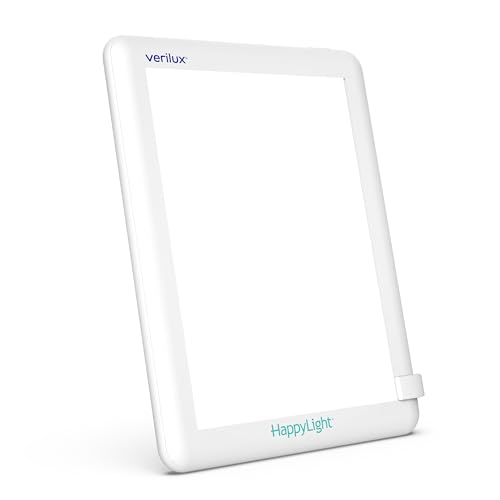
The Verilux HappyLight Lucent delivers up to 10,000 lux of UV-free, full-spectrum LED light with a simple one-button interface. It’s designed to kickstart mornings and maintain mood with minimal setup. The detachable stand adds portability for home, office, or travel use. This lamp is best for immediate, straightforward light therapy without complex settings, ideal for first-time users or busy individuals seeking quick daily relief.
Who it’s best for: Busy professionals, students, and seniors who want reliable, easy-to-use therapy with a compact design. Why selected: It provides a strong, safe dose of light in a slim form and avoids flicker and glare. Limitation: Minimal customization beyond the on/off function might not suit power users who want adjustable timers or multiple color temperatures.
EVATEALE 670nm Red Light Sleep Device & 10,000 Lux Sun Lamp
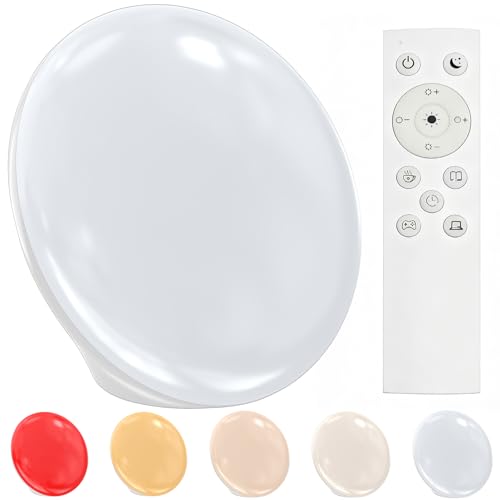
This dual-function lamp combines 670nm red light therapy with a bright 10,000 lux sun lamp. The 670nm red light promotes melatonin production and relaxation, making it suitable for bedrooms and winding-down routines. With a smart dimming system offering several white color temperatures and five brightness levels, it can function as a calming night light or a vivid desk lamp for work. Best for: households seeking science-backed sleep support and flexible ambiance. Limitation: The red light feature is complemented by white modes rather than a single, pure blue-free spectrum, which may affect preference for some users.
Sotipevs Light Therapy Lamp – 15,000 Lux UV-Free

The Sotipevs lamp offers up to 15,000 lux UV-free therapy with three color temperatures and six timer settings. The memory function restores your last used brightness and color when you return. This makes it a strong option for users who want a highly customizable therapy session, whether at home or in the office. Best for: users who need precise control over color temperature and session length. Limitation: Higher brightness and more features may require a learning curve for first-time users.
Verilux HappyLight Lumi Plus – Adjustable Brightness

The Lumi Plus offers up to 10,000 lux UV-free light with adjustable brightness and a programmable countdown timer up to one hour in 15-minute increments. It adds flexibility through three color temperature options and the option to detach the stand or mount the unit. Best for: users who want a tailored daily routine with precise timing. Limitation: The base design may feel larger on very small desks compared to compact models.
Circadian Optics Lumos 2.0 Desk Lamp

The Lumos 2.0 is a tall, adjustable desk lamp that delivers 10,000 lux with a noon-sun color (5500K). Its 270-degree rotating light panel and stable base let users position the light for maximum eye exposure. It folds down for travel, yet expands to a tall height for effective therapy. Best for: desk workers who need a flexible, tall solution with strong light delivery. Limitation: Size and footprint may be larger than ultra-compact lamps for crowded desks.
Circadian Optics Lumine Light Therapy Desk Lamp

The Lumine lamp features 10,000 lux UV-free light with a compact footprint and a large light panel designed to maximize the delivered light while occupying minimal desk space. It mirrors natural daylight and supports circadian health, mood, energy, and sleep. Best for: users who want a powerful panel in a smaller form factor. Limitation: The compact design may reduce some reach for very wide desks or users needing broader ambient illumination.
Buying Guide: How To Choose The Right Light Therapy Lamp
What intensity do you actually need? For seasonal blues, many want 5,000–10,000 lux at a comfortable distance. Lamps with 10,000 lux at a typical reading distance are common, but consistency matters more than peak brightness. UV-free LED sources are standard to avoid harmful exposure.
What color temperature makes sense? Noon-day daylight around 5500K–6500K is common for wakeful energy and focus. Some models add warmer or cooler modes to suit morning routines, evenings, or reading needs. If you have trouble sleeping, consider warmer temperatures in the evening to avoid stimulating blue light.
How important are timers and memory? If you want a routine, a programmable countdown timer and memory for last settings help maintain consistency. This is especially useful for seasonal adjustments when your schedule shifts.
What about form factor and placement? Desk-mounted panels work well for work tasks, while bedside units are better for winding down. A detachable stand or wall-mount option adds flexibility. If you travel, consider compact or foldable designs that fit in a bag or suitcase.
Are there any safety considerations? Look for UV-free lighting and flicker-free operation. A visible diffuser or soft edges reduce glare. Some users prefer blue-light-free or red-light elements for specific circadian benefits, such as melatonin support in the evening.
How should you use light therapy effectively? Use the lamp at the same time each day, typically in the morning for mood and energy benefits. Maintain an appropriate distance (often 12–24 inches) and avoid direct eye exposure. Start with shorter sessions and gradually increase to the desired duration as needed.
Frequently Asked Questions
- What is light therapy used for?
Light therapy helps regulate circadian rhythms, improve mood, increase energy, and enhance sleep by delivering controlled light exposure.
- How long should I use a lamp each day?
Many users start with 20–30 minutes in the morning, gradually adjusting based on response and the lamp’s instructions.
- Can light therapy replace medication?
Light therapy is typically a complementary approach for seasonal blues and circadian issues. Consult a healthcare professional for guidance on treatment plans.
- Is timing important for sleep disorders?
Yes. Morning use aligns with your circadian phase; evening use with warmer light may affect sleep onset differently. Follow device guidelines.
- Are these lamps safe for kids?
Many lamps are designed with adjustable brightness and modes suitable for adults and older children; always supervise use for younger children and follow product guidelines.
- What distance should I place the lamp from my face?
Many devices recommend 12–24 inches. Check your model’s manual for distance and brightness settings appropriate to your environment.