Top picks for home UV water purification address different needs, from simple installs to high-flow whole-house protection. This guide highlights five reliable options, clarifying who each is best for and why they stand out. If you want chemical-free disinfection and a steady 12 GPM flow, one of these models could fit your household. The buyer’s table below summarizes key details to compare at a glance.
| Product | Flow (GPM) | Power | Inlet/Outlet | Special Feature |
|---|---|---|---|---|
| HQUA-TWS-12 Ultraviolet Water Purifier | 12 | 55W | 1″ MNPT | Extra UV lamp + quartz sleeve |
| HQUA-OWS-12 UV Water Purifier | 12 | 40W | 3/4″ MNPT | Simple install, chemical-free |
| iSpring UVF20 Whole House System | Up to 12 | LED module, no bulb replacement | 3/4″ MNPT | Built-in flow sensor |
| JOREVS UV Water Filter | 12 | LED UVC | Designed for POE | On-demand flow sensor |
| HQUA-OWS-121 UV Water Purifier | 12 | 40W | 1″ MNPT | Extra UV bulb |
HQUA-TWS-12 Ultraviolet Water Purifier

The HQUA-TWS-12 is a 12 GPM whole-house UV purifier with a 55W lamp and a compact 21-inch length. It uses a 1″ MNPT inlet/outlet and emphasizes a smaller footprint for easier integration into existing piping. The unit is described as not altering taste, odor, pH, or overall water chemistry, aligning with chemical-free disinfection goals. This model is best for homeowners seeking a robust, easy-to-install UV solution with an extra lamp and quartz sleeve for extended service intervals.
Best for: larger homes or upgrades where space is a concern yet high flow is required. The included extra UV lamp and quartz sleeve reduce downtime during maintenance.
Caution: installation should ensure proper alignment with 1″ piping and secure electrical connections. Some users may prefer a model with built-in flow sensing for energy efficiency, which this unit does not feature.
HQUA-OWS-12 Whole House UV Purifier

The HQUA-OWS-12 delivers 40W of UV power and 12 GPM in a stainless steel chamber. It uses a 3/4″ MNPT inlet/outlet and claims chemical-free filtration with no chlorine impact on taste, color, or odor. Easy installation and a no-plumber-needed stance make it a practical choice for many homes. It is well-suited for users who want straightforward installation and reliable disinfection without ongoing chemical handling.
Best for: households needing a straightforward, chemical-free upgrade with broad compatibility and simple setup. If you value minimal maintenance, this model offers a balance of performance and ease of use.
Limitation: lacks built-in flow sensing, which can help optimize energy use, though manual monitoring is feasible.
iSpring UVF20 Whole House UV System
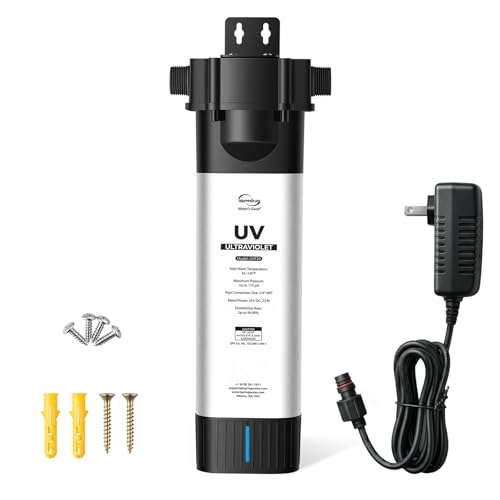
The iSpring UVF20 features long-life LED UV technology, eliminating the need for bulb replacements for up to 11 years with a typical daily usage. It includes a built-in flow sensor that activates the UV module only when water flows, which helps save energy and extend system life. The unit provides up to 12 GPM flow and uses a 3/4″ MNPT connector, making it a strong option for whole-house purification with reduced energy consumption.
Best for: homes seeking a maintenance-light, energy-saving UV solution with smart flow control. The LED module is a notable benefit for long-term reliability.
Caution: LED-based UV systems require a reliable electrical supply and proper downstream installation to maximize effectiveness; follow the manufacturer’s placement guidance for best results.
JOREVS UV Water Filter
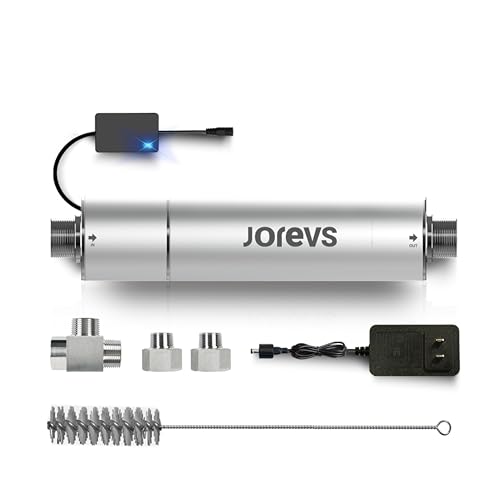
The JOREVS system uses advanced UVC-LED technology with a wavelength range of 270–280 nm to destroy microbial DNA/RNA, reducing bacteria, viruses, and protozoa rapidly. It is designed for whole-house and POE setups, ideal for homes with multiple bathrooms or light commercial use needing an economical disinfection option. A notable energy-saving feature is the on-demand flow sensor, which powers disinfection only when water runs.
Best for: households wanting a mercury-free, LED-based solution with strong disinfection and energy efficiency. Suitable for POE installations after filtration and conditioning steps.
Limitation: installation should follow guidance for downstream placement relative to softeners and filters; not ideal for raw well water without pre-treatment.
HQUA-OWS-121 UV Water Purifier

The HQUA-OWS-121 is a 12 GPM unit with a 40W power rating and a 1″ MNPT inlet/outlet. It emphasizes easy installation and chemical-free operation with no changes to water taste or pH. The model comes with an extra UV bulb, contributing to reduced downtime for maintenance. It is a strong option when a 1″ connection is preferred and a compact single-unit solution is desired.
Best for: homes that require a larger-inlet configuration and immediate availability of an extra lamp for quick changeover. Choose this if 1″ piping is already in place and you want straightforward upkeep.
Limitation: not every installation will require an extra bulb; verify space for extended maintenance cycles before selecting this option.
Buying Guide
What should you consider when choosing a home UV water purifier?
- Flow Rate and Home Size: For whole-house protection, aim for systems that deliver at least 12 GPM to cover multiple bathrooms and peak usage.
- Lamp and Power Options: LED UV modules can reduce bulb changes and energy use, while mercury-based lamps may offer familiar performance. Consider maintenance needs and replacement availability.
- Inlet/Outlet Configuration: Ensure the unit’s connector size (1″ vs 3/4″) matches your existing pipes to minimize adapters.
- Flow Sensor and Automatic Control: Models with flow sensors power UV disinfection only when water flows, saving energy and extending lamp life.
- Installation Considerations: Horizontal vs vertical placement, downstream placement after filtration, and space for installation all influence ease of use.
- Chemical Impact: A primary benefit of UV systems is the absence of added chemicals like chlorine; confirm that your water treatment plan aligns with this approach.
Frequently Asked Questions
- Do UV water purifiers remove all contaminants?
– UV systems disinfect microorganisms but do not remove dissolved chemicals or particulates; many setups combine UV with filtration for comprehensive treatment. - How often should UV bulbs or LEDs be replaced?
– LED-based modules can last many years; traditional UV lamps typically require replacement on a schedule recommended by the manufacturer. - Is a flow sensor necessary?
– Flow sensors improve energy efficiency by activating UV only when water flows, reducing wear and power use. - Can I install a whole-house UV system myself?
– Many units are designed for DIY installation, but review local codes and plumbing requirements. When in doubt, hire a licensed installer. - Will UV treatment affect taste or odor?
– UV disinfection does not add taste or odor; if taste or odor changes occur, check for upstream filtration or mineral content that may require adjustment.