De-icing cables for gutters protect roofs, fascia, and downspouts from ice dams and water backup. This guide reviews top-rated options, outlining safety certifications, power needs, and installation considerations to help American homeowners choose the right heat cable for their gutters and roofs.
| Product | Brand | Length | Power | Certifications |
|---|---|---|---|---|
| Frost King RC60 Heating Cables | Frost King | 60 ft | Not specified | UT-listed (implied in product listing) |
| LantingMing Heat Tape | LantingMing | 30 ft | 5 W/ft | UL and other standards noted |
| HEATIT HIRD 80 ft | HEATIT | 80 ft | 5 W/ft | ETL & CSA Certified; UL plug |
| TOPDURE 20 ft Roof Heat Tape | TOPDURE | 20 ft | 5 W/ft | ETL & CSA Certified; UL plug |
| Sejaede 60 ft Roof & Gutter Heat Cable | Sejaede | 60 ft | 8 W/ft | Certified for safety; self-regulating |
The following sections highlight five selected products with details on length, wattage, safety features, and typical use cases to help homeowners compare options for gutter and roof ice dam prevention.
Frost King RC60 Heating Cables, 60′

The Frost King RC60 is a pre-assembled heat cable designed for gutter protection and ice dam prevention. It emphasizes straightforward installation with easy-to-follow instructions. This model is ready to install right out of the box, reducing setup time for homeowners. It is suitable for typical residential gutters and downspouts, helping to maintain water flow during freezing conditions.
LantingMing Heat Tape for Roof & Gutter Snow De-Icing
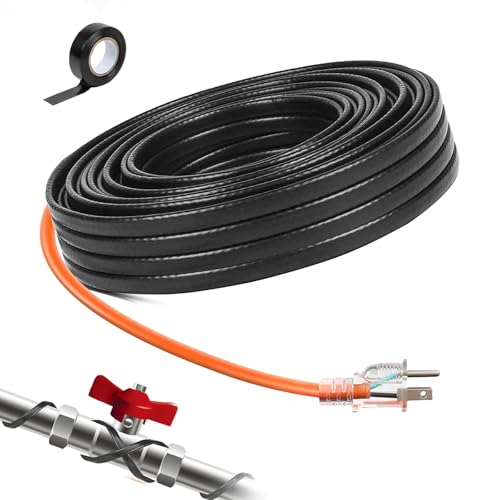
This 30-foot heat tape operates at 5 watts per foot and is designed to prevent icing on roofs, gutters, and downspouts. It provides a robust temperature range, capable of functioning in sub-freezing conditions down to -40°F. The inner copper core and multi-layer insulation offer durability, while UL and related certifications indicate compliance with safety standards. The product supports versatile DIY installations for gutters and roofs with different materials.
HEATIT HIRD 80 Feet Roof & Gutter Cable

HEATIT HIRD 80 ft features ETL and CSA safety certifications, with a UL-certified plug for added protection. The kit comes pre-assembled with a 6 ft 18/3 cold lead, clips, and spacers, making installation straightforward. It uses tough XLPE insulation and a weather-resistant outer jacket to withstand winter exposure, designed to prevent ice dams and ensure water flows through gutters and downspouts.
HEATIT HIRD 100 Feet Roof & Gutter Cable
This longer 100-foot HEATIT HIRD option shares the same safety assurances as the 80-foot version, including ETL & CSA certifications and a UL-certified plug. The pre-assembled cable includes a 6 ft 18/3 lead, a user manual, and mounting accessories. The design emphasizes reliability and safety for extended gutter or roof installations, maintaining efficiency in preventing ice buildup across larger areas.
TOPDURE 20ft Roof Heat Tape for Roof and Gutters

TOPDURE offers a compact 20-foot heat tape with 5 watts per foot, certified by ETL and CSA. The kit is UL-plug compatible and includes easy-to-follow instructions, clips, and spacers. It is suitable for smaller gutters or downspouts, and it emphasizes safety, durability, and reliable performance in preventing ice dams and water backup on smaller roof sections.
Sejaede 60 ft Roof & Gutter Heat Cable

Sejaede’s 60-foot self-regulating cable delivers 8 watts per foot, designed for rapid snow melt and ice dam prevention. The kit includes a plug with LED indicator for power confirmation and a rugged build to resist UV exposure and winter weather. Its self-regulating technology helps manage heat output to reduce energy use while protecting gutters, downspouts, and rooflines.
Buying Guide: Key Purchase Considerations And Comparisons
When choosing a heat cable for gutters, consider the following factors to balance safety, efficiency, and cost:
- Length and coverage: Measure your roof and gutter span to ensure the chosen model covers the required area. Longer cables are ideal for larger homes but require more electricity.
- Wattage and heat output: Common values are 5 W/ft and 8 W/ft. Higher wattage provides faster ice melt but uses more power. Self-regulating cables adjust heat output based on ambient temperature to save energy.
- Self-regulating vs constant wattage: Self-regulating cables automatically increase or decrease heat output, reducing the risk of overheating. Constant wattage cables deliver steady heat but can be less forgiving in variable temperatures.
- Safety certifications: Look for ETL, CSA, and UL-listed components. A fully certified system (cable and plug) provides greater assurance of safety and compliance with North American standards.
- Installation: Pre-assembled kits with cling-safe tapes, clips, and spacers simplify mounting. Consider the ease of routing cables along gutters, downspouts, and roof edges without damaging shingles.
- Durability and weather resistance: Outer jackets and insulation should withstand UV exposure, temperatures, and moisture. Choose materials compatible with your roof type (metal, asphalt, plastic gutters).
- Energy efficiency: For larger homes or extensive gutter lines, compare energy usage across options. Self-regulating types can prevent excessive heat and reduce energy costs over time.
- Compatibility with downspouts and metal vs. plastic gutters: Some products are better suited for specific materials. Check manufacturer guidance for recommended uses and any limitations.
- Maintenance and warranty: Look for long warranty periods (ideally 5–10 years) and straightforward replacement parts or accessories in case of damage.
- Installation environment: For exposed outdoor installs, ensure weatherproof plugs and cord protection, especially in areas with heavy snow or freezing rain scenarios.
In selecting a solution, balance the length, wattage, safety certifications, and the specific area you need to protect. For larger homes with extensive gutter systems, longer and higher-wattage cables with comprehensive safety certifications offer greater reliability. For smaller gutters, compact kits with clear installation instructions may suffice and reduce initial cost.