Choosing the right adhesive for vinyl flooring requires balancing bond strength, substrate compatibility, moisture resistance, and safety. Vinyl installations span kitchens, bathrooms, basements, and commercial spaces, so you need an adhesive that delivers a durable bond under daily wear and occasional exposure to moisture. This guide highlights five dependable vinyl flooring glues that offer strong initial grab, long-term durability, and safer formulas. Each product is suited for sheet vinyl, vinyl-backed carpet tile, and luxury vinyl plank installations, as well as repairs to seams and accessories.
| Product | Brand | Notable Strength |
|---|---|---|
| HOOK UP Vinyl Contact Cement | HOOK UP | Waterproof, fast-drying vinyl bond |
| HH-66 Toluene Free Vinyl Cement | RH Adhesives | Toluene-free, small-project friendly |
| ROBERTS Universal Resilient Flooring & Vinyl-Backed Carpet Tile Adhesive | ROBERTS | Acrylic latex, solvent-free, high initial strength |
| Lucida CoreBond Pro-Grade Solvent Free Vinyl Flooring PSA | Lucida Surfaces | Solvent-free, pressure-sensitive, high performance |
| Yeardera Heavy Duty Construction Adhesive | Yeardera | All-purpose, wide temperature tolerance |
Each option brings distinct advantages depending on project size, substrate, and exposure conditions. The following sections present detailed profiles of five products most relevant to vinyl flooring needs, followed by practical buying considerations to help you choose the best glue for your project.
HOOK UP Vinyl Cement Review

HOOK UP Vinyl Contact Cement is designed for vinyl-specific bonding, offering a robust, pressure-resistant connection that holds up under demanding use. The formula emphasizes exceptional initial grip and durable long-term adhesion, making it suitable for repairs that must endure movement and stress. When fully cured, it forms a waterproof seal ideal for pool liners and other water-exposed vinyl installations, helping protect investments against leaks. The rapid-drying formula minimizes downtime, allowing quick repairs on pools, inflatables, tarps, and vinyl fixtures. This product is well-suited for both DIY enthusiasts and professionals working with vinyl components that demand reliability.
- Superior Adhesive Strength
- Waterproof Seal
- Fast-Drying Formula
RH HH-66 Toluene Free Vinyl Cement
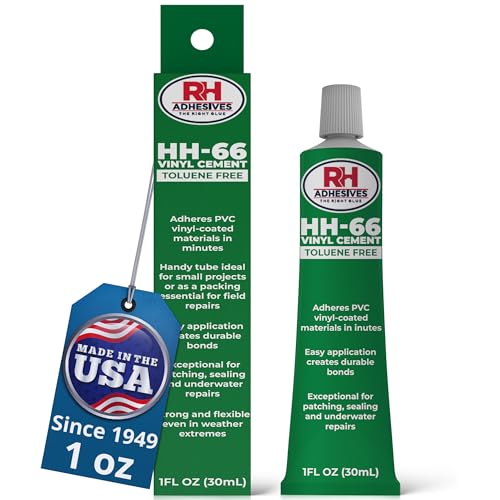
RH HH-66 Toluene Free Vinyl Cement is a compact, versatile adhesive package designed for small vinyl jobs and on-the-go projects. Its toluene-free formulation reduces fumes, making it safer for indoor use and enclosed spaces. The tube is ideal for patching seams, applying decals, repairing patches, and adhering moldings across vinyl and PVC vinyl, canvas, cork, and related substrates. The one-ounce size is convenient for quick fixes, travel kits, or situations with limited space for larger adhesives. Its protective design supports safer use without sacrificing bonding quality on a range of vinyl materials.
- Toluene-Free
- One-Ounce Tube
- Multi-Substrate Compatibility
ROBERTS Universal Vinyl Flooring Adhesive

ROBERTS Universal Resilient Flooring & Vinyl-Backed Carpet Tile Adhesive is a solvent-free acrylic latex formula designed for high initial strength and a more environmentally friendly footprint. It’s suitable for luxury vinyl tile (LVT), luxury vinyl plank (LVP), vinyl composition tile (VCT), vinyl-backed carpet tile, and other vinyl substrates. The adhesive bonds to prepared concrete, flooring-grade APA-rated plywood, steel, marble, terrazzo, and existing well-bonded vinyl tile flooring—excluding radiant-heated subfloors where surface temperatures exceed 85°F. This product provides robust adhesion while supporting sustainable building practices for both residential and commercial projects.
- Acrylic Latex
- Solvent-Free
- High Initial Strength
Lucida CoreBond Pro-Grade PSA

Lucida CoreBond Pro-Grade Solvent Free Vinyl Flooring Pressure-Sensitive Adhesive is a solvent-free option designed for a wide range of flooring types, including LVT, vinyl plank without attached backing, PVC, carpet tile, VCT, and fibreglass-backed sheet flooring. It’s noted for high strength on both porous and non-porous substrates and is suitable for residential and heavy-traffic commercial applications. As a pressure-sensitive adhesive, CoreBond simplifies installation and offers easier repositioning during the initial bond phase, reducing the need for time-consuming layout work or messy mixtures.
- Solvent-Free
- Pressure-Sensitive
- Residential And Commercial Use
Yeardera Heavy Duty Construction Adhesive

Yeardera Heavy Duty Construction Adhesive is a versatile 7.4-ounce squeeze-tube adhesive designed for tile, floor, stone, wood, and wall applications. It tolerates a wide temperature range, maintaining bond integrity from cold to hot conditions. The tube format supports easy application without a caulking gun, and the pointed-nose cap allows precise dosage control for uniform coverage on vertical or angled surfaces. This adhesive provides dependable bonding strength across multiple substrates, making it a practical option for both DIY projects and professional renovations where a strong, general-purpose bond is needed.
- Heavy-Duty Bond
- Wide Temperature Range
- Easy Application
Buying Guide
Bond Types And Substrates
Choose the bond type that matches your project: solvent-free, water-based, contact cement, or pressure-sensitive adhesives all behave differently on substrates like concrete, plywood, or existing vinyl floors. For moisture-prone areas such as kitchens and bathrooms, select an adhesive with waterproof or water-resistant properties. If you’re installing vinyl-backed carpet tiles or sheet vinyl, look for products specifically rated for vinyl substrates to ensure a durable bond and minimal edge lift over time.
Project Type, Size, And Application Method
Small repairs or on-the-go fixes benefit from compact tubes (like 1 oz) or quick-dry formulas, while full room installations may require gallon-sized containers and longer open times. Pressure-sensitive and contact-adhesive options can simplify application, especially in vertical installations, but may demand precise positioning before curing. Consider whether a solvent-free option suits your safety preferences, workspace ventilation, and environmental goals. For DIY projects, a user-friendly adhesive with clear coverage guidance can reduce mistakes and ensure consistent results.
Safety, VOCs, And Environmental Impact
Many vinyl adhesives include volatile organic compounds (VOCs) or toluene in traditional formulas. Safer choices prioritize low or zero VOCs and, when possible, toluene-free formulations. For indoor spaces, selecting a product with safer fumes supports better indoor air quality and reduces exposure during application and curing. Always follow manufacturer directions for ventilation, handling, and curing times to minimize health risks and maximize performance.
Open Time, Cure Time, And Workability
Open time determines how long you can reposition pieces after applying the adhesive. Short open times demand rapid placement, while longer open times provide flexibility for complex layouts. Cure time affects when the floor is fully serviceable. If you’re coordinating with ceiling heights, cabinetry, or heavy furniture, plan accordingly to avoid rework. A solvent-free PSA or acrylic latex adhesive often balances workable open time with strong final bonds across common vinyl flooring installations.
Substrate Compatibility And Wet Areas
Ensure the adhesive is compatible with your substrate—concrete, plywood, steel, or existing vinyl—and assess moisture exposure. Some products are designed to bond to porous or non-porous substrates and resist moisture after curing. For areas with potential water exposure, such as basements or bathrooms, prioritizing waterproof formulations helps prevent edge lifting and peeling over time.
Cost-Effectiveness And Long-Term Durability
While initial price matters, evaluate cost per square foot, coverage, and maintenance needs. Some adhesives may require surface preparation or primers; others offer quick application and reduced downtime. Long-term durability should be weighed against project scope, substrate type, and expected wear. Choosing the right adhesive aligns with both immediate project goals and long-term performance, reducing the likelihood of repairs in the near future.