Freestanding wine cellars offer versatile, space-saving cooling that helps protect and showcase your bottle collection. This guide highlights five reliable freestanding options, covering a range of capacities, temperatures, and design styles to fit kitchens, living rooms, bars, or basements. Each choice emphasizes consistent cooling, low vibration, and user-friendly controls to preserve wine quality while blending with home decor.
| Product | Capacity | Key Benefit |
|---|---|---|
| Electactic 37 Bottle Freestanding | 37 bottles | Precise temperature control with glass door |
| Kalamera 37 Bottle Dual Zone | 37 bottles | Dual temperature zones; built-in or freestanding |
| BLACK+DECKER 8-Bottle | 8 bottles | Compact, silent, and energy-efficient |
| Antarctic Star 26 Bottle | 26 bottles | Glass door; balanced humidity and lighting |
| Icyglee 25 Bottle | 25 bottles | Adjustable temp with UV-protected glass |
Electactic 37 Bottle Freestanding Wine Cooler

The Electactic wine refrigerator is designed for precise climate control, with a temperature range from 32℉ to 61℉. It emphasizes a stable cooling system and an airtight glass door to minimize air exchange and vibration that could affect corks. Freestanding installation and a door handle add convenient access in spaces like basements, game rooms, home bars, and man caves. This model integrates a compact footprint with ample capacity for a dedicated wine collection while supporting chilled beverages as needed.
Kalamera 24 Inch 37 Bottle Dual Zone Wine Cooler

This Kalamera unit combines dual-zone cooling with a sturdy wooden frame that reduces vibration and protects corks. It features a temperature memory function to maintain set conditions after power loss and removable wooden shelves with stoppers for bottle security. With an adjustable dual-zone thermostat, it can keep upper and lower zones at different temperatures, ideal for wine types requiring varied aging and serving temperatures. The cabinet can be configured as built-in or freestanding in kitchens, offices, or bars.
BLACK+DECKER 8-Bottle Wine Cellar
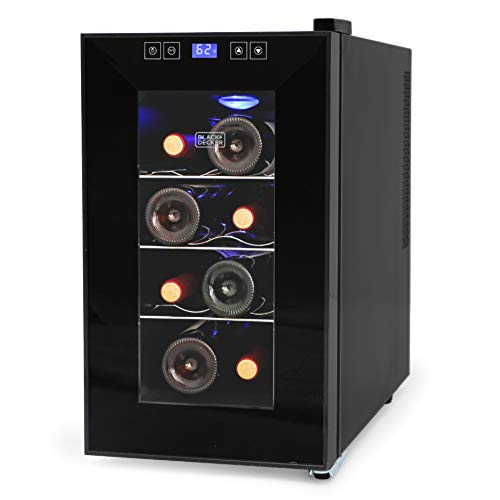
Designed for space-saving needs, this compact unit stores up to eight bottles with full-length chrome racks and interior lighting. It maintains a consistent, cool environment to help preserve wine flavor and appearance. The thermoelectric cooling system offers quiet operation and energy efficiency, with a temperature range suitable for basic wine storage. It’s a practical option for countertops or small bars where a larger cooler isn’t feasible.
Antarctic Star 26 Bottle Freestanding Wine Cooler

This wine cooler offers a 40°F-61°F temperature range with a reinforced glass door to maintain humidity and protect wine quality. The blue soft LED interior lighting showcases the collection while minimizing heat exposure, and horizontal racking helps maximize storage without crowding. It’s well-suited for living rooms, entertainment spaces, or home bars where a balance of aesthetics and function is important.
Icyglee 25 Bottle Compressor Wine Cooler

The Icyglee model provides a 40°F–64°F range with a double-layer, UV-protected glass door to shield bottles from light exposure. It holds 25 standard bottles with adjustable shelves to accommodate different bottle sizes. The design emphasizes quiet operation, energy efficiency, and an elegant LED display, making it a suitable addition for home bars, kitchens, or living rooms seeking a larger-capacity cooler without noise disruption.
Buying Guide: Key Considerations For Freestanding Wine Cellars
- Capacity and layout: Choose a model that fits your current collection and allows room to grow. Look for adjustable shelves and staggered bottle storage to maximize space.
- Temperature control: Dual-zone units are ideal for aging vs. serving needs or different wine varieties. Check the temperature range and how quickly the unit responds to changes.
- Vibration and airflow: Low-vibration compressors and vibration-damping materials help protect cork integrity. Quiet fans promote uniform cooling without disturbances.
- Door design: Glass doors showcase your collection, but ensure the seal reduces air exchange. UV-protected glass helps preserve flavor and color.
- Energy efficiency: Thermoelectric models are energy-efficient and quiet, while compressor-based units typically offer broader cooling ranges at the cost of higher power usage and occasional noise.
- Installation flexibility: Freestanding units work in many rooms, but built-in capability may be important if you’re customizing kitchen cabinetry. Ensure ventilation clearance for built-ins if needed.
- Style and finish: Stainless steel, wooden frames, and glass aesthetics should complement your decor while maintaining functionality. Consider bottle height and rack design when selecting shelves.
- Maintenance: Look for features like automatic defrost, easy-to-clean interiors, and removable shelves. Regular cleaning helps prevent odors and bottle sticking.
The selection above presents freestanding options across multiple capacities and price points, all designed to maintain wine quality while fitting diverse spaces. When choosing, consider how many bottles you typically store, whether you need dual zones, and where you plan to place the unit in your home. This approach helps ensure you select a quiet, efficient model that preserves flavor while enhancing your room’s style.