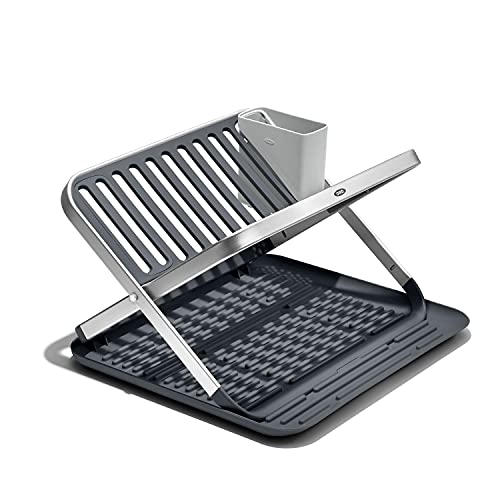
Discover top folding dish racks that maximize counter space without sacrificing drying efficiency. This guide highlights compact, collapsible, and two-tier designs from trusted brands, helping you pick a rack that fits your sink area and daily dish load. Each option folds flat for storage and offers routes to quick-drying performance for busy households.
Product
Brand
Key Feature
OXO Good Grips Aluminum Fold Flat Dish Drying Rack
OXO
Rustproof aluminum, two layers, raised ridges
HBlife Bamboo Folding 2-Tier Dish Rack
HBlife
Eco-friendly bamboo, folds for storage
Youeon Foldable Dish Drying Rack
Youeon
Rust-resistant steel, collapsible, drip tray
Simple Houseware Collapsible Dish Drying Rack
Simple Houseware
21 slots, two tiers, collapsible
THANSTAR Collapsible Dish Drying Rack
THANSTAR
Food-grade material, built-in utensil rack
OXO Good Grips Aluminum Fold Flat Dish Drying Rack
The OXO Good Grips model features a durable aluminum frame that resists rust, fitting modern kitchens while maintaining a sleek look. Its two-tier design provides versatile drying space for items of various sizes, with raised ridges to keep dishes elevated off pooled water for quick drying. The fold-flat function enables easy storage beneath cabinets or inside drawers when not in use, making it a practical option for compact counters.
HBlife offers an eco-friendly bamboo option with two tiers to maximize vertical drying space. The rack folds flat after use, helping to reclaim counter space. Top and bottom sections accommodate plates, cups, bowls, and utensils, while bamboo construction provides a natural aesthetic. Regular maintenance with bamboo oil helps extend the life of the tray and preserves its finish in busy kitchens.
Youeon presents a stainless steel, two-tier design with an upgraded rust-resistant coating. Its foldable framework and removable drain board help keep countertops dry and clean while allowing easy storage when vacated. The rack’s compact footprint fits neatly by most sinks, and the X-shaped configuration balances aesthetics with practical airflow for faster drying of plates, cups, and flatware.
This chrome rack from Simple Houseware emphasizes space-saving versatility with 21 slots for full-size dishes and two tiers for plates, bowls, and cups. Its collapsible mechanism allows easy storage in tight kitchens or under the sink. The included hooks for hanging cups add extra organization potential, making it a solid all-around performer for daily dish-drying needs.
THANSTAR combines BPA-free, food-grade PP and TPR materials with a collapsible design that expands for use and folds flat to store. It includes a built-in utensil drying rack and a separate cutlery compartment, making it a practical choice for kitchens that host occasional gatherings or travel setups where space is at a premium.
Buying Guide
Key considerations for selecting a folding dish rack:
Space and footprint: Measure your sink and counter area to pick a rack that fits without crowding your workspace. Look for fold-flat designs that tuck away neatly.
Material and durability: Aluminum racks resist rust and offer lightweight strength, while bamboo provides a natural aesthetic and eco-friendly appeal. Stainless steel options prioritize longevity in damp environments.
Capacity and layout: Two-tier racks maximize drying space for plates, bowls, and cups. Consider whether you need a dedicated utensil rack or a drip tray to manage water runoff.
Maintenance: Bamboo requires periodic oiling to extend its life; metal racks should be rust-resistant and easy to clean. Removable drain boards simplify drying and cleanup.
Portability and storage: A foldable design that collapses into a slim profile is ideal for dorms, small apartments, RVs, or kitchens with limited counter space.
Versatility: Some racks are better for by-sink setups, while others work well on countertops or near dishwashers. Consider your typical dish load and whether you need space for utensils or cookware.
Care and safety: Ensure the rack has stable feet or non-slip bases to prevent tipping. Smooth edges prevent chipping dishes or injuring hands during loading and unloading.
In evaluating these options, consider your daily dish volume, preferred materials, and how often you must store the rack away. Each choice balances space-saving design with practical drying performance, helping kitchens stay organized without sacrificing functionality.