When choosing foam for sound deadening, aim for materials that combine excellent sound absorption with heat resistance, durability, and easy installation. This guide highlights five strong options suitable for vehicles and small rooms. Each product is explained with who it’s best for, why it’s chosen, and practical limits. Buyers can compare coverage, thickness, and adhesive features to pick the right solution for doors, hoods, walls, or studios.
| Product | Best For | Key Benefit |
|---|---|---|
| Siless Liner 157 (4 mm) | Car enthusiasts on a budget | Excellent heat barrier with affordable per-square-foot cost |
| VOISEN 157 mil (4 mm) 36 sqft | All-around car insulation | Strong heat blocking, waterproof, easy install |
| Noico Red 150 mil (4 mm) | Systems where easy cutting matters | Adhesive-backed, versatile and cut-friendly |
| AggSound 157 mil (4 mm) 6 sqft | Smaller areas needing high attenuation | High-density foam with durable adhesive |
| Saiqiang Acoustic Panels 12 Pack | Studio rooms and offices | High-density sound absorption for walls |
Siless Liner 157 (4 mm) Car Sound Deadening
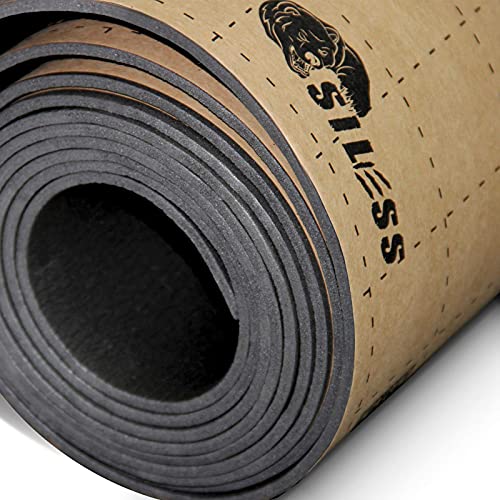
Best for: budget-conscious car owners seeking a reliable thermal barrier. Siless Liner 157 (4 mm) uses closed-cell polyethylene foam with an adhesive layer to boost efficiency and thermal insulation. It claims high density per dollar and is lightweight, water-resistant, and flexible for easy installation. Use this where you need a cost-effective option to reduce engine and summer heat entering the cabin.
Why selected: The product combines closed-cell structure with an adhesive backing, simplifying installation without sacrificing heat blocking. It’s designed to prevent moisture absorption and provide a stable barrier against radiant heat, making it a practical choice for door panels and trunk areas where space is limited.
Caution: While affordable, larger installations may require multiple sheets; ensure you have adequate adhesive coverage for seamless performance over curved surfaces.
VOISNE Sound Deading Material for Cars, 5 mm
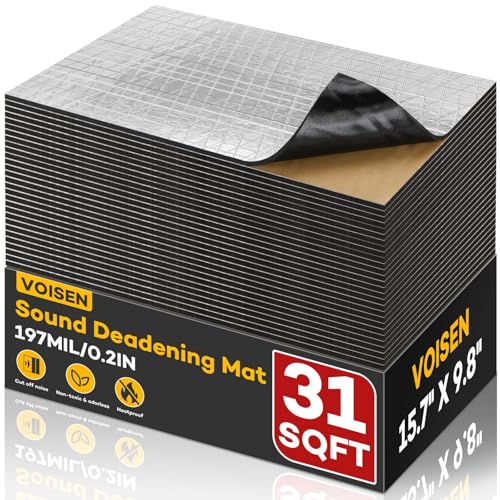
Best for: compact spaces requiring strong heat insulation and durability. The VOISEN 197 mil (5 mm) mat provides a thick barrier with a 31 sq ft total coverage and a high-temperature tolerance range. It features a waterproof aluminum surface, with a multi-layer setup designed to block radiant heat and dampen vibrations, aiding fuel efficiency and cabin comfort.
Why selected: The 5 mm thickness emphasizes higher attenuation in tighter spaces like doors and firewalls, delivering improved quietness in heavier-use vehicles. It’s suitable for DIY projects where a robust, heat-blocking performance is desired.
Limitations: The kit’s total coverage is fixed at 31 sq ft; larger vehicles may require additional rolls to cover all needed areas.
Noico Red 150 mil 36 sqft Car Sound Insulation
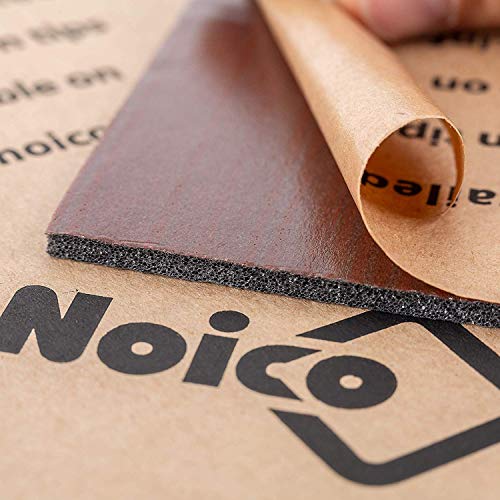
Best for: car interiors needing reliable, universal insulation. Noico Red 150 mil (4 mm) is an adhesive-backed closed-cell foam designed for easy installation and effective thermal control. It’s marketed as both a heat and sound insulator, helping maintain cabin temperature and reduce exterior noise.
Why selected: The combination of a strong backing with easy cutting makes it a practical choice for hobbyists and professionals alike. It helps protect against both heat and cold while contributing to a quieter ride.
Caution: Some users may need overlapping pieces for complete coverage on irregular panels; plan for waste and waste-cutting.
AggSound 157 mil (4 mm) Car Sound Deadening

Best for: vehicles requiring a compact, high-density solution. AggSound 157 mil (4 mm) is a three-layer foam system with a potent adhesive and a heat barrier. It’s designed to suppress road noise and reduce radiant heat, especially for hoods, floors, and doors.
Why selected: The material’s density helps resist compression over time, maintaining effectiveness in high-heat environments. It’s easy to trim and fit, which is beneficial for precise coverage around irregular shapes.
Limitation: The package size suggests smaller area coverage per roll, so larger projects may require combining multiple pieces for full quieting across surfaces.
Saiqiang Acoustic Foam Panels, 12 Pack
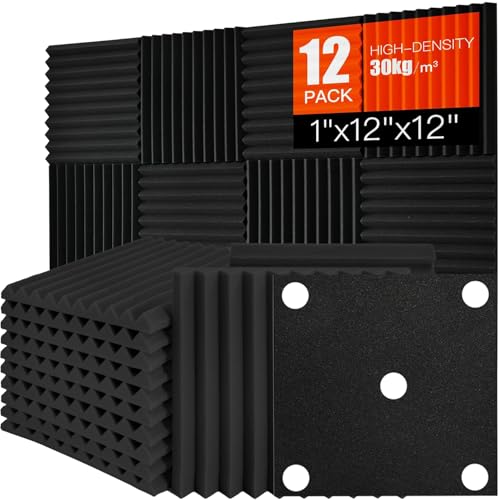
Best for: studios, offices, and home theaters seeking wall acoustics. Saiqiang’s 12-pack features high-density polyurethane foam with a density around 30 kg/m³ and wedge shapes designed for effective sound absorption and reduced echoes.
Why selected: The wedge design and high-density composition provide clear voice and music clarity, especially in rooms with reflective walls. The self-contained panels are suitable for quick, tool-free installation in studios and workspaces.
Caution: These are wall panels designed for sound treatment, not directly optimized for vehicle use; they may be less effective for automotive vibration dampening in certain installations.
Buying Guide: Key Considerations For Foam Sound Deadening
- Application: For cars, prioritize closed-cell foams with heat barrier properties and adhesive backing. For rooms or studios, choose high-density acoustic foam panels with wedge or pyramid structures for better absorption and diffusion.
- Thickness and Density: Thicker foams (4 mm to 5 mm) generally provide better heat blocking and sound dampening. Higher density foams offer improved attenuation and lasting shape, especially in busy spaces.
- Adhesive System: Integrated adhesives simplify installation but ensure compatibility with surfaces (metal, plastic, painted finishes). If the backing isn’t self-adhesive, plan for dedicated adhesive or mechanical mounting.
- Coverage: Calculate total surface area to treat. Some products cover 31–36 sq ft, others come in smaller packs. Combining products can optimize coverage for complex vehicle panels.
- Moisture Resistance: For vehicles, moisture resistance is crucial to prevent odor and mold. Closed-cell foams typically resist moisture better than open-cell foams.
- Temperature Tolerance: Automotive environments can see wide temperature swings. Check the foam’s rated operating range to ensure performance in both summer heat and winter cold.
- Installation Skill Level: Some products are simple peel-and-stick, others require trimming and shaping. Plan your project timeline accordingly and consider safety equipment for sharp cuts.
FAQ
- What foam is best for car doors? Closed-cell foam with heat blocking and a sticky backing is typically ideal for doors, trunks, and floors. Look for 4 mm thickness and moisture resistance.
- Can foam sound deadening improve HVAC efficiency? Yes. Reducing outside noise and heat transfer can lower the load on air conditioning and heating systems, potentially improving efficiency and comfort.
- Is adhesive backing essential? It simplifies installation, but non-adhesive foams can be fastened with mechanical methods. Adhesive-backed options are usually quicker for DIY projects.
- Do foam panels work for studios? Yes. High-density acoustic foam panels with wedge patterns improve sound absorption and reduce echoes in rooms, offices, and home studios.
- Should I mix products? Mixing products is common: use car-specific foam for panels and walls, and acoustic panels for interior rooms. Ensure consistent thickness where possible to avoid uneven deadening.
- How do I measure how much material I need? Measure the surface area of the surfaces to be treated, add a small percentage for waste, and consider panels that fit irregular shapes with minimal cutting.