Looking for fans that effectively cool rooms while staying quiet and energy-efficient? This guide highlights five top options that cover large rooms, bedrooms, and home offices. Each pick is described for specific buyers—whether you want ultra-quiet operation, broad airflow, or smart features. A quick buying table follows to help you compare at a glance.
| Product | Type | Best For |
|---|---|---|
| LEVOIT Tower Fan | Tower, bladeless | Large rooms, quiet nights |
| DREO 2026 Upgraded Fan | Oscillating pedestal | Whole-room cooling |
| DREO 40″ Tower Fan | Tower, bladeless | Quiet sleep, remote control |
| DREO 120° Pedestal Fan | Pedestal with wide reach | Room-wide air circulation |
| KopBeau Personal Tower Fan | Personal/desk to floor | Flexible mini-cooling |
LEVOIT Tower Fan for Bedroom

The LEVOIT tower fan uses a curved inlet and multi-blade design to deliver a soft, natural breeze. It offers 25 ft/s wind speed, 1044 CFM airflow, and 90° oscillation to cover larger spaces. An integrated temperature sensor helps adjust airflow for comfortable conditions without overheating. This model is best for sleepers and small-to-mid sized rooms where a quiet, steady breeze is important. A remote and multiple speed and mode options add convenience. A potential limitation is its larger footprint, which may dominate compact desks or nightstands.
DREO Fan for Bedroom 2026 Upgraded
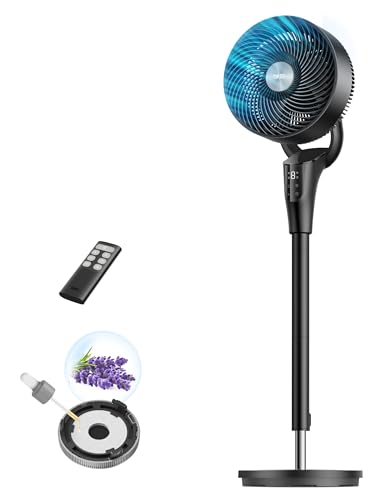
This upgraded DREO model delivers up to 105° pivoting head, 90° horizontal oscillation, and air circulation up to 90 ft away with up to 1000 CFM, designed for fast whole-room cooling. It operates quietly on a DC motor (about 20dB) and supports an 8-hour timer. Best for larger bedrooms or living spaces where strong room-wide airflow is needed without disturbing sleep. Choose this if you value broad reach and a quiet footprint; the large airflow may feel intense in small rooms.
DREO Tower Fan for Bedroom (40″), 5 Speeds
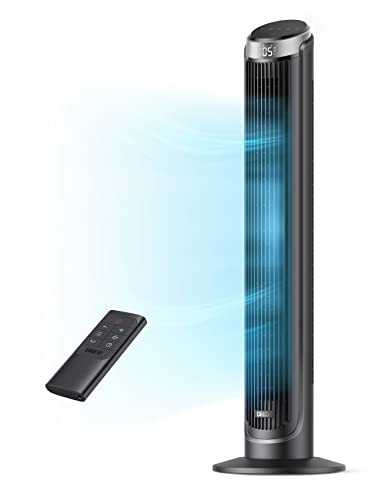
This tower fan emphasizes quiet operation (28dB) with TurboSilent technology and a 12-hour timer, plus 5 speeds and 4 modes for tailored cooling. Its 26 ft/s airflow and 90° oscillation provide broad distribution across a bedroom or home office. It’s best for those who want a quiet, simple control experience with flexible mode options. A potential limitation is that extremely large rooms may demand higher airflow from a larger unit.
DREO Fan for Bedroom 120° Oscillation

This model blends a pedestal design with 120° vertical tilt and 120° horizontal oscillation for comprehensive coverage. It runs quietly at about 20dB and offers nine speeds with four modes, plus a long adjustable height (37″–42″). Best for those who want flexible directionality and coverage in a big room, including living rooms or shared spaces. A limitation is that manual tilt control may require occasional adjustment for optimal airflow in different seating areas.
KopBeau Personal Tower Fan

This compact tower fan extends cooling to desks and small rooms with 60° and 110° oscillation options. It features three speeds and a timer, offering flexible personal cooling. Best for dorm rooms, home offices, and bedside use where a portable, adjustable breeze is needed. Limitation: its smaller size means airflow may be less intense in very warm, open spaces.
Buying Guide
Consider these practical questions to pick the right fan for your space:
- How large is the room? Choose a higher-CFM model with broad oscillation for bigger areas.
- Is quiet operation a priority? Look for low dB ratings and DC motors for whisper-quiet performance.
- Do you want smart features or simple controls? Remote controls, timers, and multiple modes add convenience.
- Where will the fan live? Pedestal or tower designs save space and direct airflow differently; verify height and reach.
- Is energy efficiency important? Models with efficient motors and multi-speed settings save power over time.
Frequently Asked Questions
- What is a practical room size for a 90° oscillating tower fan? A 90° oscillating tower fan is typically suitable for mid-to-large rooms up to about 200–300 square feet, depending on CFMs and climate.
- Do bladeless fans cool rooms better than traditional blades? Bladeless or curved-inlet designs can provide smooth airflow and quieter operation, but overall cooling depends on CFM, oscillation, and room layout.
- Is a DC motor worth it? Yes, DC motors generally run quieter and more energy-efficient than AC motors, especially at lower speeds.
- Should I choose a pedestal fan vs. a tower fan for a living room? Pedestal fans offer flexible height and strong airflow across a room, while towers save space and blend with decor; space and use-case determine the best fit.
- How important is a timer? Timers help prevent overcooling and save energy during extended use, such as overnight sleeping.
- Can these fans improve air circulation in stuffy rooms? Yes, oscillation and high CFMs improve air mixing, reducing stagnation in enclosed spaces.