For homeowners seeking efficient heating with clean emissions, EPA-certified wood stoves offer a reliable option. This guide highlights five popular EPA-certified wood stoves that balance heat output, durability, and ease of use. Each model complies with U.S. emissions standards while delivering consistent warmth.
From pedestal designs to free-standing units, these stoves suit living rooms, basements, or small cabins. Below, compare BTU ratings, square footage coverage, log capacity, and standout features to help you select the right unit.
| Product | Brand | BTU | Heats Up To | Notable Feature |
|---|---|---|---|---|
| Ashley AW2520E-P | Ashley Hearth | 112,800 | 2,500 sq ft | Firebrick lining; large ash drawer; accepts 21″ logs |
| Ashley AW1120E-P | Ashley Hearth | 68,000 | 1,200 sq ft | Firebrick lined; large ash pan; accepts 18″ logs |
| Ashley AW3200E-P | Ashley Hearth | 152,000 | 3,200 sq ft | Reinforced plate steel with firebrick lining; 18″–22″ logs; 30 lb wood capacity |
| Pleasant Hearth 1,200 Sq Ft | Pleasant Hearth | 74,000 | 1,800 sq ft | EPA 2021; 17″ log capacity; Air Wash system |
| Cleveland Iron Works Huron | Cleveland Iron Works | Not specified | 2,500 sq ft | Firebrick lined; 18″ logs |
Ashley Hearth AW2520E-P Wood Stove

- 112,800 BTUs; heats up to 2,500 sq ft
- Firebrick lined for long life and efficient combustion
- Large ash drawer with brushed nickel handle for easy cleanup
- Accepts logs up to 21 inches in length
The AW2520E-P is a pedestal-style unit designed to provide steady heating for mid-sized living spaces while maintaining convenient cleanup features and durable construction.
Ashley Hearth AW1120E-P Wood Stove

- 68,000 BTUs; heats up to 1,200 sq ft
- Firebrick lined for long life and efficient combustion
- Large ash pan with brushed nickel handle for easy cleanup
- Accepts logs up to 18 inches
The AW1120E-P offers a compact footprint with strong output for smaller spaces, emphasizing clean operation and straightforward maintenance.
Ashley Hearth AW3200E-P Wood Stove
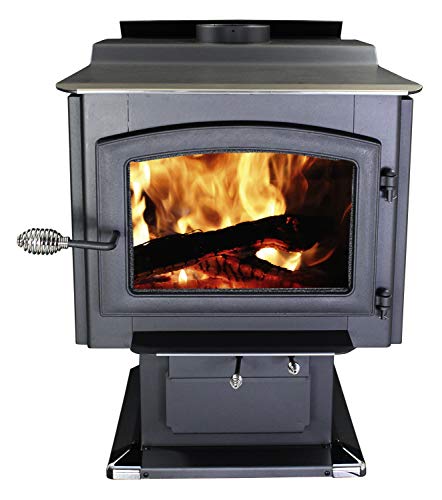
- 152,000 BTUs; heats up to 3,200 sq ft
- Heavy gauge 3/16 inch reinforced plate steel with firebrick lining
- Accepts logs up to 18″–22″ and holds up to 30 lbs of wood
- Includes blower for enhanced heat distribution
Designed for larger spaces, the AW3200E-P combines robust construction with a blower to maximize warm-air circulation throughout the room.
Pleasant Hearth 1,200 Sq Ft Wood Stove

- 2021 EPA Certified; 17″ log capacity
- Heats up to 1,800 sq ft with up to 74,000 BTU/hr
- Large ceramic glass window for a clear view of the fire
- Built-in Air Wash System
This compact stove blends EPA compliance with an open-view window, making it ideal for smaller living areas that still require substantial warmth.
Cleveland Iron Works Huron Wood Stove

- Holds logs up to 18 inches
- Heats up to 2,500 sq ft
- Firebrick lined for long life and combustion efficiency
The Huron delivers solid heating performance with a traditional log-length capacity and a durable firebrick-lined interior for sustained efficiency.
Buying Guide
Choosing an EPA-certified wood stove involves balancing heat needs, space, and installation requirements. Here are key considerations to help you compare options and select a model that fits your home and lifestyle.
- Heating area and BTU versus space: Larger rooms or open-plan areas generally benefit from higher BTU models (e.g., 100,000+ BTUs for 2,500–3,200 sq ft), while smaller rooms may be adequately heated by mid-range units (60,000–90,000 BTUs).
- EPA certification and emissions: All models listed comply with EPA standards, reducing creosote buildup and particulate emissions. Verify the certification date to ensure current compliance.
- Fuel type and log capacity: Wood stoves burn logs; pellet stoves use pellets. Pellet models typically need electricity and a hopper, while wood stoves rely on manual feeding and ash removal.
- Construction quality: Firebrick lining supports long life and efficient combustion. Durable steel plates (often 3/16 inch or thicker) improve heat retention and longevity.
- Heat distribution features: Some models include blowers to improve airflow, while others rely on convection through the stove’s body. An air wash system helps keep the glass clean for a clearer view of the fire.
- Ventilation and clearances: Check required clearances to walls, ceilings, and floors, and plan for a proper chimney or flue. Some installations may require floor protection or dedicated venting paths.
- Installation and maintenance: Consider ease of ash removal, availability of replacement parts, and whether you’ll need a professional for installation and annual maintenance.
- Tax credits and incentives: In some cases, EPA-certified stoves qualify for energy-efficient tax credits. For example, certain models may be eligible under IRS guidelines; verify current eligibility in your jurisdiction and with your tax professional.
- Future needs: If you anticipate upgrading to a larger home or changing insulation levels, choose a stove with adjustable heat output and compatible piping or ducting options.
Choosing the right EPA-certified wood stove involves weighing heat output, space, and maintenance requirements. By evaluating BTU ranges, log capacity, and construction quality, you can select a unit that delivers reliable warmth while meeting emissions standards and safety needs.