Pole barns and large outbuildings demand heating solutions that are safe, durable, and capable of delivering warmth where it’s needed most. The following selections focus on electric garage and shop heaters that perform well in open or semi-insulated spaces, offer adjustable heat, and provide reliable operation in a workshop or barn environment. This guide compares several high-performing units to help you pick the right heater for your space.
Summary of Selected Products
| Product | Brand | Power (W) | Key Features |
|---|---|---|---|
| Shinic 2 Packs Electric Garage Heaters | shinic | 1500W / 750W | Ceiling-mounted radiant heaters, halogen work light, 90-degree rotation, 5 modes |
| CTSC 4800W Garage Heater | CTSC | 4800 | 240V, remote, 10-hour timer, ETL, professional-grade installation |
| CTSC 8500W Garage Heater | CTSC | 8500 | Digital thermostat, remote, timer, voltage display, ETL |
| CTSC 10000W Electric Garage Heater | CTSC | 10000 | Remote control, digital thermostat, timer, ECO mode |
| Encyclpo Smart Wall Heater | Encyclpo | 1500 | Wireless/remote control, thermostat, Alexa compatibility, 24h timer |
Note: This overview emphasizes reliability, safety features, and suitability for large, uninsulated or semi-insulated spaces commonly found in pole barns, shops, and garages.
Shinic 2 Packs Electric Garage Heaters

The Shinic ceiling-mounted radiant heaters offer a practical solution for warm coverage in workshops and garages. Each unit uses radiant quartz elements that heat people and objects directly, delivering quick warmth where you’re working. The pack includes adjustable brackets for ceiling mounting and a built-in halogen work light to improve visibility on dark workbenches, which is particularly beneficial for late-night tasks or dim pole barn interiors. With multiple operation modes and a 90-degree rotation capability, this setup can tailor warmth to different zones within a large space.
CTSC 4800W Garage Heater
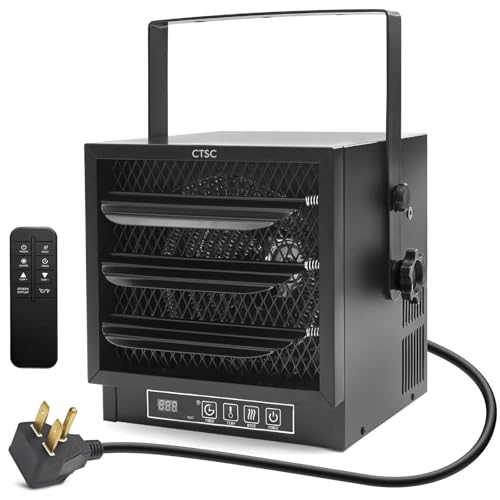
This 240V, 30A-rated heater is designed for dedicated circuits and heavy-duty spaces. It ships fully assembled with a six-foot power cord for straightforward plug-in use at 240V outlets, rather than standard 120V household receptacles. Built from durable SPCC steel, it emphasizes safety with overheating protection and ETL certification. Its substantial heat output makes it suitable for large, open garages or shop areas where a reliable, consistent temperature is required.
CTSC 8500W Garage Heater

Designed to heat larger workshop spaces, this 8,500-watt unit is focused on robust performance for spaces up to 850 square feet, depending on insulation. It includes a voltage display screen to help diagnose voltage-related startup issues, and it offers high-powered fan-forced heating with a digital thermostat and remote control. The combination of a sturdy steel chassis and ETL safety compliance makes it a strong pick for professional-grade outbuildings that require consistent warmth during cold months.
CTSC 10000W Electric Garage Heater

This 10,000W hardwired unit targets large workshops and uninsulated spaces with a digital thermostat, a remote control, and a timer for scheduling warmth. The dual-control approach (digital panel plus remote) offers flexibility to adjust temperature without approaching the heater, which is useful when equipment or obstacles block access. It also features ECO and safety protections, including ETL listing and a voltage display to ensure proper operation in varying electrical setups.
Encyclpo Smart Wall Heater

The Encyclpo wall-mounted heater combines 1,500 watts of ceramic heating with smart controls, including remote and wireless options and Alexa compatibility. It supports a 24-hour timer and a thermostat to regulate indoor comfort, making it a practical choice for mixing interior warmth with occasional use in semi-insulated barns or workshops. Quiet operation is emphasized with a designed convection flow, helping keep noise low in work areas where conversation and focus matter.
Buying Guide
Choosing the right heater for a pole barn depends on space size, insulation, electrical capability, and intended use. Consider the following perspectives to ensure a balanced purchase:
- Space sizing and heat load: For very large, poorly insulated barns, higher-wattage units (5000W–10000W) may be necessary, but ensure your electrical system can handle the load.
- Electrical requirements: Some models require 240V circuits and dedicated outlets. Verify circuit capacity and breaker allowances with a licensed electrician before installation.
- Installation type: Ceiling-mounted radiant heaters save floor space and focus warmth where you work. Wall-mounted units can be ideal for open bays or areas with ceiling clearance issues.
- Controls and scheduling: Remote controls, digital thermostats, and timers simplify operation and help maintain consistent temperatures, reducing energy waste in unused bays.
- Safety features: Look for ETL or UL certifications, overheating protection, tip-over switches, and sturdy steel construction for durability in workshop environments.
- Ventilation and odor: Electric heaters produce little to no fumes, making them preferable for enclosed barns compared with propane or kerosene heaters. Consider models with noise controls if the space doubles as a workspace or office area.
- Future expandability: If you plan to expand the workspace or improve insulation, choose units that scale in power or that can be paired with zone heating elements.
- Maintenance: Access to filters, ease of wiring, and straightforward remote operation can reduce downtime during busy seasons.
When evaluating options, match the heater’s heat output to the space you want to heat, confirm electrical compatibility, and prioritize safety certifications. For pole barns with variable use—storing equipment, hosting workstations, or conducting DIY projects—a mix of radiant ceiling heaters and configurable fan-forced units often provides the best overall comfort and energy efficiency.