Cold basements can stay damp year-round, inviting mold, musty odors, and damage to walls and belongings. The right dehumidifier should combine high moisture removal with reliable cold-weather performance and energy efficiency. The following five models are among the best for cold basements in 2025, balancing capacity, features, and running costs across American homes.
To help you compare quickly, here is a snapshot of the chosen units: a mix of large-area and basement-focused machines with frost protection, continuous drainage, and smart humidity controls. Each model handles substantial square footage while offering practical features that address cold climates and long-term use.
| Product | Brand | Coverage (sq ft) | Max Pint/Day | Key Cold-Weather Feature |
|---|---|---|---|---|
| Ludatido 2025 Upgrade | Ludatido | 5000 | 75-80 | Defrost Sensors |
| Waykar 80 Pint Dehumidifier | Waykar | 5000 | 80 | Drain Hose |
| Dreo 110-Pint Basement Dehum. | Dreo | 4500 | 110 | Smart Humidity Auto Mode |
| AEOCKY 4500 Sq.Ft | AEOCKY | 4500 | 74 | Energy Star Version 6.0 |
| DECIUU 100 Pint Dehumidifier | DECIUU | 5000 | 100 | Most Efficient 2025 |
Ludatido 5000 Sq.Ft Dehumidifier

The Ludatido model is designed for large basements and other expansive spaces, delivering up to 75–80 pints per day under varying conditions and up to 5000 sq ft of coverage. It features a sizable 1.72-gallon water tank and supports continuous drainage via a drain hose, reducing the need for frequent emptying. The unit emphasizes cold-weather reliability with frost-aware operation.
Key cold-weather attributes include automatic defrost when temperatures dip below 45°F, ensuring operation in damp, chilly environments. Mobility is practical thanks to a portable design and easy maneuverability. This model also prioritizes energy efficiency and long-term running costs, aligning with modern efficiency expectations while still providing robust dehumidification for a cold basement.
Waykar 80 Pint Dehumidifier
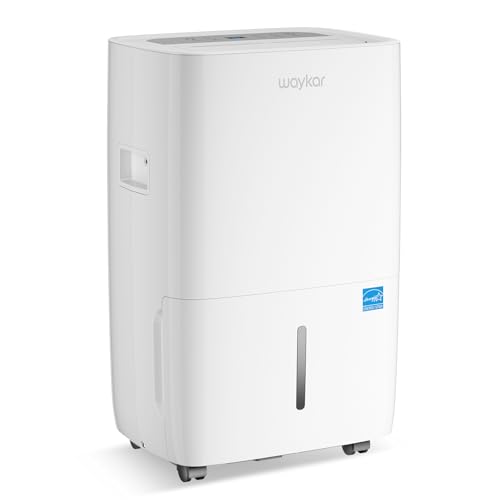
Waykar’s 80-pint model is built for large basements and spaces up to about 5000 sq ft. It removes up to 80 pints per day under typical conditions and uses an adjustable humidity range from 30% to 80%, offering flexible control for damp environments. A 1.14-gallon water tank is complemented by a drain hose option for continuous drainage, which is ideal for long-term basement use without constant monitoring.
Energy efficiency is a focal point, with 2025 ENERGY STAR certification to help reduce operating costs. The unit is designed for quiet operation and practical placement, with features like a timer and adjustable fan speeds to tailor dryness to your comfort level. Its broad coverage makes it a sensible choice for larger cold basements seeking consistent moisture control.
Dreo 110-Pint Basement Dehumidifier

Dreo’s 110-pint model is designed for spacious basements and large rooms, capable of pulling 110 pints per day under peak conditions and serving spaces up to about 4500 sq ft. It features a 2-gallon water tank and offers multiple operating modes—Auto, Comfort, and Continuous—to fine-tune humidity. The humidity control is precise, with a tolerance of about 5% to keep your space consistently dry.
Energy efficiency is notable, delivering up to 4.0 pints per kWh, which can outperform some Energy Star 2025 benchmarks. The model emphasizes smart controls and reliable humidity tracking, helping maintain a healthier environment in cold or damp basements while maintaining economical running costs and quieter operation for a large space.
AEOCKY 4500 Sq.Ft Dehumidifier

AEOCKY’s 4500 sq ft model emphasizes energy efficiency with Version 6.0 (2025) certification and a dual-structure design that uses pure copper tubes and advanced heat exchange materials. The unit’s dehumidification range makes it suitable for large, damp basements, offering robust performance while addressing long-term energy costs. The product notes a significant efficiency advantage over non-Energy Star units, with a focus on reduced electricity usage year-round.
Build and engineering choices are highlighted, including the use of copper tubing and a multi-row core in the evaporator and condenser. The result is enhanced durability and efficient moisture removal, helping basements dry out faster and stay drier in cold conditions. The model targets ongoing usability and energy savings for spaces that demand constant moisture management.
DECIUU 100 Pint Dehumidifier

DECIUU’s 100-pint model is built for larger basements up to 5000 sq ft and is marketed as a Most Efficient 2025 unit. It combines three core technologies—the rotary compressor, a large air fan, and high-conductivity copper tubing—to deliver strong, steady moisture removal. Intelligent Humidity Control lets users set a target humidity between 35% and 80% RH, with a memory chip that restores settings after power cycles for consistent performance.
In practical terms, this unit maintains dryness in extreme conditions (up to 95°F and 90% RH) and aims for energy efficiency that translates to lower operating costs. A built-in drain hose option supports continuous drainage, making it suitable for long-term basement use where regular tank empties aren’t convenient. The combination of capacity, control, and efficiency makes it a strong cold-basement contender.
Buying Guide
Key Factors To Consider
For cold basements, prioritize units with strong dehumidification capacity, frost protection features, and reliable operation at lower temperatures. Large spaces require higher pint-per-day ratings, while basements benefit from continuous drainage options to reduce manual maintenance.
Cold-Weather Performance
Look for frost protection features such as automatic defrost, frost sensors, or low-temperature operation modes. Equipment designed specifically for cold spaces reduces the risk of frost buildup and maintains steady moisture removal even when ambient temperatures drop.
Drainage Options
Continuous drainage via a drain hose is highly convenient for basements, especially in damp climates. If you prefer tank-based models, note the tank capacity and auto shut-off to prevent overflow. Some units offer both options, which can be ideal for flexible use.
Room Size And Capacity
Match capacity to the space. A model rated for up to 5000 sq ft is appropriate for large basements, while smaller areas can be comfortably managed by units in the 1500–3000 sq ft range. Oversizing can waste energy, while undersizing may leave damp spots behind.
Energy Efficiency
Choose ENERGY STAR-certified models when possible to reduce running costs. In 2025, newer standards (such as Version 6.0) may offer improved efficiency over prior generations, translating to noticeable savings over time without sacrificing performance.
Smart Features and Humidity Control
Smart or precise humidity controls help maintain comfort and prevent over-drying. Look for sensors that hold humidity within a tight tolerance (often around 3–5%), auto modes that adjust fan speed, and memory features that retain your last settings after power loss.
Noise And Portability
Basements may be near living spaces; consider noise levels (especially below 50 dB in quiet mode) and features like easy-roll casters or handles for maneuverability. Portability matters when you want to relocate the unit between rooms or seasons.
Maintenance And Durability
Examine filter accessibility, ease of cleaning, and the durability of components like copper tubing and corrosion-resistant coils. A longer warranty offers peace of mind for appliances operating in challenging basement environments.
Quick Comparison Snapshot
| Model | Capacity (Pints/Day) | Coverage | Cold-Weather Features | Drainage |
|---|---|---|---|---|
| Ludatido | 75–80 | 5000 sq ft | Defrost sensors | Drain hose option |
| Waykar | 80 | 5000 sq ft | General cold-capable design | Drain hose |
| Dreo | 110 | 4500 sq ft | Smart Auto/Comfort/Continuous modes | Drain hose |
| AEOCKY | 74 | 4500 sq ft | Energy Star 6.0 (2025) | Drain hose / remote drainage |
| DECIUU | 100 | 5000 sq ft | Most Efficient 2025 | Drain hose |
Choosing the right model involves balancing space, humidity targets, and practical features like defrost protection and continuous drainage. For cold basements, prioritize units with explicit cold-weather capabilities and energy efficiency to keep operating costs manageable while maintaining dry, healthy air year-round.