Deploying the right coating on an aluminum RV roof is essential for preventing leaks, reducing heat absorption, and extending roof life. The options below highlight durable, reflective, and compatible elastomeric coatings designed to work on aluminum and other common RV roof substrates. This guide compares performance, ease of application, and long-term benefits across five top choices.
| Product | Brand | Size |
|---|---|---|
| Liquid Rubber RV Roof Sealant – 1 Gallon | Liquid Rubber | 1 Gallon |
| Liquid Rubber RV Roof Sealant – 5 Gallon | Liquid Rubber | 5 Gallon |
| Dicor RP-MRC-1 Acrylic Elastomeric Coating for Metal RV Roofing | Dicor | 1 Gallon |
| AMES RESEARCH LABORATORIES MSS1 Maximum Stretch Roof Coating | AMES | 1 Gallon |
| Rust-Oleum 710 Elastomeric Roof Coating | Rust-Oleum | 5 Gallon |
Note: The following product selections focus on coatings that are compatible with aluminum roofs and offer features like heat reflection, flexible seals, and durable coverage to address both leaks and temperature control. Each section below provides a concise overview, notable features, and practical considerations for choosing the right coating for your aluminum RV roof.
Liquid Rubber RV Roof Sealant – 1 Gallon

Liquid Rubber’s professional-grade sealant is designed to form a flexible waterproof membrane for aluminum, EPDM, TPO, and fiberglass roofs. The product emphasizes a heat-reflective, elastomeric coating that helps keep interior temperatures lower and protects against leaks in varying climates. It recommends pairing with the Liquid Rubber EPDM Primer for enhanced adhesion on EPDM and TPO surfaces, creating a durable seal across a complete RV roof sealing system. The formula aims to be long-lasting and resistant to temperature fluctuations, preserving interior dryness year-round.
Key considerations: suitability for aluminum roof substrates, flexibility to resist cracking in temperature swings, and the potential for reduced interior heat gain due to solar reflectivity. This size is ideal for smaller RVs, patches, or initial coating projects, with coverage typically dependent on surface porosity and application thickness.
Liquid Rubber RV Roof Sealant – 5 Gallon

The 5-gallon version provides a higher-volume option for larger RVs or multi-coat applications. Like the 1-gallon variant, this coating forms a flexible waterproof membrane suitable for aluminum and other common RV roof materials. It emphasizes heat reflectivity to reduce interior temperatures and extend roof lifespan, aligning with long-term energy savings and interior protection. The product remains part of a broader system that benefits from compatible primers and multi-surface compatibility, including vents and skylights.
Key considerations: larger quantity reduces per-gallon cost and is practical for big RVs or multiple seasons of maintenance, though proper surface preparation remains critical for lasting performance. Care should be taken to ensure even coverage to avoid missed areas, especially around seams and penetrations.
Dicor RP-MRC-1 Acrylic Elastomeric Coating for Metal Roofs

Dicor’s RP-MRC-1 is designed for metal RV roofing, offering a white acrylic elastomeric coating that provides temperature-regulating reflectivity. While specifically marketed for metal roofs, it is not recommended for EPDM or TPO surfaces. The white finish helps lower interior temperatures by reflecting sunlight, and its formulation aims to resist cracking and peeling with elastomeric flexibility. For aluminum or other metal roof substrates, Dicor provides a straightforward metal roof coating option with established performance in the RV market.
Key considerations: metal roofing compatibility, heat reflectivity, and suitability for metal-specific applications. It is important to confirm surface preparation steps and check compatibility with any existing coatings or sealants on the aluminum roof before applying.
AMES RESEARCH MSS1 Maximum Stretch Roof Coating
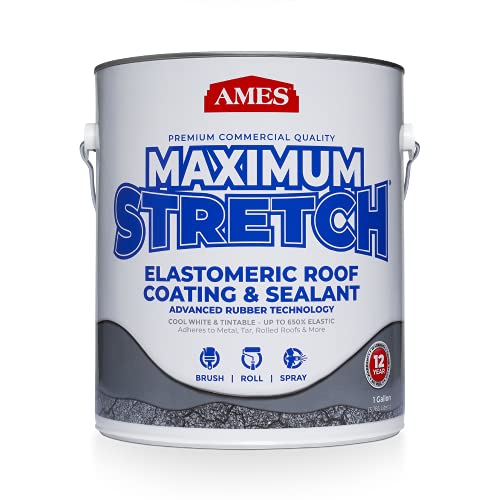
AMES MSS1 is a white elastomeric coating designed with high elongation (650%) to resist cracking and peeling—an important property for flat or low-slope roofs on RVs. Its 88% light reflectivity helps reduce surface temperatures, contributing to energy savings and interior comfort. The product is described as adhering to metal roofing, tar, and rolled roofs, making it versatile for various RV roof conditions, including those with aluminum substrates. It serves as both a sealant and protective coating, potentially simplifying maintenance with a single product.
Key considerations: high elongation reduces the risk of microcracks over time, suitability for metal surfaces, and the need to follow proper cure times for best results. Coverage will depend on substrate preparation and the desired thickness of the coating layer.
Rust-Oleum 710 Elastomeric Roof Coating

Rust-Oleum’s 710 Elastomeric Roof Coating emphasizes a long warranty and a quick-drying approach to waterproofing. The product features Cool Roof Technology with up to 80% reflectivity, helping to reduce interior temperatures and energy costs. A 10-year warranty underscores durability for RV roofs, including aluminum substrates where applicable. The coating aims to seal against leaks within hours of application, supporting quick maintenance cycles for RV owners who want reliable protection with minimal downtime.
Key considerations: warranty length, reflectivity and energy savings, and the suitability for metal roofs. While marketed as a broad elastomeric coating, confirm compatibility with any existing coatings on aluminum surfaces and ensure proper surface cleaning and priming where required.
Buying Guide: Key Purchase Considerations
When choosing a coating for an aluminum RV roof, consider the following factors to ensure you select the best option for your vehicle and climate:
- Substrate compatibility: Aluminum roofs require coatings that adhere well to metal, with some products also suitable for EPDM or fiberglass if you have mixed surfaces. Verify the manufacturer’s guidance for aluminum specifically.
- Heat reflectivity: White or reflective coatings help keep interior temperatures lower, reducing cooling costs and extending roof life. Look for products with demonstrated solar reflectivity or Cool Roof technology.
- Elongation and flexibility: A high-elasticity coating resists cracking as the roof expands, contracts, or moves with wind and temperature changes. This is especially important for long-term durability on RV roofs.
- Coverage and application: Consider size options (gallon, five-gallon) based on the roof area. Check if primers are recommended for adhesion on metal or specific substrates and whether multiple coats are required for full protection.
- Maintenance and warranty: Some brands offer lengthy warranties and quick cure times. Evaluate the balance between upfront protection and long-term coverage, as well as what the warranty covers (cracking, peeling, leaks).
- UV stability and environmental resistance: UV-stable formulations resist sun degradation, a critical factor for outdoor RV roofs exposed to prolonged sunlight.
- Ease of application: Brush, roller, or sprayer compatibility can affect time and labor. For DIY enthusiasts, user-friendly products with straightforward prep steps are advantageous.
- Compatibility with existing coatings: If you already have a roof coating, ensure the new product is compatible or that proper surface prep is performed to avoid poor adhesion.
Choosing the right coating involves balancing performance, ease of use, and long-term protection. Aluminum RV roofs benefit from reflective, flexible, and durable coatings that can withstand temperature swings, weather exposure, and routine maintenance. The products listed here provide a range of options tailored to metal roof substrates, with emphasis on protection against leaks, heat gain, and wear over time.