When you want to keep curious toddlers safe at home, the right door latch or reinforcement lock can make a big difference. This guide highlights five practical options that fit common interior doors, explain who each product is best for, and clarify key limitations. Whether you need easy one-handed operation for adults, tool-free installation, or strong door reinforcement, you’ll find a solution here.
Top product picks at a glance. The summary table below helps you compare purpose, installation effort, and ideal use cases.
| Product | Best For | Installation | |
|---|---|---|---|
| Door Lever Lock (2 Pack) – Wappa Baby | Homes with multiple lever doors; quick, tool-free setup | Adhesive backing, no tools | One-handed operation for adults; keeps toddlers from opening doors |
| Huglock | High-traffic interior doors; versatile for knobs and levers | No tools or adhesives required | Stays out of reach; adjustable height |
| SKYLA HOMES Baby Locks (8-Pack) | Cabinets, drawers, and other furniture—quick cabinet protection | No screws or magnets | Fast, adhesive installation; simple for adults |
| AceMining Door Reinforcement Lock | Front or interior doors needing strong security | Drill required; multiple screw options | Up to 800 lbs of force resistance; durable reinforcement |
| Door Buddy | Cats and toddlers; space-saving interior latch | No tools; 3M adhesive | Adjustable strap; cat-friendly interior solution |
Door Lever Lock (2 Pack) – Prevents Toddlers from Opening Doors

The Wappa Baby lever-lock set is designed for interior doors with lever handles. It uses an adhesive backing to attach to a flat surface next to the lever, avoiding drilling or tools. This option is best for households with multiple lever doors or rental homes where modifications are restricted. The kit’s dimensions (about 3.25″ L by 1.5″ W by 4.5″ H) are chosen to fit a standard flat panel door margin. Best for caregivers who want quick, tool-free installation and reliable one-hand operation to prevent a child from pulling a door open.
Who it’s best for: Parents seeking a simple, ready-to-stick solution on lever doors. Why selected: minimal installation effort and compatible with most interior doors that have flat surfaces beside the lever. Limitation: requires a flat, unobstructed surface; space constraints near the lever can hinder proper application.
Key notes: Ensure your door has a suitable flat area to apply the product. If the surface is curved or heavily textured, adhesion may be less secure.
Huglock – Snap-On Door Lock

HugLock is a tool-free childproofing solution that slides over interior doors to secure knobs and levers. It is designed to fit standard interior doors up to 1-⅜ inches thick and works with various handle shapes. Its standout feature is effortless installation and high adaptability, making it suitable for homes with multiple doors of varying designs. Best for renters or households that prefer damage-free, high reach coverage without adhesives. A limitation to note is compatibility with certain door jamb widths—check your door’s inset before purchase.
Who it’s best for: Families needing a flexible, tool-free option that works across knob and lever doors. Why selected: high adaptability and damage-free installation. Limitation: not compatible with doors outside the stated thickness or with unusual jamb widths.
SKYLA HOMES Baby Locks (8-Pack)
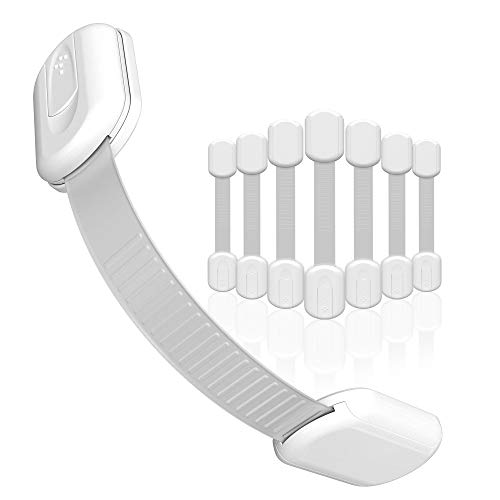
This eight-pack from Skyla Homes focuses on quick cabinet and drawer safety. It uses 3M adhesives and eliminates the need for screws or magnets, letting adults fasten many interiors in seconds. The package is ideal for families with multiple cabinets, drawers, and kitchen areas that require protection from curious toddlers. Best for parents prioritizing speed and ease of installation. A potential limitation is the adhesive’s performance on certain finishes or textured surfaces; test a small area first.
Who it’s best for: Homeowners who want fast, screw-free cabinet protection across many spaces. Why selected: high-value pack with straightforward application. Limitation: adhesion may vary by surface texture or finish.
Home Security Door Lock, 2 Pack (AceMining)
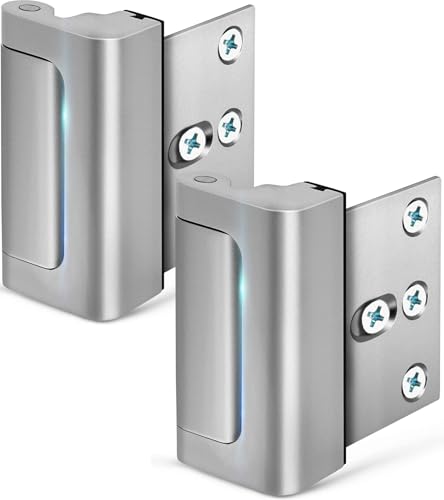
AceMining’s door reinforcement lock is built to withstand up to 800 pounds of force, presenting a robust defense for inward-swinging doors. It uses eight screws to anchor the plate and provides a substantial upgrade over standard door hardware. Install requires basic tools, including a drill, and comes with a measured instruction set to guide placement. Best for households seeking a high-security option for main doors or rooms that require extra privacy. Caution: installation involves drilling and may affect door frame integrity if not aligned properly.
Who it’s best for: Homeowners needing strong, hard-to-breach reinforcement. Why selected: extreme force resistance and multiple fasteners enhance security. Limitation: requires drilling and careful alignment for optimal performance.
Door Buddy Baby & Cat Door Latch

Door Buddy offers a cat-friendly interior latch that doubles as a child safety strap. It uses a 3M adhesive system to attach to the door and frame, avoiding tools. The product is adjustable and designed to fit around doors while allowing access from either side. It’s best for homes where a simple, non-destructive solution is preferred and where pets and toddlers share spaces. A caveat: adhesive curing time is 48–72 hours for maximum bond strength, and it should not be applied on drywall surfaces.
Who it’s best for: Families needing a simple, tool-free latch that also accommodates pets. Why selected: dual-purpose design and easy installation. Limitation: requires adhesive curing time and non-drywall surfaces for best bond.
Buying Guide: Key Considerations For Choosing The Right Door Safety Solution
- Door type and thickness: Confirm whether the latch or reinforcement lock is designed for interior doors, lever handles, or knob doors, and check thickness and jamb width requirements.
- Installation method: Decide between tool-free options (adhesive-backed or slide-on) and those requiring drilling or screws. Consider your renter status and surface compatibility.
- Height and reach: For child safety, choose devices positioned out of reach or requiring deliberate adult actions. Some products offer adjustable height or dual-side operation.
- Surface compatibility: Adhesives work best on flat, clean surfaces. Textured, curved, or unfinished surfaces may reduce adhesion strength.
- Strength versus convenience: Heavy-duty locks offer greater security but may require more installation effort. Lightweight latches are easy to install but may be less resistant to tampering.
- Versatility: If you have multiple door types (knobs, levers, cabinets), consider a product that covers several applications or purchase a pack that targets various surfaces.
- Maintenance and replacement: Some adhesives weaken over time or with heat exposure. Plan for periodic checks and potential reapplication.
- Safety considerations: Ensure locks do not create an entrapment risk. Test to confirm they do not hinder emergency egress when needed.
Frequently Asked Questions
- Do these locks require tools to install? Some options are tool-free with adhesive backing or sliding designs, while others require basic drilling or screws. Check product specifics.
- Will these locks fit all interior doors? Interior doors vary in thickness and profile. Confirm the product’s compatibility with your door type and the nearby lever or knob.
- Are adhesive locks durable on painted surfaces? Adhesive strength depends on surface texture and paint condition. Clean, flat surfaces typically yield better adhesion.
- Can I use these on cabinet doors and drawers? Yes, several products are designed for cabinets and drawers as part of cabinet-proofing kits or multi-surface use cases.
- Is it safe to install on doors used by pets and children alike? Most devices are designed to improve safety for toddlers and pets; ensure proper installation and avoid entrapment risks.
- How soon should I expect an adhesive latch to cure? Some products require 48–72 hours to achieve maximum bond strength; plan installation accordingly.