Answers for buyers seeking a neat, safe, and professional look for wall-mounted TVs start with reliable cord management. This guide highlights five top options that fit most living rooms, bedrooms, and home theaters. Each product is evaluated for who it’s best for, its standout feature, and any notable limitation. Suitable for renters and homeowners alike, these cable raceways and in-wall kits help you hide wires behind walls or along surfaces for a clean, distraction-free viewing experience.
Summary table of chosen products:
| Product | Best For | Key Benefit |
|---|---|---|
| Delamu Cord Hider | Homes with open-wall aesthetics | Easily snaps on/off with upgraded design and good flame retardancy |
| Mount-It! In-Wall Kit | Clean in-wall concealment with recessed power | In-wall power and multiple cables, DIY friendly |
| ZhiYo Cable Raceway Kit | Budget-friendly, quick hide for multiple cords | 4 sections, adhesive-backed, paintable |
| Yecaye TV Cord Hider | Flexible installations for low-profile setups | Modular and easy to splice or snap on |
| ECHOGEAR Cord Hider | Simple, fast DIY wire concealment | Includes hole saw and locking brackets |
Delamu Cord Hider: 157in White Cable Raceway Kit

Best for: viewers who want a long, uninterrupted run of cord coverage with easy install. This Delamu model uses a pass-and-snap design that suits homes and small offices seeking a tidy brightness-free wall surface.
Why selected: The kit emphasizes an upgrade in snap structure for quicker setup, plus a UL94 V-0 rated material for higher flame retardancy. It is designed to hide and organize typical TV and computer cords, reducing visible clutter and improving room aesthetics.
What to know: The primary trade-off is the length; if you need a shorter path, you may not require all 157 inches. The product excels when you have a long cable run along a wall or behind a TV console. The installation is straightforward, though textured walls may affect adhesive performance.
Mount-It! In-Wall TV Concealer Kit
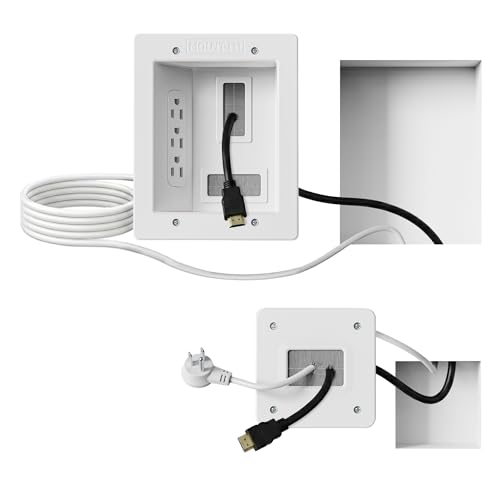
Best for: households wanting a near-professional look with recessed power and multiple cables behind a wall. Ideal for living rooms or bedrooms where a clean wall is a priority and you’re comfortable with a DIY project.
Why selected: This kit supports a flexible concealment system, including a recessed opening to route HDMI, Ethernet, and A/V cables while keeping them hidden behind the wall. It’s designed for renters and homeowners who want a pro look without hiring an electrician, and it includes a drywall saw and template for easier installation.
What to know: It is a plug-in system (not hard-wired). The process requires cutting into drywall and routing the cords behind the wall, which may be more involved than surface-mounted raceways.
ZhiYo Cable Raceway Kit: 68in 4-Pack

Best for: cost-conscious buyers who need to hide 2-3 cords along a wall. The kit provides a long total length (68 inches) with four 17-inch pieces, making it ideal for straight runs behind a TV or along a wall shelf.
Why selected: It uses pre-applied adhesive for simple installation and avoids wall damage, which is preferable for renters. Its PVC construction aims for better flame retardancy and a cleaner appearance. The kit is budget-friendly but requires flat walls for best adhesion.
What to know: Adhesive tapes may not work on textured walls. If you anticipate cord changes, the modular sections allow some flexibility, but replacement parts are limited to the kit contents.
Yecaye TV Cord Hider: 42in White Cable Cover

Best for: wall-mounted TV setups with 4 cords or where you need a modular, adjustable covering that can be added onto or trimmed as needed. This option suits media rooms with multiple devices behind a mounted TV.
Why selected: The Yecaye system is designed to be easy to install in tight spaces, allowing you to slide in or snap on segments to fit the wiring layout. Its clean white finish blends with most decors and can hide a multi-cable arrangement efficiently.
What to know: The kit is designed for flexibility, but its performance depends on accurate wall space and the capability to manage longer runs by combining segments. It’s best when you can avoid rough corners where cables bend sharply.
ECHOGEAR TV Cord Hider: White Kit

Best for: DIY installers who want a quick, reliable pass-through system with simple assembly. Suitable for low-profile walls where cables need to be hidden without extensive remodeling.
Why selected: This kit includes a drywall hole saw drill attachment and locking brackets, aiming to simplify installation and secure the grommets. It’s a practical choice for hiding HDMI, audio, and other low-voltage cables behind the wall.
What to know: The kit specifically notes use with in-wall rated power cables, so verify your cable types and wall depth before starting. The “zombie apocalypse” drill joke aside, ensure you have appropriate safety measures for electrical work.
Buying Guide: Key Considerations For Wall-Mounted TV Cable Management
- Installation location: Surface-mounted raceways are easiest for renters and quick setups, while in-wall kits deliver a cleaner, pro look but require more tools and wall modification.
- Wall type and depth: Textured walls affect adhesive performance. In-wall systems require sufficient cavity depth to route power and low-voltage cables and may need a professional for complex runs.
- Number of cables: If you have multiple HDMI, USB, Ethernet, and power cords, choose a kit with multiple channels and enough length to minimize junctions and bends.
- Safety and flame resistance: Look for materials rated for safety (e.g., UL94 V-0) to ensure reduced fire risk around electrical cords.
- Modularity and future changes: Modular raceways (snap-on or splice-able) are easier to adjust when you reconfigure your setup or move your TV.
- Surface compatibility: Adhesive-backed options require smooth, clean walls. If you have textured surfaces, you may prefer screws or in-wall installations.
- Paintability and aesthetics: If color matching matters, consider white, black, or paintable PVC to blend with your wall and furniture.
Frequently Asked Questions
- Do I need a professional to install in-wall cable management?
In-wall installations typically require more tools, wall modification, and knowledge of electrical codes. A professional may be advisable for complex runs or if you’re unsure about wiring.
- Can I install a cable hider on textured walls?
Adhesive-backed raceways may not adhere well to textured surfaces. Consider screw-mounted options or in-wall solutions if you want a permanent, clean look.
- Is it safe to run power cables behind walls?
In-wall power solutions should comply with local electrical codes and typically require a power kit designed for in-wall use. Do not route standard extension cords behind walls.
- How do I choose between surface-mounted and in-wall options?
Surface-mounted raceways are fastest to install and reversible, ideal for renters. In-wall systems provide the neatest appearance but require more effort and potential remodeling.
- Will painting the cable cover affect its performance?
Paintable covers generally maintain performance; however, use light coats and avoid clogging seams that could reduce fit and function.
- Can these kits support a power outlet behind the TV?
Yes, some kits include recessed power options; others require separate electrical work. Always follow safety guidelines and local codes.