Choosing the right brick mortar mix can influence the durability and appearance of brick, stone, and concrete installations. This guide highlights five reliable options, spanning traditional mortar blends, polymer-enhanced mixes, and high-temperature refractory mortars. Each product is selected for common American masonry tasks, from laying bricks to repairing fireplaces and chimneys. Read on to compare their uses, benefits, and considerations for your next project.
Summary of Selected Products
- Quikrete Construction Grade Mortar Mix (10 lb) — Traditional masonry cement and graded sand blend for bricks, concrete units, and stone.
- Bauer Instant Polymer Cement (2 kg) — Ready-to-use polymer-based repair adhesive for concrete, cracks, and general masonry repairs.
- Rutland Dry Mix 211 Refractory Mortar (2.5 lb) — High-temperature mortar for fire-related masonry applications.
- Tenon Refractory Mortar — White, high-heat resistant mortar for fireplaces, fire pits, and chimneys (up to 2550°F).
- Rutland Dry Mix 211 Refractory Mortar (10 lb) — Refractory mortar for high-temperature applications, including fireboxes and fireplaces.
Quikrete Construction Grade Mortar Mix

Product overview: QUIKRETE Construction Grade Mortar Mix combines masonry cement and graded sand to create a versatile mortar for laying brick, concrete units, and stone. This classic mix is sized for small-to-medium masonry jobs and offers workable set times suitable for standard residential projects. It is suitable for tuckpointing and repointing as part of routine renovation work, ensuring reliable adhesion to brick, block, and stone substrates when used with proper joints and curing practices.
Bauer Instant Polymer Cement

Product overview: Bauer Instant Polymer Cement is a ready-to-use polymer-containing cement adhesive designed for quick repairs and crack filling. It emphasizes high yield and versatility, enabling use in concrete crack repair, tile and stone repair, and block setting. The polymer formulation aims to provide strong adhesion with rapid application, reducing on-site mixing and timing concerns for quick fixes in both interior and exterior environments.
Rutland Dry Mix 211 Refractory Mortar (2.5 lb)

Product overview: Rutland Dry Mix 211 is a USA-made high-temperature mortar designed for joining or repairing fire bricks and masonry flue tiles in fireplaces, stoves, kilns, and pizza ovens. It is a dry mix that requires water mixing, cures through exposure to air, and is suitable for extreme heat environments. This product is commonly used in hearths and heat-intensive applications where maintaining structural integrity under high temperatures is critical.
Tenon Refractory Mortar

Product overview: Tenon Refractory Mortar is a ready-to-use, white high-temperature mix designed for fireplaces, fire pits, chimneys, parging, brick and clay applications, and other heat-exposed masonry tasks. It provides a practical working time of about an hour before hardening, making it suitable for professional and DIY projects requiring precise placement in heat-resistant joints.
Rutland Dry Mix 211 Refractory Mortar (10 lb)
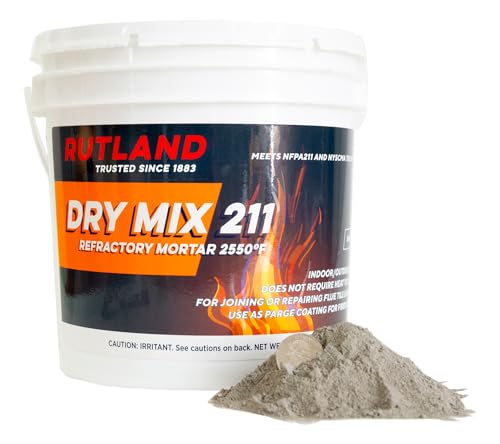
Product overview: This larger 10-pound version of the Rutland 211 refractory mortar provides the same high-temperature performance for masonry repairs around fireplaces, fire pits, kilns, and pizza ovens. It is a dry mix that requires water and offers straightforward trowel application for surface repairs or parge coatings on heat-exposed surfaces.
Buying Guide: Key Purchase Considerations
- Intended application: Traditional mortar mixes suit general bricklaying and repointing, while refractory mortars are essential for heat-exposed areas like fireplaces and pizza ovens.
- Temperature requirements: For high-heat environments, select a refractory mortar with a specified fire-resistance rating up to your project’s temperature.
- Working time and cure: Polymer-enhanced blends may offer faster cures and better adhesion but can require stricter surface prep; read product data sheets for pot life and cure conditions.
- Mix-type: Dry mix versus ready-to-use formulations affect on-site preparation; choose based on available tools, time, and expertise.
- Substrate compatibility: Ensure the chosen mortar is compatible with brick, stone, concrete, or tile substrates to prevent adhesion issues.
- Water requirements: Some products are mixed with water on-site; others are ready-to-use, reducing mess and potential mixing errors.
- Durability and flex: Sanded acrylic or elastomeric additives can improve joint flexibility and weather resistance for exterior projects.
- Color and finish: For visible joints, consider color-matching options (some products are white or can be painted later) to achieve a uniform appearance.
- Safety and storage: Polymer compounds and high-temperature mortars may require proper ventilation and storage; follow manufacturer guidelines for storage duration and handling.
- Code compliance: In some regions, certain high-temperature applications may have code or warranty implications; verify local requirements before use.