Clay soils often hinder healthy growth with slow drainage and compacted layers. Selecting the right amendment can transform structure, drainage, and nutrient access for lawns and gardens. This guide highlights five Amazon-tested options that address clay challenges, from mineral-based gypsum to humic-acid blends and biochar-enhanced mixes. Each product is reviewed for how it works, typical coverage, and practical use in clay-rich beds and turf. A quick summary table follows to help you compare at a glance, followed by detailed product sections and a comprehensive buying guide to support informed decisions.
| Product | Brand | Core Benefit | Size / Coverage |
|---|---|---|---|
| Espoma Garden Gypsum Soil Conditioner | Espoma | Loosens clay soil; improves drainage with natural gypsum | 6 lb bag |
| The Andersons HumiChar Organic Soil Amendment | The Andersons | Combines humic acid with biochar to boost soil health | 12 lb; ~12,000 sq ft coverage |
| The Andersons Humic DG Organic Soil Amendment | The Andersons | High humic content; chelates nutrients for better uptake | 11 lb; ~10,000 sq ft |
| Jonathan Green Love Your Soil | Jonathan Green | Loosens hard soils; stimulates microbial life and root growth | 15,000 sq ft |
| Sol Soils Calcined Clay | sol soils | Superior drainage and aeration; promotes root health | 2 Quarts |
Espoma Garden Gypsum Soil Conditioner

Espoma Garden Gypsum Soil Conditioner loosens heavy clay soil and improves root growth by enhancing soil structure without synthetic additives. This 100% all-natural mined gypsum is pelletized for easy application and contains no fillers or additives. It helps break up compacted clay, creating air and water pathways for roots. Use anytime during the growing season; sprinkle on the soil surface or apply with a broadcast spreader. While gypsum does not dramatically alter soil pH, it supports better texture and healthier turf and garden beds by facilitating drainage and structure, particularly in clay-rich soils.
The Andersons HumiChar Organic Soil Amendment

The Andersons HumiChar Organic Soil Amendment blends humic acid with biochar to boost soil health and microbial activity. The biochar helps retain nutrients and water, while humic acids stimulate beneficial microbes, improving soil structure—especially important in clay soils prone to compaction. The product is easy to apply as a dispersible granule, designed for uniform coverage, and OMRI-listed to align with organic gardening goals. It supports long-term fertility and can reduce the frequency of fertilizer inputs when used as part of a regular soil-conditioning plan for turf, beds, and landscape areas.
The Andersons Humic DG Organic Soil Amendment
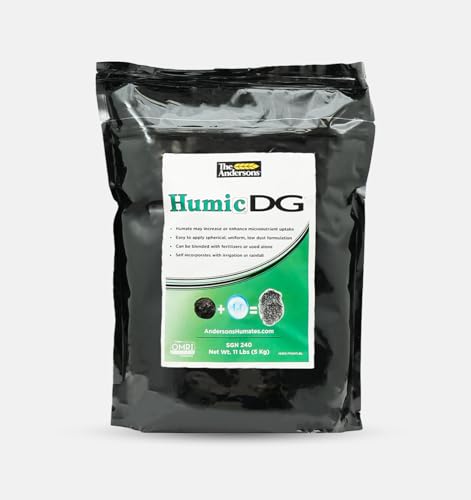
The Andersons Humic DG Organic Soil Amendment delivers a concentrated humic-rich option to support nutrient availability and microbial life. With about 70% humic content, it chelates nutrients to improve uptake and fertilizer efficiency. The fast-to-dissolve granules blend with any fertilizer program and are easy to apply across lawns and garden beds, making it a versatile choice for clay soils where both biology and chemistry matter. Covering up to 10,000 square feet, this product is OMRI-listed and designed to provide long-term soil improvements beyond immediate plant nutrition.
Jonathan Green Love Your Soil

Jonathan Green Love Your Soil is a soil food designed to loosen hard, compacted soils and improve air and water movement through lawns and vegetable beds. By promoting microbial life and humus formation, it helps release nutrients trapped in dense clay and expands root mass. The formula also supports drought resistance by encouraging deeper rooting. Designed for up to 15,000 square feet, it’s a practical option for homeowners seeking a biology-first approach to clay soil improvement. This product emphasizes soil ecology as a foundation for vibrant turf and productive gardens over time.
Sol Soils Calcined Clay
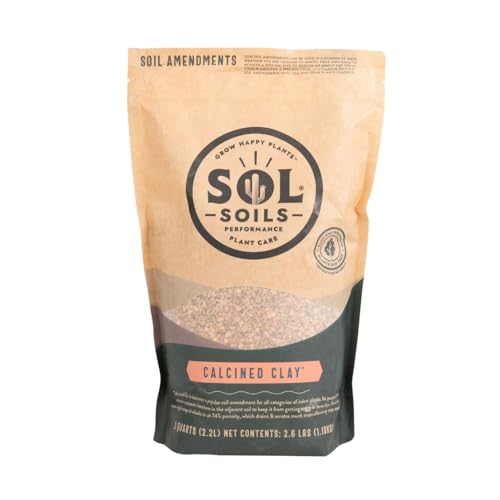
Sol Soils Calcined Clay provides a peat-free amendment that enhances drainage, aeration, and root health. Fired at high temperatures, it achieves high porosity (about 74%), creating air pockets that prevent compaction and support nutrient absorption. It helps maintain an optimal moisture balance, keeping roots hydrated without waterlogging. Suitable for indoor plants, succulents, bonsai, and outdoor beds, calcined clay is particularly effective in dense, clay-heavy mixes where airflow and moisture control are critical for robust growth and healthy root systems.
Buying Guide
Key purchase considerations
When choosing an amendment for clay soil, consider your goals (drainage, soil biology, nutrient availability), whether you prefer mineral-based options (like gypsum) or biology-friendly blends (humic acids and biochar), and the size of your area. OMRI-listed products may be important for organic gardens. Check label directions for application rates and timing, especially in turf vs. garden beds. For large lawns, products with high coverage per bag offer more value, while smaller containers may suffice for potted plants and raised beds.
Planting goals and soil biology
Clay soils respond well to amendments that improve structure and microbial habitat. Mineral-based amendments such as gypsum primarily enhance physical properties and drainage, while humic substances and biochar address nutrient availability and microbial activity. Calcined clay emphasizes physical aeration. Choose a combination that addresses both physical and biological needs for best long-term results in lawns, vegetable plots, and ornamental beds.
Application methods and timing
Most amendments work best when applied during the growing season or as part of a scheduled soil-conditioning program. Gypsum is often applied in spring or fall to help break up clay and ease compaction, while humic-based products can be effective when integrated with regular fertilization. Calcined clay can be added to soil mixes or top-dressed to improve drainage in containers and beds. Always follow product-specific instructions for spread rates, incorporation, and safety precautions.
Coverage, cost, and longevity
Consider the area size and the product’s coverage under typical use conditions. Some amendments offer long-lasting improvements to soil structure and microbial life, reducing the need for frequent replacements, while others provide rapid but temporary effects. Balance upfront costs with long-term benefits, especially for large properties or heavily clay-based landscapes. A layered approach—combining gypsum for structure with humic-biochar blends for biology—often yields the most durable improvements.
Compatibility with lawn vs garden applications
Lawn applications emphasize drainage and root health, often benefiting from gypsum and humic-based soil conditioners. Gardens and edible beds may benefit from products with stronger microbial support and nutrient chelation. If you garden organically, prioritize OMRI-listed options and ensure compatibility with your fertilizer regime. For container gardening or indoor plants, calcined clay provides essential aeration and moisture balance without heavy amendments.