Choosing the right kitchen gloves is essential for safe food handling, allergen management, and clean cooking. This guide highlights selected gloves that balance comfort, durability, and food safety.
Below you’ll find five top options with practical notes on material, thickness, and best-use cases, plus a buying guide to help compare features and select the right pair for your kitchen.
| Product | Brand | Key Feature |
|---|---|---|
| PROMEDIX P Nitrile Disposable Gloves | PROMEDIX P | 4 mil nitrile, latex-free, powder-free |
| SWIFTLITE Disposable Vinyl Gloves | SWIFTLITE | Latex-free, 3 mil PVC, food-safe |
| OKIAAS Disposable Gloves Medium | OKIAAS | Latex-free, powder-free, 3 mil |
| Comsmart BBQ Gloves | Comsmart | Heat resistant up to 1472°F, silicone |
| Schneider Black Vinyl Exam Gloves | Schneider | 4 mil vinyl, latex-free, food-safe |
PROMEDIX P Nitrile Disposable Gloves

PROMEDIX P nitrile disposable gloves deliver reliable durability with a 4-mil thickness that adds puncture resistance without sacrificing tactile sensitivity. The gloves are latex-free and powder-free, reducing allergy risk and preventing powder transfer to foods and surfaces. Their snug, flexible fit maintains dexterity for fast-paced prep while providing a strong barrier against oils, water, and common kitchen chemicals. Made from high-quality nitrile, they resist tearing and provide dependable protection for handling raw proteins, greasy ingredients, and kitchen tools. The design aims to minimize odor and residue, helping hands stay clean between tasks.
SWIFTLITE Disposable Vinyl Gloves

SWIFTLITE disposable vinyl gloves offer a latex-free, powder-free option suitable for a wide range of kitchen tasks. Constructed from non-toxic PVC with about 3 mil thickness, they strike a balance between barrier protection and tactile response for common prep work. The loose-fit design makes it easy to don and doff, especially when moving between stations. They perform well in both heat and cold, handling greasy foods, sauces, and produce without cracking under typical kitchen temperatures. The waterproof surface helps keep hands dry during washing, cleanup, and surface contact, while remaining skin-friendly for many users.
OKIAAS Disposable Gloves Medium

OKIAAS disposable gloves in medium size offer latex-free, powder-free protection ideal for everyday cooking and light cleaning. Made from clear vinyl with about 3-mil thickness, these gloves provide a reliable barrier against contamination during food prep while preserving finger sensitivity. The gloves are designed to fit a range of hand shapes with comfortable stretch for quick changes between tasks. Suitable for home kitchens and light industrial use, they guard against oils, water, and residues without introducing latex proteins or powder into food or surfaces.
Comsmart BBQ Gloves
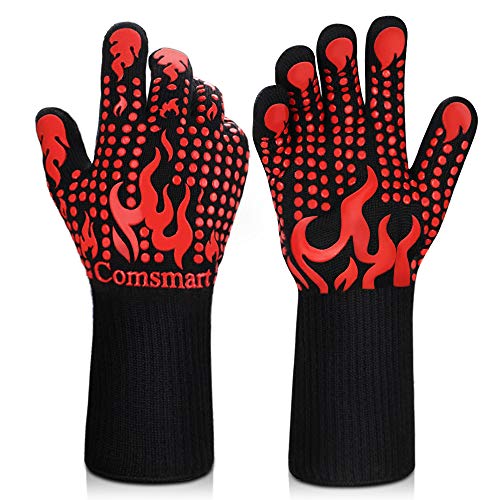
Comsmart BBQ gloves are designed for high-heat cooking tasks, boasting a remarkable 1472°F heat resistance. Made from silicone with a long cuff, they protect fingers, palms, and forearms during grilling, roasting, and handling hot cookware. The gloves are easy to dry and maintain, with a looped cuff for hanging between uses. Their flexible, snug fit accommodates different hand sizes, while the non-slip surface helps grip hot items securely. They excel for barbecue, baking, and heavy kitchen operations where metal tongs, cast iron, or hot pans are involved, reducing burn risk and improving control.
Schneider Black Vinyl Exam Gloves

Schneider black vinyl exam gloves deliver a durable barrier for food handling and cleaning tasks. At four mil, the vinyl thickness provides puncture resistance while maintaining dexterity. The gloves are latex-free and powder-free, reducing exposure to allergens and particulates. While marketed as medical exam gloves, their food-safe, non-powder formula makes them suitable for cooking, food prep, cleaning, and dishwashing. The dark color helps veil stains and oils, which can be advantageous in busy kitchens. They are a practical choice for light to moderate kitchen tasks requiring reliable protection and easy removal.
Buying Guide
Material And Allergen Considerations
Choose among nitrile, vinyl, and silicone depending on allergy concerns and task demands. Nitrile gloves are usually the strongest option for puncture resistance and chemical protection, making them ideal for handling raw meat and oily foods. Vinyl gloves are affordable and latex-free, suitable for light tasks and household use. Silicone gloves, such as long-cuff designs, excel in high-heat scenarios like grilling. If you have latex sensitivities, confirm latex-free labeling to avoid allergic reactions.
Thickness, Dexterity, And Sensitivity
Glove thickness (measured in mil) affects durability and tactile feel. Heavier gloves (4 mil or more) offer better protection against tears and contaminants but may reduce tactile precision slightly. Lighter gloves (about 3 mil) provide greater dexterity for delicate tasks such as mincing herbs or peeling fruits. For high-heat tasks, specialized gloves with higher resistance are recommended. In general, balance protection with the need for precise manipulation based on your cooking style.
Powder-Free And Food-Grade Certifications
Powder-free gloves prevent powder residue from transferring to food and surfaces, an important consideration in clean prep environments. Look for food-grade certification or explicit labeling indicating suitability for food handling. Powder-free, latex-free options reduce the risk of allergic reactions and contamination, especially in households and professional kitchens.
Fit, Comfort, And Sizing
Size matters for comfort and performance. Use gloves that fit snugly without restricting circulation. For a mix of tasks, consider a glove with a looser cuff or a more flexible material to ease on-and-off between steps. If you wear gloves for extended periods, prioritize softer textures and lines of stretch to reduce fatigue and improve grip.
Heat Resistance And Specialty Use
For grilling or oven work, specialty gloves with high heat resistance are essential. Silicone-based upgrades and long cuffs provide protection against splatters, steam, and direct contact with hot surfaces. For non-heat duties, standard disposable gloves are typically sufficient, but for culinary tasks involving high temperatures, invest in purpose-built heat-resistant options.
Durability, Reusability, And Value
Disposable gloves are designed for single-use, but some tasks may benefit from thicker materials that last longer or alternative reusable options like silicone oven gloves. Consider your budget, the frequency of use, and the range of tasks when evaluating value. If you frequently switch between raw meats and ready-to-eat foods, thicker, more durable gloves can reduce waste and improve safety.
Color Coding And Task Differentiation
In busy kitchens, color-coded gloves can help prevent cross-contamination between different stations (e.g., raw meat vs. produce). While not all brands offer color variety, choosing gloves with distinct colors for specific tasks can improve hygiene and workflow efficiency.