Discover top sound proof ceiling panels that reduce echo, flutter, and noise for home offices, studios, and living spaces. The following selections are ideal for different needs—from quick installations to high-density, professional-grade sound control. This guide helps you choose by room type, installation style, and material, with clear pros and limits for each option.
The table below summarizes five well-suited products and who they are best for. Use it as a quick reference when comparing options.
| Product | Best For | Key Benefit | Installation Note |
|---|---|---|---|
| Focusound 52 Pack Acoustic Foam Panels | Triangle grooved design for better noise absorption | Includes 300 pcs adhesive tape for quick mounting | |
| GUERRI Sound Proof Foam Panels | Unique wedge triangles with strong resilience | Pack expansion may take a few hours to days | |
| Art3d Acoustic Drop Ceiling Tiles 24×48 | Perforated structure with sound-absorbing felt | Designed for standard ceiling grids and wood frames | |
| ZonaSonic 48 Pack Pyramid Panels | High-density foam with strong adhesive | Fast expansion; ensure full contact with wall | |
| Soundsbay 12 Pack Square Panels | High NRC and durable polyester fiber | Self-adhesive; no extra adhesives needed |
Focusound Acoustic Foam Panels

Best for aspiring home studios and voiceover work. The Focusound 52 Pack uses triangular groove panels designed to absorb noise across a range of frequencies, reducing echoes and flutter. An extra benefit is the included double-sided adhesive tape, allowing fast, wall-safe installation suitable for renters or temporary setups. If panels deform, a quick water soak can help restore shape within 24 to 48 hours. This makes it a practical choice for budget-conscious buyers who want a sizable, easy-to-implement solution.
Who this is for: independent creators, podcasters, and small home studios needing a cost-effective, high-coverage option that’s easy to install. Why chosen: high panel count, clear sound absorption design, and ready-to-apply adhesive make it a strong all-around choice for beginners and DIY installers. Caution: adhesive can leave residue on delicate walls, and panel recovery relies on proper drying after storage or soaking.
GUERRI Sound Proof Foam Panels

Best for decorative walls and ceilings with strong noise absorption. The GUERRI panels feature a unique wedge design that not only absorbs echoes but also adds a modern visual texture to walls. High-density polyurethane foam ensures resilience and potential to expand back to full size after compression. They are SGS-tested for flame retardancy, contributing to safer rooms used for music practice or work.
Who this is for: designers and musicians who want both acoustic performance and a bold wall aesthetic. Why chosen: durable, high-density foam with a distinctive wedge shape; good expansion properties after packaging. Caution: expansion time varies; do not count on immediate full-size recovery after opening.
Art3d Acoustic Drop Ceiling Tiles 24×48
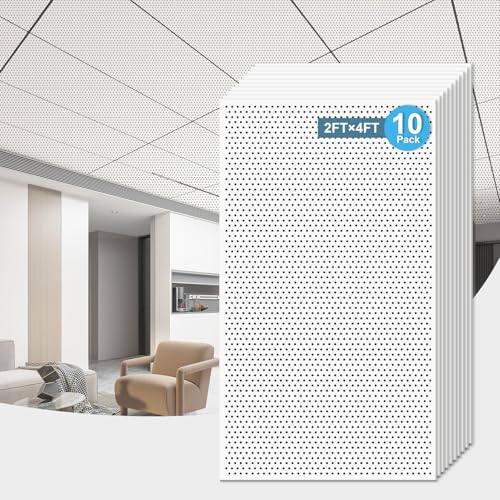
Best for ceilings and mixed-use walls where a larger installation is needed. Art3d’s 24×48 ceiling tiles combine perforation with high-sound-absorbing felt to reduce reflections. They work well in spaces where ceiling aesthetics matter as much as acoustics, offering a simple upgrade for rooms with grid ceilings or wooden frames.
Who this is for: homeowners upgrading a studio or home theater where ceiling acoustics matter. Why chosen: versatile, grid-friendly installation and proven noise reduction through perforation plus absorber materials. Caution: installation requires alignment with existing ceiling grids and may need screws for wooden structures.
Soundsbay 12 Pack Square Panels

Best for compact rooms and walls that require quick, reliable treatment. These 12″ x 12″ square panels use 100% polyester fiber with a high-density core and self-adhesive backing. The NRC up to 0.92 supports effective noise reduction for vocal clarity and reducing room reverberations. They are suitable for studios, home theaters, and multi-surface installations where quick setup is desired.
Who this is for: small studios and apartments needing fast, clean installation without extra tools. Why chosen: high NRC, durable self-adhesive design, and a versatile square shape that fits many wall layouts. Caution: may have odor initially due to flame-retardant treatment; air out before long-term use.
Buying Guide
What type of room are you acoustically optimizing? Rooms with hard surfaces (concrete, wood, glass) benefit most from high-density foam panels that absorb a broad range of frequencies. For ceilings, consider grid-compatible tiles or tiles with strong adhesive backing to avoid sagging or gaps.
- Density and NRC: Higher density panels (around 25 kg/m³ or higher) tend to offer better noise absorption, particularly for mid to high frequencies. Look for panels with NRC ratings above 0.9 when possible for recording or speech clarity.
- Adhesive and installation: Self-adhesive options are ideal for quick projects or renters. If you choose tapes, ensure they are wall-friendly and rated for panel weight.
- Shape and coverage: Wedge or pyramid designs can improve diffusion and absorption. For large ceilings, consider tiles or packs that provide broad coverage to minimize untreated reflections.
- Material safety: For spaces used by families or where airflow matters, verify flame retardancy and low odor, especially for heavy denser foams.
- Combination with other treatments: Acoustic panels reduce reverberation but aren’t true soundproofing. For noisy environments, pair with door sweeps, weatherstripping, or mass-loaded vinyl if needed.
Installation tips
- Plan a layout before mounting; stagger rows to avoid straight-line seams that create flutter echoes.
- Leave some space between panels for even absorption across frequencies, especially in small rooms.
- Allow time for panels to regain shape after unpacking; some compressed packs expand over 24–72 hours.
- Test acoustics by clapping and listening to reflections; adjust panel placement to target problem frequencies.
FAQ
- Do these panels block sound from leaving a room?
– No, they primarily absorb and diffuse internal sound to reduce reflections; they are not designed to fully block sound transmission between rooms. - Can I install panels on ceilings or just walls?
– Both. Many products are designed for walls and ceilings; check the product notes for compatibility with ceiling grids or wood frames. - Will panels affect air quality or odors?
– Some panels may have a temporary odor from materials or flame-retardant treatments; airing out for 24 hours is common before long-term use. - Is higher density always better?
– Higher density generally improves absorption, especially at mid-to-high frequencies, but room size, placement, and frequency content matter most for overall effect. - Are there risks with adhesives on painted walls?
– Some adhesives can peel paint if removed aggressively. Use removable options or test a small area first.